Richard Gadd’s ‘Half Man’ Is the Most Devastating Portrait of Brotherhood and Male Rage on TV Right Now

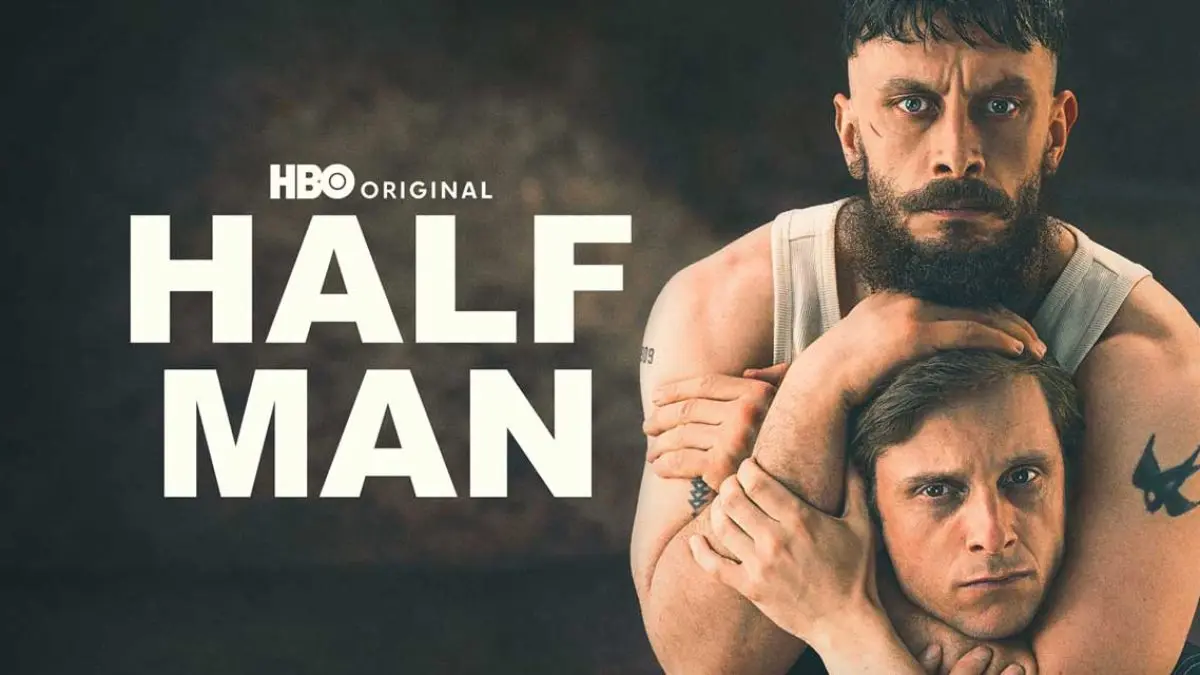

‘Baby Reindeer’ announced Richard Gadd as one of the most singular voices in contemporary television. His follow-up, ‘Half Man’, makes an equally bold and bruising case that this was no accident.
‘Half Man’ is a British six-part drama created, written by, and starring Richard Gadd, co-produced by HBO and the BBC, premiering on April 23 on HBO and April 28 on BBC One. The series explores the brittle bonds of male friendship and violence through the relationship between two brothers bound not by DNA, but by time and circumstance.
The ‘Half Man’ Plot Summary You Need Before You Watch
When the show opens, Niall is a grown man preparing for his wedding day. Ruben arrives uninvited, showing affection for Niall but then physically and sexually abusing him. The series bounces back and forth from the brothers’ encounter at Niall’s wedding to key scenes from their adolescence and adulthood in which the broken men hurt and occasionally help one another.
As boys without dads, Niall (played in youth by Mitchell Robertson and adulthood by Jamie Bell) and Ruben (Stuart Campbell, then Gadd) are “brothers from another lover” whose moms combined households in a liminal form of lesbianism. Ruben, a charming but terrifyingly angry juvenile delinquent, pummels timid, bookish Niall’s bullies.
Having grown up inseparable after being brought together through tragedy, the pair’s bond is tested decades later when Ruben unexpectedly appears at Niall’s wedding. His return sets off a chain of events that culminates in an eruption of violence, sending the narrative back through three decades of their lives, from the 1980s to the present day.
As ‘Half Man’ progresses, it becomes clear that Niall and Ruben are two sides of the same coin, both titular half men incapable of truly functioning without the other. Niall himself captures the impossible weight of the dynamic with one sentence that says everything: “Ruben is the best and worst thing all at once.”
Richard Gadd and Jamie Bell Dig Into Toxic Masculinity and Brotherhood
Gadd has a distinct ability to write characters who appear to be exactly who audiences expect them to be, only to shift perspective and shine a new light on them, so they become someone else entirely. That quality is on full display here, with ‘Half Man’ refusing to let either brother occupy a simple moral lane.
Niall, from the start, has feelings for men. He may even have feelings for Ruben, but he is too afraid to act on them. Be it the homophobic abuse he faces as a boy or the half-life he witnesses his mother suffering through, Niall hates that he is attracted to men and goes to increasing extremes to smother his natural urges.
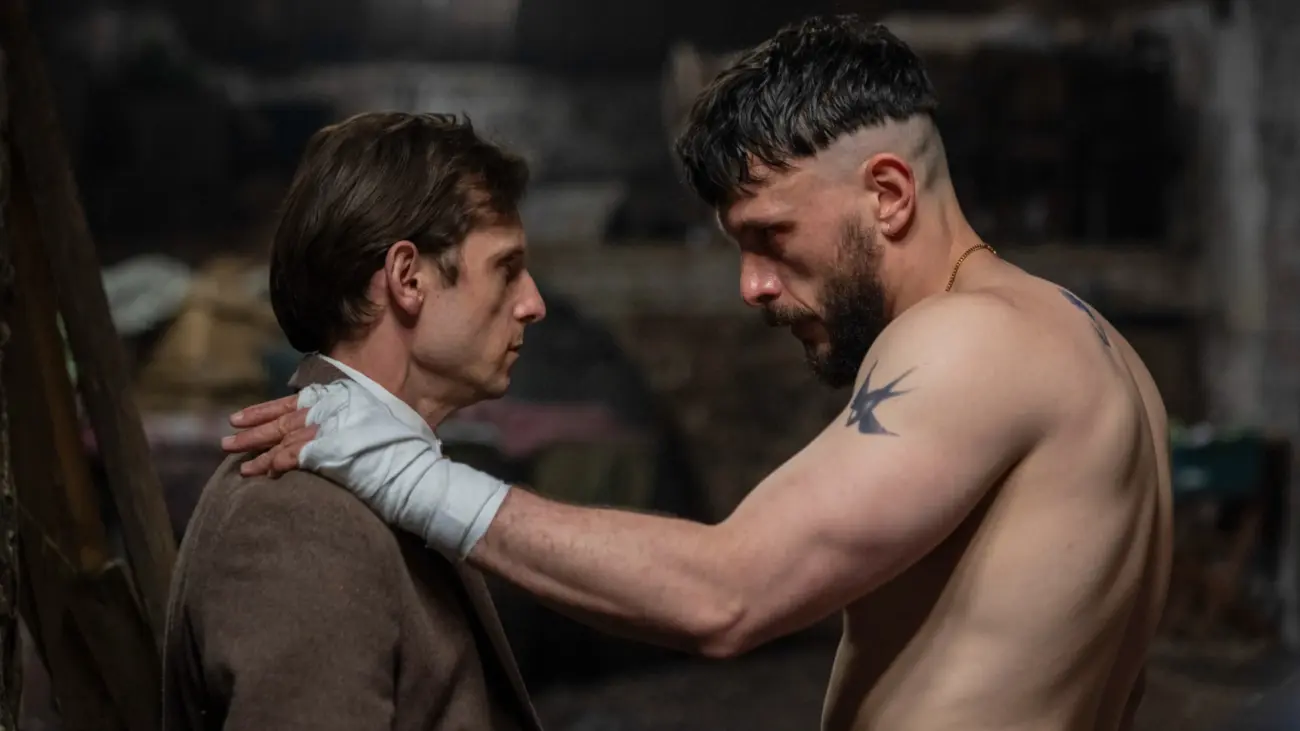
Gadd and Bell are doing career-best work here. As Ruben ages, Gadd finds a slower, heavier gait and a lower, almost simian vocal register, substituting short grunts or heavy breaths as contributions to conversation. As his counterpoint, Bell taps into a brokenness, a glass-eyed sorrow that has to be seen to be believed, practically all the suffering in Niall’s life traceable back to his internalized homophobia, which Bell portrays with heartbreaking sincerity.
The figure of masculinity is placed under scrutiny in the show, dissected, torn apart, and reassembled to understand the indelible scratches on the bodies and souls of the characters. The protagonists are so insecure that they never show their weaknesses, causing more damage than they could have ever imagined.
How ‘Half Man’ Expands on the Legacy of ‘Baby Reindeer’
‘Half Man’ is pure fiction, yet the series takes a similarly raw and tangled approach to a similar set of issues including sexuality, masculinity, violence, love, addiction, creativity, and self-loathing. It is also more disturbing than its predecessor, with every spark of black comedy extinguished by a torrent of despair.
In ‘Half Man’, shame creeps in as it already did in the autobiographical ‘Baby Reindeer’. It is a theme Gadd seems not to have fully resolved, or perhaps precisely because he is now fully aware of it, he continues to explore it in every direction, almost as if trying to free himself from it through narrative perspective.
Without ever uttering the phrase “toxic masculinity,” the series deep dives into the self-loathing men often have about themselves when society expects them to act and behave in specific ways, presenting ‘Half Man’ as a hauntingly effective portrait.
The series’s central questions are fascinating, asking what happens when a terrified child’s entire identity is shaped by and dependent on a bully’s largesse, and whether anyone whose humanity is governed by anger can ever turn back. The show does not claim to have answers, but its depiction of the ramifications of unchecked rage is a brilliant and discomfiting six-hour experience.
What the Critics Are Saying About the HBO Series
The critical conversation around ‘Half Man’ has been loud and genuinely divided, which is perhaps exactly what Gadd intended. Lucy Mangan of The Guardian called the show “brave, brutal, and blazing,” writing that Gadd’s “unforgiving new drama tackles the damage men do to each other head on, by pulling out his insides and smearing them everywhere.” Andrew Murray of The Upcoming agreed, saying Gadd “continues to cement himself as one of the greatest contemporary talents,” aided by “an ensemble of flawless performances.”
Collider’s Therese Lacson praised how Gadd “solidifies his reputation by stripping his second project of any real connection to his comedy roots and demonstrating what’s possible when he tells a story about utter ruin.” Not everyone was fully won over, however.
Time’s critic came out moved and devastated but remained ambivalent about whether the payoff had been worth the pain. On Rotten Tomatoes, the series holds an approval rating of 77% based on 52 critic reviews, a score that reflects a show that genuinely polarizes rather than one that merely disappoints.
According to Gadd himself, speaking to The Hollywood Reporter, the show’s frightening nature is entirely by design. “It’s a show about male violence, male rage, male repression,” he said. “If we spend six episodes and we don’t see the lengths to which he’s capable of, then the show’s not really going to work.”
Whether you find ‘Half Man’ a masterwork or an endurance test, one thing is certain: Gadd has made exactly the show he set out to make, with zero compromise and maximum nerve. If you’ve already made it through all six episodes, what did you make of Ruben and Niall’s final confrontation, and do you think either of them ever stood a real chance of escaping who they became?