Original ‘Euphoria’ vs. the American Remake – How the Original Israeli Show Became One of TV’s Most Radical Remakes

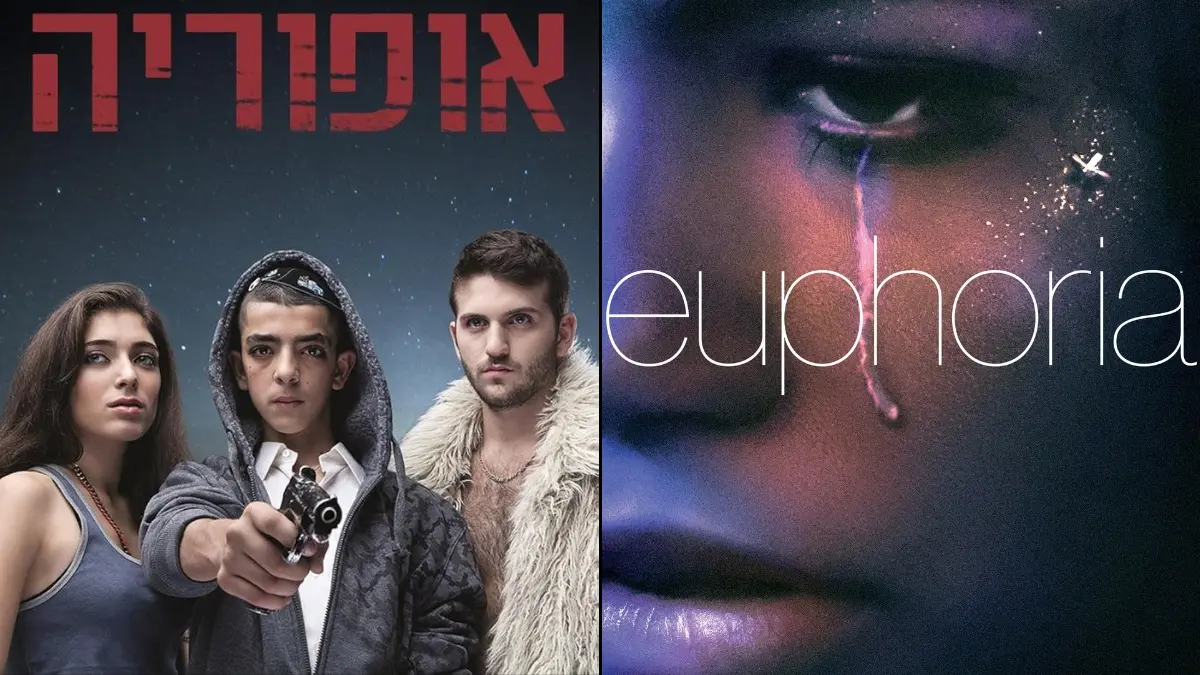

Most fans of ‘Euphoria‘ know the show as the glitter-soaked, emotionally devastating HBO series that turned Zendaya into one of the biggest stars on the planet. What far fewer people realize is that the show they obsessed over is actually a remake, rooted in a raw, little-known Israeli miniseries that aired more than a decade before Rue Bennett ever appeared on screen.
The original ‘Euphoria’ aired in Israel in 2012, sharing the same name as its American counterpart, and was created by Ron Leshem and Daphna Levin. The series ran for a single season before fading into relative obscurity, but the DNA it passed on to its HBO successor is far more complex than most viewers ever suspected. This is the story of two shows, two countries, and one very different vision of what it means to be young and lost.
The True Story Behind the Original Israeli Series
The Israeli version of ‘Euphoria’ was not born from imagination alone. Written by Leshem, also the writer behind the Oscar-nominated film ‘Beaufort,’ and directed by Levin, the series was produced by Teddy Productions and aired on cable network HOT3, and was based on the true story of a teenager who was murdered outside a club. That grounding in real tragedy gave the original show a particular weight that its American remake would ultimately trade for something broader and more stylized.
Key plot elements, including a fatal stabbing outside a nightclub, were inspired by the real-life murder of 18-year-old Ra’anan Levy on December 25, 2004, in Tel Aviv, who was killed after attempting to break up a fight between groups of teens near a nightclub. The show chronicles how the teens from that same scene, one year after the tragedy, attempt to cope and escape their reality through drugs, sex, and recklessness.
The original ‘Euphoria’ ran for a single ten-episode season and then effectively disappeared, with conservative backlash over its depictions of teen sex, drugs, and violence helping to limit its lifespan, and unlike its American counterpart, it never benefited from a streaming afterlife that could reach more niche audiences.
Head writer Ron Leshem and director Daphna Levin threw their characters into the heart of Israeli national consensus, using their nihilistic credentials to present sensitive issues including drugs, sex, depression, the loss of parenting authority, and body image.
How Sam Levinson Transformed the Source Material
When HBO began developing the American adaptation, the network brought in writer Sam Levinson, who made sweeping changes that would reshape almost every fundamental aspect of the show. Speaking about the major changes made in an interview with the Television Academy, Levinson explained that the original series is mostly about young men, with a female character with some drug issues who is into self-harming, but that he took his own experiences at that age and wrote himself as a young woman. That decision would prove transformative for the entire franchise.
Levinson said in an interview with Entertainment Weekly that he asked Francesca Orsi, HBO’s Head of Drama at the time, what she liked about the series, and that she enjoyed the raw and honest portrait it was of drugs and being young, with Levinson adding that he started talking about his own personal history with drugs. The adaptation became deeply personal in a way the original never attempted.
The show’s writers and producers, which include Sam Levinson, Drake, and Zendaya, have yet to fully reveal how they crossed paths with the Israeli series, and having made so many changes to the show and its characters that served as its foundation, it is easy to see why the American version of ‘Euphoria’ made a name for itself so detached from its original.
Character Parallels and Plot Divergences
The differences between the two shows stretch well beyond setting and gender. In both series, the main character uses drugs to cope with a tragedy, with the role played by Zendaya in the American version and by Roni Dalumi in the Israeli version. In the Israeli version, it is revealed that the main character died of an overdose and is narrating from beyond the grave, while the American adaptation kept Rue as a narrator without yet confirming whether she too is already dead.
While Kat in the HBO remake faces difficult personal circumstances, it is nothing compared to what her counterpart endures in the Israeli version, where her sexual exploits have consequences including contracting HIV. The Israeli series consistently pushed its storylines into more irreversible, punishing territory. In the original, Hofit’s ex-boyfriend is killed on a livestream by a young kid he used to bully, and the fearless Deker rapes Hofit after she does not return his affections.
The HBO adaptation has been criticized for being unrealistic, while both the HBO adaptation and the Israeli version critique the parents of the high school teens, though the American series is more detailed, showcasing the characters’ connection with their children, while no parent was featured in the Israeli version at all, a move highly critiqued by fans for displaying Israeli parents as ignorant and neglectful.
Visual Language and Cinematic Style
Beyond the plot, the two shows are separated by a striking difference in how they look and feel. The original Israeli ‘Euphoria’ used handheld shots that added a gritty realism to the show, with scenes that were washed out and a camera that was unflinching in how it captured its subjects, giving the show an overall tone of a raw, ground-level portrayal of teen lives in Israel, while for the American version, showrunner Sam Levinson opted for a sleeker approach using flashy edits and an emotionally driven editing style.
The HBO series has a production of higher technical and audiovisual quality, and while one is set in Israel in the 1990s and one in the United States today, both have generated controversy in their respective countries for intense and strong scenes. The polish of the American version became one of its most debated qualities, with some critics arguing it aestheticized the very suffering it claimed to interrogate.
A Franchise Still Expanding
The legacy of the Israeli original is no longer confined to a single HBO remake. Ron Leshem spoke about the ambitions to expand ‘Euphoria’ to other countries, noting that when Sam Levinson finalizes his journey with the HBO series, there may be a few other adaptations in different languages, with a German version of ‘Euphoria’ set to premiere.
After season three’s finale, creator Sam Levinson confirmed there will not be another season, and ‘Euphoria’ proved its star Zendaya to be an A-lister, capable of taking a dark, dramatic and emotional turn from her previous performances. The HBO run, spanning three seasons and years of cultural conversation, has permanently overshadowed the modest Israeli original that started it all.
The characters in the original Israeli ‘Euphoria’ were all based on real stories, and in many ways the show was ahead of its time, its magical realism tapping into a dark, unhinged and hopeless teen reality that other shows about teens do not match.
It may have aired quietly in Hebrew on a cable channel and vanished before streaming could save it, but without that ten-episode miniseries, there would be no Rue Bennett, no Jules, and no glittering, chaotic world that gripped a generation. Now that ‘Euphoria’ has come to its end on HBO, which version do you think captured the rawness of youth more honestly: the forgotten Israeli original or the American remake that the whole world watched?