‘Dragon Striker’ Season 1 Recap and Ending Explained: Key’s Destiny, Dark Secrets, and What Comes Next

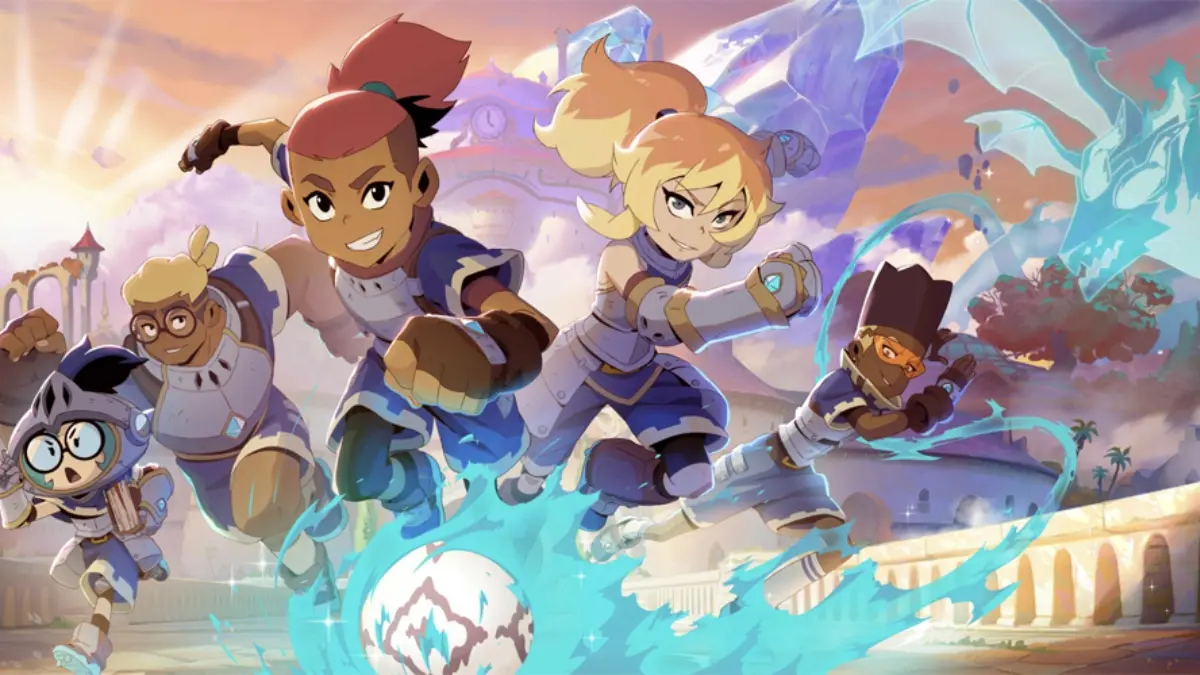

Disney’s newest animated series has arrived with all the urgency of a penalty shootout. ‘Dragon Striker’ dropped all 11 of its first-season episodes on Disney XD on June 9, 2026, with the full run becoming available on Disney+ and Hulu the very next day. Co-created by Sylvain Dos Santos and Charles Lefebvre, the show wastes no time planting its flag as something genuinely different in the animated landscape.
Set in the world of Asteria, ‘Dragon Striker’ centers on a high-stakes magical sport called Gorotama, a five-a-side, soccer-like game enhanced with fantastical powers. The story follows Key, a 12-year-old farm boy who dreams of playing Gorotama at the elite school Kal Asterock, despite initially lacking magical abilities. What unfolds across eleven episodes is a layered blend of underdog spirit, volatile power, and a mythology that grows darker with every match.
Key’s Journey Through Kal Asterock
Key joins goalkeeper Ssyelle on a scrappy new team to challenge the school champions while struggling with the raging dragon inside him and uncovering dark secrets of the past and an ancient evil. That tension between raw power and control is the emotional engine of the entire season.
The pilot establishes the series as a high-octane blend of tactical sports drama and fantasy-infused shonen action, moving past the standard “underdog discovery” trope to reveal a deeper conspiracy regarding the nature of the “Striker” ability that drives the sport’s competitive landscape. Key is not simply a gifted newcomer — he is carrying something far more dangerous.
Key is given an ultimatum at a key point in the season: master his destructive tama or be expelled from Kal Asterock. This pressure cooker of academic and athletic stakes is what pushes the character’s arc toward its breaking point before the finale.
Along the way, the team’s unity comes into serious jeopardy in the run-up to their first official game against The Shadows, and Key struggles to control his tama when the Shadows accuse the Knights of stealing Pregrina’s diadem. These early tournament conflicts establish the political landscape of Kal Asterock as one where trust is a liability.
The Tama Magic System Explained
Not everyone in Asteria has a Tama, with only around 15 to 20 percent of the population developing one, and each Tama is unique, shaped by the personality and dreams of its user. This scarcity makes the academy feel genuinely elite rather than merely decorative.
Dos Santos compared the Tama philosophy directly to One Piece’s Devil Fruits, noting that a Tama can seem completely ridiculous at first, but with creativity and control it becomes unstoppable, with the limit being the user’s imagination.
That design philosophy pays off best with Milo, whose jelly Tama appears weak until his confidence and friendships transform it into one of the school’s most formidable abilities.
The creators noted that everything inside Kal Asterock is important, with significant time spent creating all the props, tapestries, and visual details, including elements fans may only catch if they pause the episode. The world is built with the patience of a franchise that expects to be revisited.
What Really Happened in the Season Finale
The absolute drop of all eleven episodes on June 9, 2026, across Disney XD, followed immediately by a global streaming release on Disney+ and Hulu, completely rewrote initial industry projections for the series. Episode 11, titled “Revelations,” functions as far more than a tournament sendoff.
The finale reveals that the school’s founding champions did not actually banish the realm’s primordial evil — instead, they anchored the academy directly on top of it, channeling its dormant, volatile dark matter to fuel the students’ magical athletic enhancements. That revelation recontextualizes every match, every Tama surge, and every moment of power the Knights have experienced all season.
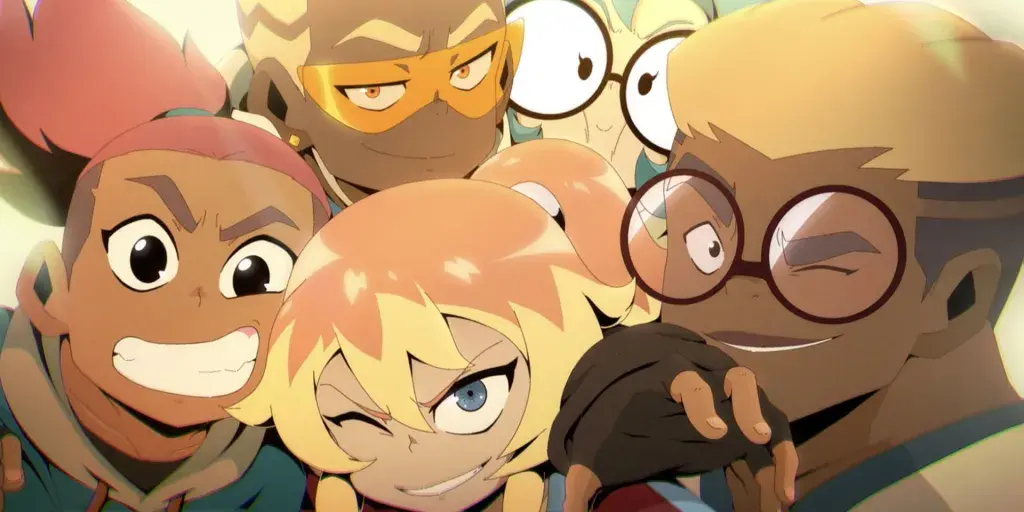
In the finale, Key is finally able to display his new signature move in a heated clash against The Bards, resolving his long arc of Tama mastery while simultaneously opening a far more dangerous chapter for the world beyond the school walls.
The final shot of the season reveals that Ssyelle’s family legacy is directly intertwined with the original gatekeepers who sealed the entity, positioning her as a vital target for the rogue faction seeking to break the seal. It is a closing image that reframes her entire role in the season with a single piece of information.
The Anime and Gaming DNA Behind the Show
‘Dragon Striker’ landed on Disney+ just days before the 2026 FIFA World Cup kicks off across the United States, Canada, and Mexico, and while the timing may have been unintentional, it could not have worked out better. The cultural timing gives the series a real-world context that amplifies its sports energy.
The Captain Tsubasa and Inazuma Eleven references are immediately apparent the moment Gorotama is shown in action, but the Monster Hunter and Final Fantasy influences push ‘Dragon Striker’ beyond the sports show category entirely, with Kal Asterock feeling as though it could exist inside an RPG.
The production features a Japanese-French pipeline, with several crew members who previously worked on celebrated anime including ‘Chainsaw Man’, ‘BLEACH’, and BNA, with their influence evident in the show’s dynamic action and animation style. The series score was recorded in Japan with an 80-piece orchestra, which gives even the smaller tournament moments a cinematic weight.
What Season 2 Could Look Like
Co-creator Sylvain Dos Santos confirmed that the show is not designed to be standalone, with the team thinking in terms of five seasons while acknowledging they could do considerably more if the audience responds to it, noting that the universe is consistent and has a great deal of story left to tell.
The series blends European fantasy with Japanese animation influences and follows a decade-long path of development behind it, meaning the lore underpinning any future season is already mapped far beyond what viewers have seen on screen.
The aesthetic success of ‘Dragon Striker’s’ finale highlights a highly effective international production methodology, with creators Sylvain Dos Santos and Charles Lefebvre deliberately bridging Western casting choices with Eastern visual frameworks. The combination of Evanna Lynch voicing Ameline alongside the show’s French-Japanese animation pipeline creates something with genuinely broad global appeal.
With Ssyelle’s bloodline now positioned as a target, Key’s Dragon power still only partially understood, and Kal Asterock itself revealed as a prison built on top of something that should have stayed buried, the real question heading into any future season is not whether the Knights can win another tournament — it is whether the ground beneath the school will even hold. If you have just finished the finale and you are still processing what Ssyelle’s family connection actually means for where ‘Dragon Striker’ goes next, share your theory in the comments.