‘X-Men ’97’ Season 2 Episodes 1 to 3 Recap and Ending Explained, How Ancient Egypt, X-Force, and Apocalypse Collide


Marvel Animation’s celebrated revival returned this week, carrying an enormous amount of pressure on its shoulders. Season 1 became one of Disney+’s most acclaimed offerings, and its finale left the X-Men scattered across time after a devastating attack, so the follow-up needed to prove it could pick up those pieces without missing a beat.
That task became even trickier once fans learned the show’s original showrunner had exited the project ahead of Season 2, with head writer Matthew Chauncey stepping in to guide the story forward. Expectations were understandably mixed heading into the three-episode premiere, especially given how beloved the first season’s political undertones and character work had become.
Based on those first three episodes, the show largely rises to the occasion, resolving most of its time travel setup while still delivering the mutant soap opera fans expect. The premiere opens with “Days of Past Future,” in which Forge and Bishop launch an ambitious plan to rescue the X-Men after they were flung across different points in history during the previous season’s finale.
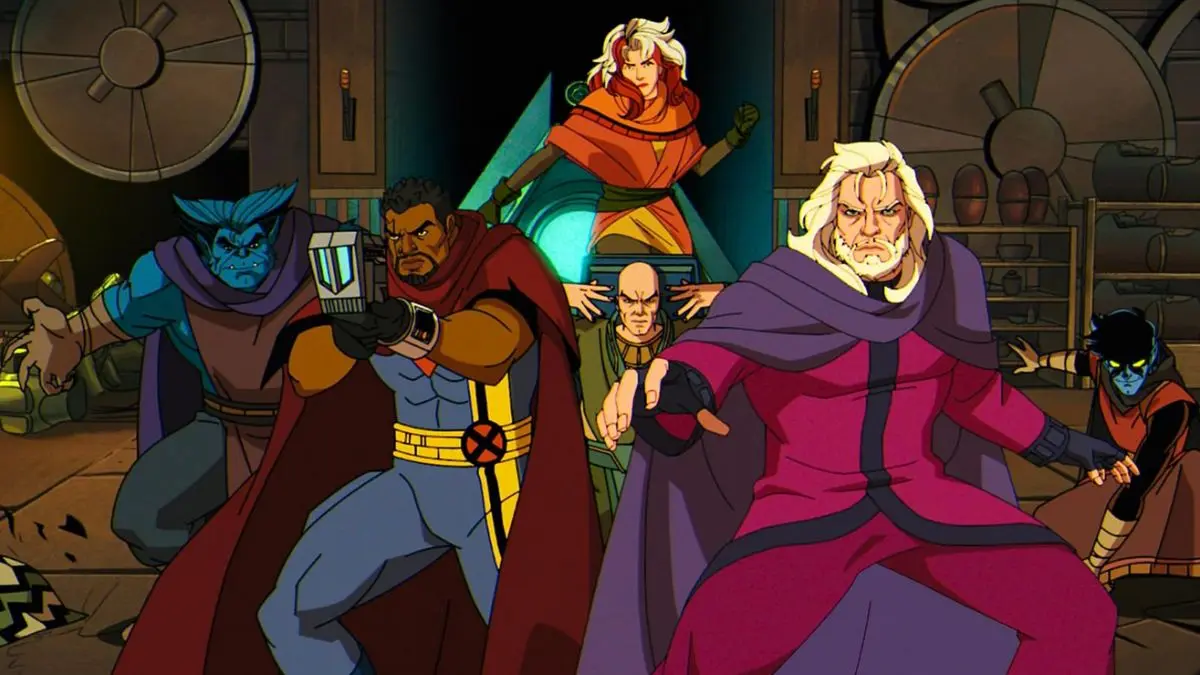
One faction of the team, made up of Professor Xavier, Magneto, Rogue, Beast, and Nightcrawler, lands in Ancient Egypt around the year 3,000 B.C, where they cross paths with a man named En Sabah Nur. That name will be instantly familiar to longtime fans, since En Sabah Nur is the figure destined to become the villain Apocalypse, and the show is clearly setting up its own take on the classic Rise of Apocalypse comic storyline.
By the time “Rise of Apocalypse Part 1” closes out the premiere, that rescue mission has been complicated in a major way. Xavier and Magneto attempt to stop En Sabah Nur from ever transforming into the tyrant he is fated to become, only for their efforts to be upended by the arrival of Rama-Tut, a Pharaoh with deep ties to the time traveling villain Kang the Conqueror in the comics.
Back in the present timeline, the second episode titled “A Force to Be Reckoned With” introduces two very different responses to the X-Men’s disappearance. Cable assembles a scrappy new team called X-Force, recruiting Sunspot and Jubilee to join forces with Psylocke and Archangel, while Cyclops’ brother Havok leads a more government-sanctioned unit known as X-Factor.
The friction between these two groups essentially mirrors the philosophical divide that has always existed between Xavier and Magneto, only now playing out among a younger generation of mutants forced to fill the void left behind. It is a clever way to keep the show’s signature ideological tension alive even while its core cast remains scattered elsewhere in time.

Elsewhere, Cyclops and Jean Grey find themselves thrown into a distant, dystopian future where they encounter a mysterious robed figure and a society built entirely around Apocalypse’s ideology. Their story thread has been noted as carrying some of the premiere’s most emotionally resonant material, adding a deeply personal stake to a season otherwise focused on sweeping historical mythology.
Meanwhile, the whereabouts of Wolverine, Storm, and Morph remain deliberately unaddressed across these first three episodes, a mystery the season 1 finale left dangling and one Season 2 has chosen not to resolve immediately. That patience suggests the show intends to keep audiences guessing well into the season rather than tying up every loose end in the premiere alone.
Unlike Season 1’s ten-episode run, this new season consists of nine episodes spread across seven weeks, wrapping up with a finale on August 12. Following the three-episode premiere, the story continues directly into “Rise of Apocalypse Part II” on July 8, promising to resolve the fractured alliance between the X-Men and En Sabah Nur as Rama-Tut’s ambitions escalate further.
With Apocalypse’s origin story now actively unfolding in the past, new factions forming in the present, and Cyclops and Jean navigating a nightmarish future, the season has set an ambitious table across its opening hours. Whether every thread pays off remains to be seen, but the premiere has clearly reestablished the show’s willingness to swing big.
What did you think of how Season 2 kicked off, and which of the three timelines has you most invested going forward? Share your theories in the comments.