‘Shipwrecked: Nightmare at Sea’ Recap and Ending Explained: How Netflix’s Documentary Reopens the Costa Concordia Tragedy


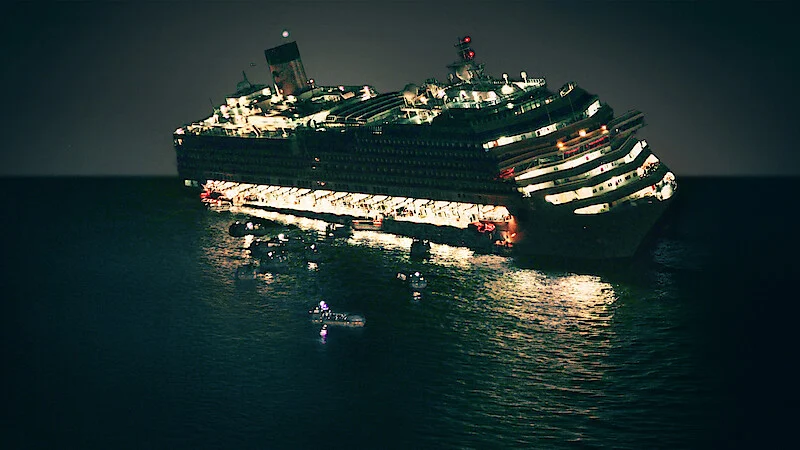
Netflix has once again turned its lens toward real life catastrophe, and this time it is diving straight into one of the most infamous maritime disasters of the modern era. ‘Shipwrecked: Nightmare at Sea’ revisits the sinking of the Costa Concordia, the luxury cruise liner that capsized off the Italian coast in January 2012, and the documentary is already stirring up conversation among true crime and disaster doc fans alike.
Made by the same team behind the ‘Trainwreck’ documentary series, the film promises never before seen footage paired with raw survivor testimony, and it premiered on Netflix on July 10 according to reporting from Unilad, which described the film as an immersive account of the collision, evacuation, and aftermath. For anyone who lived through the initial headlines back in 2012 or is discovering this story for the first time, here is everything worth knowing about the recap and the ending.
What Happened to the Costa Concordia
The disaster unfolded on the night of January 13, 2012, when the Costa Concordia left the port of Civitavecchia carrying more than 4,000 people on what was meant to be a routine week long Mediterranean cruise. The ship was operated by the Italian cruise line Costa Cruises and its American parent company Carnival Corporation, and one of its most popular routes had it sailing from Lazio to Savona over the course of seven days.
As the ship made its way along the coast, passengers dining in the restaurant near the back of the vessel heard a loud noise and felt a jarring impact that barely registered on the front decks. Captain Francesco Schettino had ordered the ship steered close to the island of Giglio for what was supposed to be a routine salute maneuver, one the crew had performed many times before. Instead, the ship struck a well charted underwater rock formation known locally as Le Scole.
Schettino was later accused of traveling too fast and navigating by sight instead of relying on maps and radar before the ship ran aground. He also reportedly turned the ship to starboard instead of port once he spotted the rock, a decision that caused the stern to swing around and slam into the obstruction, tearing a massive gash below the waterline. The ship began taking on water almost immediately and started listing hard to one side.
Onboard that night were roughly 300 passengers, and by the time the chaos ended, 32 people had lost their lives. The scale of the tragedy, combined with the confusion during the response, turned the sinking into one of the most scrutinized maritime disasters in recent memory.
Survivor Accounts Bring the Chaos to Life
What sets ‘Shipwrecked: Nightmare at Sea’ apart from a typical news recap is its heavy reliance on the people who actually lived through the sinking. One survivor, Nate Lukes, who was aboard with his wife and four daughters, described a scene of pure panic during the evacuation. He recalled the atmosphere as a total melee, and compared what he witnessed to scenes from the film ‘Titanic,’ saying people were climbing over lifeboats and pushing past women and children to get to safety.
Lukes also described holding his daughters close while the crowd surged around them, worried they could be trampled in the crush to reach the lifeboats. These kinds of firsthand recollections are what give the documentary its emotional weight, according to reviewers who have already watched it.
One review from Midgard Times noted that the pacing never rushes, allowing viewers to sit with the gravity of what unfolded rather than racing through the timeline. The same review cautioned that anyone sensitive to accident related content might find the documentary difficult to sit through, given how vivid and immediate the survivor testimony feels even more than a decade later.
Audience reactions on Rotten Tomatoes have been similarly intense, with some viewers calling the film more unsettling than typical horror fare simply because of how real the dread feels on screen.
The Ending Explained and What Happened to Captain Schettino
The documentary does not just end with the ship sinking, it also traces the long legal aftermath that followed Schettino for years. In the immediate aftermath, Schettino ordered crew members to tell the Coast Guard that the ship had simply experienced a blackout and did not need assistance, a decision that violated Italian maritime law and delayed the arrival of help.
As the ship continued listing, Schettino dropped anchor in an attempt to stop further tipping, but too much anchor line was released and the anchors failed to catch. He later claimed he fell into a lifeboat, and audio surfaced of him pleading with a Coast Guard officer not to send him back to the ship to help with the search for survivors.
Following a lengthy trial, a court in Grosseto sentenced Schettino to 16 years in prison after finding him guilty of manslaughter and abandoning ship. Of that sentence, 10 years were attributed to multiple counts of manslaughter, five years to causing the wreck, and one year to abandoning the ship. Prosecutors had originally pushed for a far harsher 26 year sentence.
Schettino exhausted his appeals in 2017 and was ordered to report to prison, where he has been serving his sentence at Rebibbia Prison in Rome. His attempts to secure early release have repeatedly been withdrawn or denied, and he is expected to remain in custody until his sentence concludes around 2032.
Where the Story Stands Today
Beyond Schettino’s legal saga, the documentary also touches on how the ‘Costa Concordia’ disaster reshaped conversations around cruise safety and crew accountability. The wreck itself remained off the coast of Giglio until it was refloated and towed away in 2013, with the final scrapping process wrapping up in July 2017, just months after Schettino began serving his sentence.
The overall salvage operation ended up costing an estimated 1.2 billion dollars, making it more expensive than the ship’s original construction and one of the priciest salvage efforts in maritime history. That staggering figure alone speaks to just how catastrophic the incident truly was, both in human and financial terms.
For survivors like Vanessa Brolli, the emotional toll has never fully faded, even as the legal proceedings dragged on for over a decade. She has said that regardless of what happens with any future release requests, she believes Schettino will carry the weight of the tragedy with him for the rest of his life.
With ‘Shipwrecked: Nightmare at Sea’ now streaming and reigniting interest in a disaster many thought was long settled, the documentary makes clear that the wounds from that January night in 2012 are still very much open for the people who lived it. What do you think really deserves more blame here, Schettino’s individual choices that night or the systemic failures at Costa Cruises that put him in that position to begin with?