Maggie Gyllenhaal Tried Using AI to Turn Dakota Johnson Into Marilyn Monroe, and It Failed Completely


Artificial intelligence has become an increasingly divisive topic across Hollywood, with filmmakers split between embracing its potential and rejecting it entirely on both creative and ethical grounds. Few recent stories capture that tension quite as directly as one director’s candid admission about her own brief experiment with the technology.
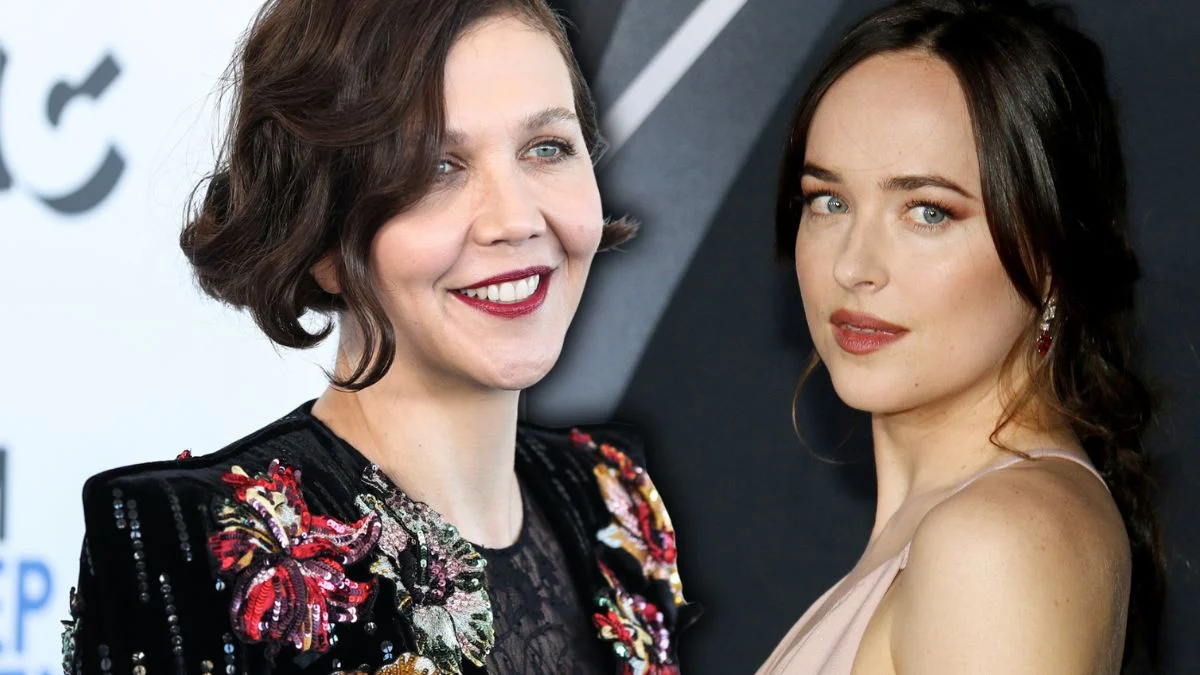
Maggie Gyllenhaal, serving as jury president at this year’s Venice Film Festival, is also premiering her own project on the Lido: “Flesh Impact,” a 17-minute short film exploring the legacy of Marilyn Monroe on what would have been the icon’s 100th birthday. Starring Dakota Johnson as a younger version of Monroe and Ellen Burstyn as an imagined older version, the project was created with the blessing of Monroe’s estate holders as part of centennial celebrations honoring the actress.
Behind that finished film, though, sits a creative detour Gyllenhaal has now openly discussed abandoning entirely. Speaking at a symposium alongside composer Alexandre Desplat, filmmakers Lee Daniels and Shannon Murphy, producer Lorenzo Mieli and artist Marc Quinn, Gyllenhaal revealed she experimented with AI early in production before ultimately scrapping the technology altogether.
Gyllenhaal explained that the project’s commissioners initially asked her to incorporate AI into the filmmaking process. “The people who commissioned this project from me asked me to use AI. And I thought, I mean, they weren’t using OpenAI, they were using licensable AI, training it off of Marilyn Monroe films that we had licensed,” Gyllenhaal said during the symposium, presented by Finch & Partners and CAA.
According to Gyllenhaal, the technical process involved training the AI on licensed Monroe footage before overlaying the resulting model onto Johnson’s face during filming. Despite putting genuine effort into making the approach work, she ultimately concluded it undermined exactly the qualities that made Johnson’s performance compelling in the first place. “We worked hard at it, and in the end, I threw it away because what was coming through Dakota playing Marilyn Monroe was so much more moving, human, alive,” she explained.
Gyllenhaal didn’t mince words about the final verdict on the AI-generated version. “It fundamentally did not work. All the reasons we decided to make this project to begin with were, were, were, were killed off in the AI version,” she said, describing the technology as stripping away the emotional authenticity central to the film’s entire purpose.
Beyond the specific artistic shortcomings she encountered, Gyllenhaal also raised concerns about AI’s broader impact, specifically pointing to what she described as the “huge environmental issues” the technology raises. That criticism reflects a growing conversation within the film industry about the energy and resource costs associated with training and running AI models, an issue that’s increasingly factored into creative decision-making beyond just questions of artistic merit.
Her comments arrive at a moment when AI’s role in filmmaking remains a deeply contested topic across Hollywood, with some productions actively experimenting with the technology while others, including major guilds and unions, have pushed back against its unchecked use. Gyllenhaal’s decision to scrap the AI version entirely, despite already having invested significant effort into making it work, offers a notable real-world example of a filmmaker prioritizing performance authenticity over technological novelty.
With the AI experiment ultimately discarded, “Flesh Impact” instead relies entirely on Johnson and Burstyn’s live-action performances to bring their respective interpretations of Monroe to life. The film imagines what Monroe’s career and legacy might have looked like had she lived decades longer, framing itself as what press materials describe as a love letter to one of cinema’s most enduring icons.
As “Flesh Impact” continues its run at the Venice Film Festival, Gyllenhaal’s candid account of testing and rejecting AI offers a rare, detailed look at how filmmakers are actively wrestling with the technology’s creative limitations in real time
Do you agree with Maggie Gyllenhaal’s decision to scrap AI from her Marilyn Monroe project?
Have something to add? Let us know in the comments!