Why Superhero Team-Up Scenes Are Difficult to Stage


Superhero team-ups might seem simple to the viewer who sees a movie because a couple of his old characters are present at once, have an interesting conversation, fight one enemy, and use their various capacities to achieve an impressive climax. In reality, they are among the most challenging events to be captured on film, as for each character, there might be a different style of fight, access to power, clothes, attitude to the conflict, visual presence, and narrative position.
The director should ensure that the viewer understands everything that happens at once, comprehends the motivations of heroes, and does not get lost in the complex choreography. It becomes apparent that the successful superhero team-up requires more than the presence of multiple popular characters in one frame, as all the relevant aspects of the movie production must be considered.
Every Character Needs a Clear Purpose
One of the first challenges is determining what each hero is actually doing within the scene because the audience will need to have an interest in every major character, which means that one hero may be protecting civilians while another is fighting the villain and a third is trying to destroy a weapon or stop an alternate big threat from coming into play.
Giving each character a goal creates an organized scene where the audience sees more than characters showing off their abilities and cool powers; they can watch multiple conflicts and how a group works together to stop a threat.
This will also prevent incredibly powerful heroes or those with the ability to take out threats instantly (or without help) from making the other characters feel useless and replaceable, thus weakening the idea of teamwork and the necessity of a group working together to accomplish feats greater than any one person could achieve.
The best way to allow for an interesting team-up is to think of a number of different conflicts for characters to face.
Power Levels Need to Feel Balanced
In superhero movies, characters differ significantly, so it is apparent that there is a problem of presentation. One superhero movie character is strong and almost invulnerable, while the other may be smart and resourceful or faster or more skillful in the close fight.
The films’ directors should understand these differences and provide a worthy fight for both heroes so that it does not seem that one is way better than the others. A strong superhero can fight the main villain, taking the most effort, while the other uses his skills to fight robots, save hostages, or do something else that seems difficult enough to be worthy of a superhero.
This would give the less powerful character a sense of achievement without implying that every character is the same. Such an approach would make it easier to understand how heroes manage to perform extraordinary feats and would inspire more loyalty and devotion in the viewer, as they would see that the combined efforts of the heroes are needed to achieve the desired result.
Geography Becomes Much More Complicated
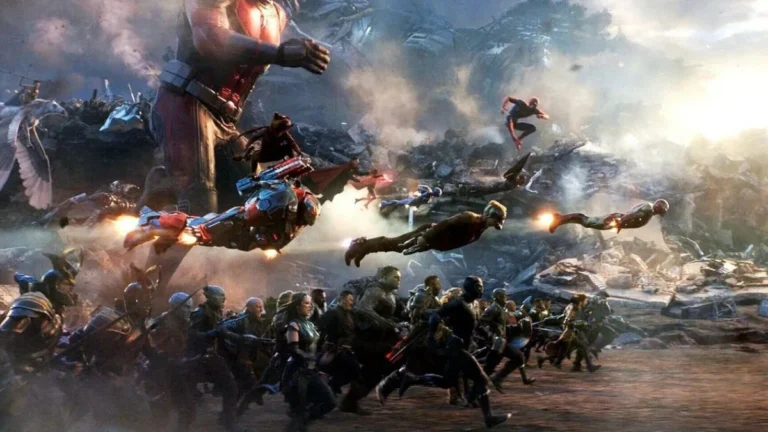
Keeping action clear is challenging even when there are only two fighters, adding six or eight superheroes to the same place makes it much harder. The audience must follow what each hero is doing in the fight without getting lost in the chaos.
It can be solved by using wide shots to show the entire battleground, but the director cannot keep using them due to the need to focus on characters’ emotions and show their personal moments in the fight.
The trick is to divide the location into sections and show the characters in their part facing enemies in another one while keeping them in the larger area. If you are planning scenes involving multiple heroes and large-scale action, location scouting from World Production Service can help discover locations that match the visual and practical requirements of the production.
This way, one hero can engage nearby, while two others take on the adversary in the street, and one more prepares to leap from the roof. Such framing keeps the audience from getting lost and helps it track the characters’ movements. Without proper division of the space, even the most well-staged team-up can get lost in the confusion.
Each Hero Needs a Distinct Fighting Style
Action is much more engaging when the audience can perceive the difference in how the various heroes perform their movements, fights, and reactions to incoming attacks. A character that has immense power should not move and fight like a professional martial artist, and a tech-powered superhero will have a different style than one whose main ability is to run at incredible speeds.
Choreographers, therefore, have to consider the dissimilarities in their characters’ movements and plan their motions around those differences to create a coherent performance. This process becomes more complex when different styles have to merge in one fight
As such, a speedy character will have to loop around brawlers who have lesser agility, and a character capable of flight will enter the fight vertically while others stay on the ground. These spatial differences should be easily apparent but still form a coherent whole that showcases a fight and not several smaller tussles happening in the same location.
When executed correctly, such planning allows the differences to highlight the characters, making it easier for the audience to tell them apart, even before the camera focuses on a particular character.
The Camera Cannot Follow Everyone at Once
Another major challenge is deciding where the audience should look when several heroes are performing important actions at the same time. Trying to show everything equally can create visual confusion, so strong team-up scenes usually establish a clear hierarchy of attention.
The most important action receives the strongest framing, while secondary events may remain visible in the background or appear in separate shots. This allows the audience to understand what matters without feeling as though they are constantly missing something important elsewhere in the scene.
Camera movement can also transfer attention from one character to another in a natural way. A moving shot might begin by following one hero, pass through the environment, and then reveal another character continuing the action, which helps create the impression that everyone occupies the same continuous space.
These transitions are difficult to design because the timing of stunt work, visual effects, camera movement, and performance all need to align precisely.
Visual Effects Have to Connect Different Powers
Team-up episodes often involve multiple uses of effects within the same field of view, making consistency paramount. One character is flying while another is summoning energy blasts which are digitally rendered; a third is wrestling with computer-animated imps, causing structures of any kind to fold and collapse.
The lighting must be consistent so that the energy effects properly illuminate the actors and their costumes, the smoke, the walls, and other reflective surfaces, rather than being an afterthought. Visual effects artists need to make sure that the figures have a certain scale and weight, and that all the characters’ movements are consistent with a similar force.
A single hero creating an explosion will cause other objects in the room to react accordingly. Every additional hero makes the interactions more complex, as each one must be consistent with the whole rather than simply the effect it is supposed to represent.
Costumes Can Affect Movement More Than Expected
Superhero costumes are intended to help to create characters through their appearance, but they also pose several challenges when it comes to real action. Various costume accessories such as armor, helmets, masks, capes, boots, stiff fabric, or intricate costume construction can limit the action that the actor or model can perform.
A costume that looks great when standing might greatly restrict movement when it comes to a complex stunt. Moreover, when there are multiple superheroes, the limitations for each costume may be determined individually, which can interfere with the action choreography.
Some movements may have to be modified or replaced for the sake of stunt persons or visual effects. This is why the costume department has to work together with the VFX, stunt, and camera departments to ensure that the costume does not restrict actors’ movement too severely.
A seemingly minor detail such as a subtle change in the material can make some actions impossible on set, while a minor modification to the costume construction can allow the actor to perform a great stunt that would otherwise be impossible.
Dialogue Becomes Harder With Larger Teams
Team-up scenarios are not always combats, as pitting all the main characters against each other can leave the conversation in its own melodrama. Each hero should retain enough of his or her personality to make the conversation interesting, but not so much that it becomes a waiting game for both participants to speak.
Writers need to find ways to keep these conversations from becoming stagnant, be it through fighting, teasing, or bickering, where at least one of them does something unexpected or out of character.
That does not mean that there should not be an agenda to these talks, but it is easy to turn a conversation between heroes into a conversation about the heroes. Giving each character equal time to do nothing but declare their stance on the issue can make the dialogue sound artificial.
Ensemble scenes need to let personalities clash to let each character’s voice come through, which is more interesting than dividing speaking time evenly between everyone.
Screen Time Needs to Feel Balanced
Audiences often enter team-up movies with favorite characters, which creates pressure on filmmakers to give everyone enough attention while still maintaining a clear central story. Perfect equality is hard to achieve in any media, as some characters are more interesting to write about than others, but they all should have their moments in the spotlight.
Even if they are only shown for a brief moment, characters that are not portrayed often enough should have a scene that demonstrates their importance to the plot or just their unique skills.
A great action scene in which one of the heroes manages to use their head and outwit the villain and the whole team is better than several minutes of bickering between the heroes that has nothing to do with the upcoming battle or show any unique traits, which gives the audience an idea of what to expect from each character and helps them feel more involved. It is not the quantity but the quality.
Sound Design Helps Separate the Heroes
Sound becomes particularly important when several characters are performing actions simultaneously because the audience needs additional cues to understand what is happening. Distinctive sounds connected to weapons, powers, technology, or movement styles can make individual heroes easier to recognize even when the image becomes complicated.
A character’s arrival may be heard before they enter the frame, while the sound of a particular power can tell the audience what is happening outside the current camera angle. These audio details help organize the scene without requiring additional visual explanation.
Music can perform a similar function by incorporating themes associated with individual characters before bringing them together into a larger musical idea. When used carefully, this makes the sequence feel unified while still preserving the identity of each hero.
The soundscape therefore becomes another way of helping the audience separate several characters within one complex action scene.
Editing Has to Maintain Momentum Without Losing Clarity
Editing large team-up sequences requires a careful balance because cutting too slowly can reduce energy, while cutting too quickly can make the scene difficult to follow. Consider that all editors must perform transitions between characters, making sure that geography, motivation, and a sense of progression are maintained.
The hero should not be able to move from one part of the battle to an entirely different part without the audience knowing how he got there. In other words, transitions should be made within the same scene, and one character’s actions should lead to the next character’s actions.
During the final visual development of a superhero project, World Production Service can provide color grading assistance to ensure the film’s characters, locations, and action sequences maintain a consistent cinematic style.
For instance, one of them could hurl something that the other is going to catch or use. In the next shot, they can then see the second character using the item that the first character threw. Such transitions are usually crucial to making a film involving multiple heroes, because they create a sense of connection and collaboration between the characters. The characters have to rely on each other, which is not always easy to see, and transitions can make that reliance obvious. They can be among the most memorable parts of the entire film.
Teamwork Needs to Be Visible
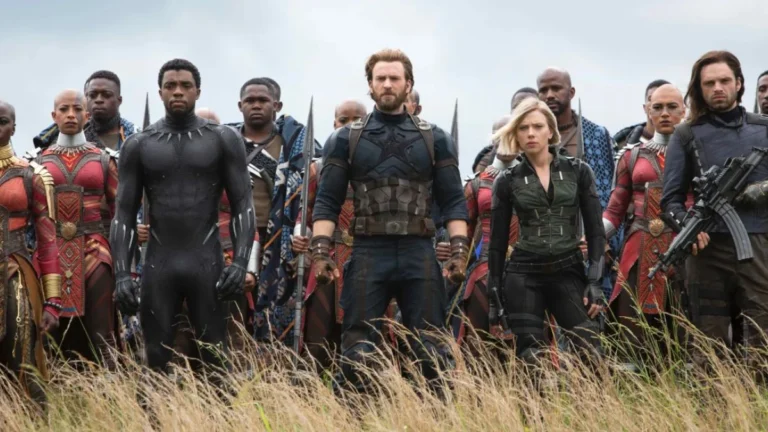
A superhero team-up scene should eventually feel different from several individual action scenes edited together. The audience needs to see the heroes actually helping one another, combining abilities, creating opportunities for teammates, and adapting to each other’s strengths. This gives the sequence a sense of progression.
The heroes may struggle to coordinate at first, but as the battle continues, their movements become more connected and efficient. That development can reflect the larger story of the team learning to trust one another.
Action then becomes a form of character development rather than simply spectacle. The audience sees the relationship between the heroes changing through the way they fight together.
When staging achieves this, cooperation becomes one of the most satisfying parts of the sequence.
Emotional Focus Still Matters
With so many characters, effects, and moving parts competing for attention, team-up scenes can easily become emotionally distant. The audience needs a viewpoint through which they can relate the show to a character who is genuinely interested in it.
Usually, there is one or two heroes on whose emotions the audience can focus on, despite there being more characters involved. A close-up of the character’s face showing the fear, determination, indecisiveness, or tiredness, for example, could make the battle more human and relatable. Otherwise, it could be just an exciting fight that has nothing to do with the characters.
Therefore, the best ensemble scenes switch between massive, spectacular confrontations and more personal touches to keep it from becoming all spectacle.
Location Design Has to Support Different Abilities
The environment itself must be able to accommodate heroes with greatly varying abilities and methods of movement. An empty or flat location might make choreography easier, but will also lead to less variety and opportunities for characters to use their powers in interesting ways.
More varied environments offer variety in terms of levels, obstacles, rooftops, interiors, vehicles, and other elements that enable different heroes to have different approaches and use their powers in unique ways. One character might fly around obstacles while another hero would have to ground tackle a vehicle or person in the way.
Production designers and location scouts for film, then, should consider the potential for the environment to showcase the powers of a variety of different characters and enable differing approaches to the action. This allows for more varied action while also helping to differentiate one participant from another.
The location itself becomes an element of the organization of the conflict.
The Best Team-Up Scenes Hide Their Complexity
Perhaps the most challenging aspect of staging a superhero team is making the entire battle seem spontaneous, even if every movement has been meticulously planned. The characters have to seem like they are improvising and reacting to a volatile environment, while the people behind it, the actors, stuntmen, cameramen, visual effects, editors, and sound designers, have to perform at exactly the right time.
If the planning is successful, the audience does not notice the hard work and the complexity in the operation.
They see the smiling heroes who fight the villain and manage to create a great battle only because they are united as a team. This is the primary wish of every great director when they get a chance to make a film with a group of superheroes.
It does not matter which particular heroes fight together – if the action looks natural, with carefully designed elements that complement each other, then the outcome is positive.
The characters need to have a reason to stand together, to occupy the same space, to use their powers in a synchronized manner. As long as this is achieved, the audience will not care about individual actors but instead about the heroes as a whole.