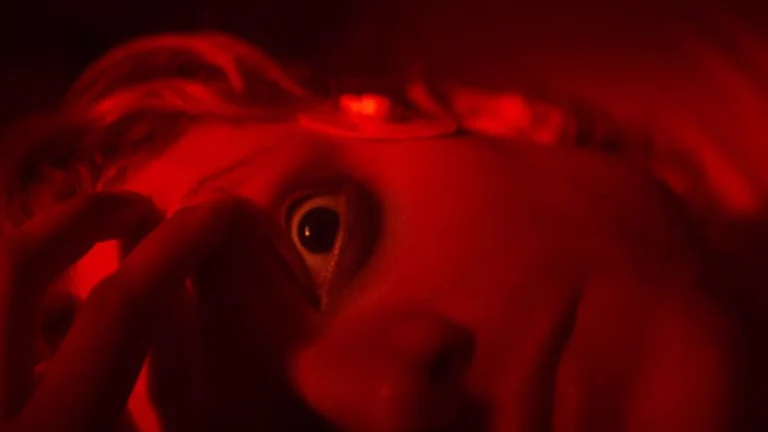
‘Brimstone’ Ending Explained: The Brutal Ending Finally Makes Sense and It’s Darker Than You Remember


Martin Koolhoven’s ‘Brimstone’ is one of those Westerns that lingers long after the credits roll, and years later, fans are still trying to untangle exactly what happened by the time the smoke clears. The film tells the story of a mute woman named Liz who is stalked across the American frontier by a sinister Reverend, a man determined to punish her for a past she thought she had escaped.
If you just finished watching and felt like you needed a map to follow the timeline, you are not alone. The movie’s fractured structure is part of what makes its finale hit so hard, and once you piece it together chronologically, the ending becomes an entirely different kind of gut punch.
‘Brimstone’ Ending Explained Through Its Reverse Timeline
‘Brimstone’ is broken into four chapters called Revelation, Exodus, Genesis, and Retribution, and together they form a reverse journey through Liz’s life, starting with her present struggles and working backward to the origins of her trauma. This structure is not just a stylistic flourish, it is the entire key to understanding why the ending feels the way it does.
Each chapter peels back another layer of Liz’s story, slowly transforming what looks like a straightforward survival thriller into something closer to a horror film about generational abuse. By the time the pieces click into place, viewers realize the Reverend was never a random villain who wandered into her life, he was the source of it from the very beginning.
The final chapter reveals that Joanna, later known as Liz, lived with her mother Anna and her father, who turns out to be the Reverend himself, a man who ran his household through strict and cruel religious discipline. That reveal recontextualizes every earlier scene of violence as something rooted in a much older, much darker cycle.
Who Is The Reverend And Why He Terrorizes Liz
The Reverend is Elizabeth’s own father, and the reason she fled in the first place is that he forced her into marriage against her will after her mother died. That single fact reframes the entire film, since every act of pursuit and punishment he inflicts on her throughout the story is less about religious zealotry alone and more about a man asserting control over a daughter who dared to escape him.
Guy Pearce plays the Reverend as an incestuous figure of dread, and what makes the performance so chilling is that he rarely erupts, letting his quiet menace do the work instead of theatrical outbursts. That restraint is precisely what makes the character feel inescapable, since his cruelty never reads as impulsive, it reads as doctrine.
By the film’s climax, he openly declares his intent to top his previous crimes by killing Elizabeth and assaulting his own granddaughter, which is the moment that finally pushes the story into its most horrifying territory. It is a threat that ties the generational trauma together, showing that his abuse was never confined to one victim or one era of Liz’s life.
Liz’s Fate and the Fire That Ends His Reign
The climax finally arrives when the Reverend’s violence spirals completely out of control. He lashes out at Sam, and in the chaos of his sadistic frenzy, Joanna manages to break free, grabbing a gun, shooting him, and setting him ablaze to end his reign of terror in fire and rage.

That fiery confrontation functions as the story’s closest thing to catharsis, even if it arrives only after years of suffering. It is worth noting that earlier in the story, Liz herself tried to end his life directly. She once snuck off at night intending to kill the Reverend, only to find her daughter’s doll placed in his bed instead, a chilling warning that he already knew what she was planning.
The tragedy compounds further in the middle chapters, since Liz’s path to safety is never clean. Elizabeth, the woman who once protected Joanna and taught her sign language, is ultimately murdered by the Reverend, with Joanna slashing his throat in retaliation before fleeing and cutting off her own tongue to take Elizabeth’s place. That single act of mutilation explains why the adult Liz communicates only through sign language for the rest of the film.
What the Final Scene Really Means
The closing moments show Liz moving forward with her child, wounded but alive, a symbol of hope emerging from devastation, and her long silence feels transformed by the end, no longer forced but finally chosen. It is a small but meaningful shift, suggesting that even after everything stolen from her, Liz reclaims some form of agency over her own voice.
The film closes with her daughter Sam narrating about the strength of her mother, expressing hope that her mother’s sacrifices would make Sam strong in turn. That narration turns the ending into something generational in the opposite direction of the Reverend’s cruelty, passing resilience forward instead of trauma.
Although ‘Brimstone’ is not based on a specific true story, it draws heavily from the historical realities of the nineteenth century, particularly the oppressive treatment of women under extreme religious and patriarchal systems, using its biblical symbolism to reflect a broader moral struggle between faith and corruption. That grounding is part of why the ending resonates as more than shock value, it plays as commentary on how those systems perpetuate themselves.
Critics have described the film as walking a fine line between horror and voyeurism, gripping audiences while forcing them to avert their eyes, turning cruelty into spectacle without ever fully tipping into pure indecency. That tension is exactly why the finale sparks so much discussion, since Koolhoven refuses to let the audience look away from what Liz endures, yet never lets the violence feel gratuitous for its own sake.
Between the reversed chapter structure, Dakota Fanning’s largely wordless performance, and Guy Pearce’s quietly terrifying Reverend, ‘Brimstone’ ends up being less a traditional Western revenge story and more a slow unearthing of exactly how deep one family’s trauma runs. Now that the timeline is untangled, what part of Liz’s story hit you hardest, the reveal about the Reverend, or the moment she finally takes her freedom back.