‘Bruiser’ Has One of the Most Quietly Devastating Endings on Hulu, and Here’s What It All Really Means

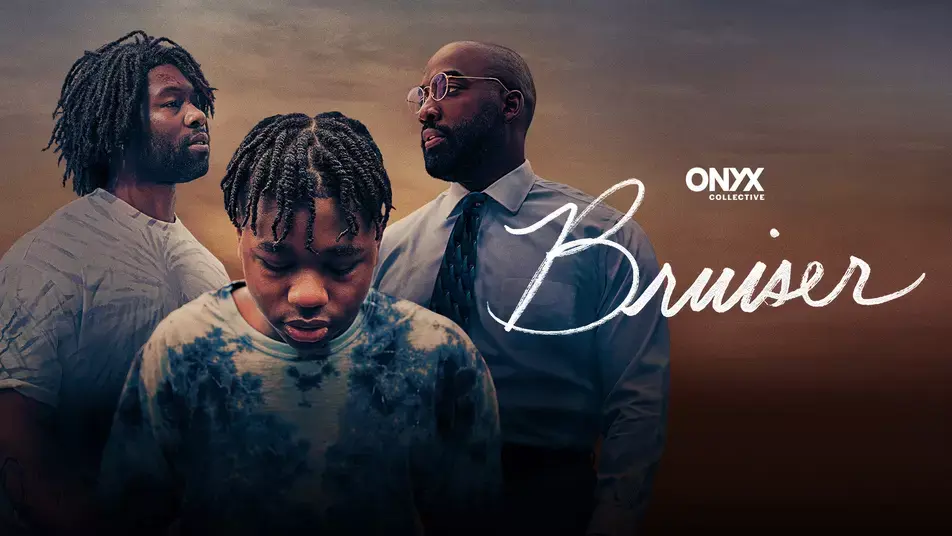

There is a specific kind of film that lands softly but leaves a bruise. Miles Warren’s ‘Bruiser’ is exactly that, a debut feature that sneaks up on you and refuses to let go long after the credits roll. Centered on a young fourteen-year-old boy named Darious and his unconventional relationship with a man named Porter, a man who has always found solutions in physical fights, the film strikes a rare balance of being straightforward yet restrained.
The film premiered at the Toronto International Film Festival in September 2022 before being acquired by Onyx Collective, marking it as the first narrative feature film the brand had ever taken on. It eventually reached a wider audience when it dropped on Hulu, but plenty of viewers were left puzzling over its deliberately open-ended conclusion. Here is everything that final sequence is actually saying.
The Two Father Figures Tearing Darious Apart
The entire architecture of ‘Bruiser’ rests on a single teenager caught between two opposing visions of manhood. Darious is a fourteen-year-old boy who lives with his father Malcolm and mother Monica, and Malcolm urges Darious not to fight or act aggressively, reflecting on his own violent childhood and strained relationship with his own father. One afternoon, after getting beaten up, Darious wanders into the woods and stumbles into someone who will change everything.
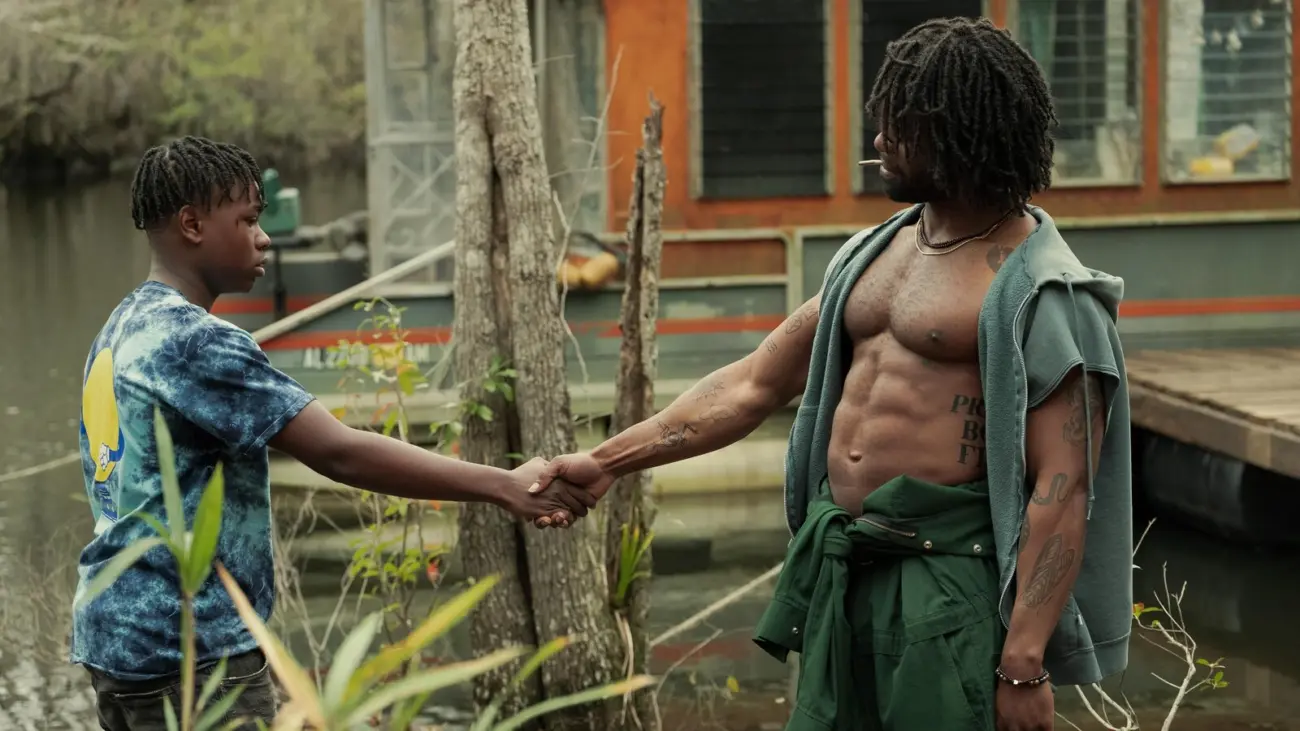
After getting into a fight, Darious runs into the woods and stumbles upon a docked boathouse, where its owner, a stoic and muscular man, silently watches the bloody-lipped teen wash his face with creek water before approaching.
That direct exchange sparks Darious’s curiosity about the mystery man named Porter. What emerges from their growing bond is a film less interested in plot mechanics and far more invested in what men teach boys about surviving the world.
The men represent two sides of the same coin. Both struggle with emotional regulation and self-expression, yet whereas Porter is honest about his challenges, Malcolm clings to respectability as a shield. That dynamic is where ‘Bruiser’ becomes genuinely compelling, because neither man is written as a villain or a hero.
Porter’s True Identity and the Revelation That Changes Everything
The film’s central twist is handled with surprising restraint. It is eventually revealed that Porter is Darious’s biological father who had abandoned him at birth, but is now eager to reconnect. Director Miles Warren wisely refuses to make this moment a dramatic showstopper, treating the reveal as a catalyst for emotional complexity rather than a soap opera pivot.
The film considers the effect of the revelation rather than dwelling on the mere fact of it, and Darious becomes trapped between Porter and Malcolm, who were best friends before their hatred of each other calcified. When Porter goes to Malcolm and Monica to ask to be in Darious’s life, Malcolm refuses to even engage, unable to get past Porter’s mistakes.
In his youth, both men were brutally violent in fights, and this shared history is what drives so much of the buried tension between them. The film is careful to show that Malcolm’s rigidity comes from the same damaged place as Porter’s recklessness, rooted in cycles of violence that were handed down rather than chosen.
The Final Fight Scene and What the Darkness Symbolizes
The ending of ‘Bruiser’ has divided audiences, with some finding it unresolved and others recognizing it as the film’s sharpest move. After sitting down at a diner together, the manager informs Malcolm that Darious is there with Porter, and Malcolm drives down in a rage. By the time he arrives, Porter has already driven off with Darious, throwing away his phone as the boy pleadingly tells him to stop the car.
What follows is the sequence the whole film has been quietly building toward. Malcolm and Porter indulge in a violent physical fight, and the two men often go into the darkness before reappearing in the streetlights and then going back into the darkness again.
That choreography between shadow and light is not accidental. It is the film’s most precise visual argument, suggesting that these men are endlessly cycling between moments of clarity and the kind of blind, inherited rage that swallows them whole.
Malcolm eventually tracks the two down by the side of a road, puts Darious in his car, and proceeds to fight with Porter, as Darious drives the car back home alone. That final image of Darious behind the wheel, navigating away from the brawl, is the real ending. He is not choosing a father. He is choosing himself, and whether he can build a different kind of masculinity than either man modeled for him.
Why ‘Bruiser’ Refuses to Give You a Clean Resolution
The most important thing to understand about the ending of ‘Bruiser’ is that the ambiguity is the point. The film is not being evasive. It is being honest. The easy call in ‘Bruiser’ would have been moving the scales in the final setup to make a villain and hero story, but the avoidance of this is what ultimately left an impact on audiences.
Actor Jalyn Hall, who plays Darious, put it plainly in a Collider interview before the film’s release, describing the movie as having no bad or good, just emotions that drive people to do certain things, where from a blind eye you might label one character the villain and another the hero, but nobody truly occupies either role.
What makes ‘Bruiser’ so affecting is that Warren does not keep any of his characters locked into types. Malcolm is neither a monster nor a saint. Porter is neither a savior nor a predator. They are damaged men who love a boy in ways that are ultimately more about their own unresolved wounds than his actual needs. That is what toxic masculinity looks like in its most ordinary and therefore most dangerous form.
In Warren, Trevante Rhodes has found a director capable of harnessing his charisma, and the film reads with such assurance that it scarcely registers as a debut feature. Paired with a breakthrough turn from Jalyn Hall, ‘Bruiser’ quietly earns its place among the more emotionally intelligent films about Black fatherhood and generational pain to come along in years.
If you have already watched the ending and are still turning it over in your mind, that restlessness is the film working exactly as intended. What did the final image of Darious driving away from the fight mean to you, and do you think he can break the cycle those two men never could?