Christopher Nolan Reveals ‘The Odyssey’ Scene He Had to Change Because It Was “Misogynistic”

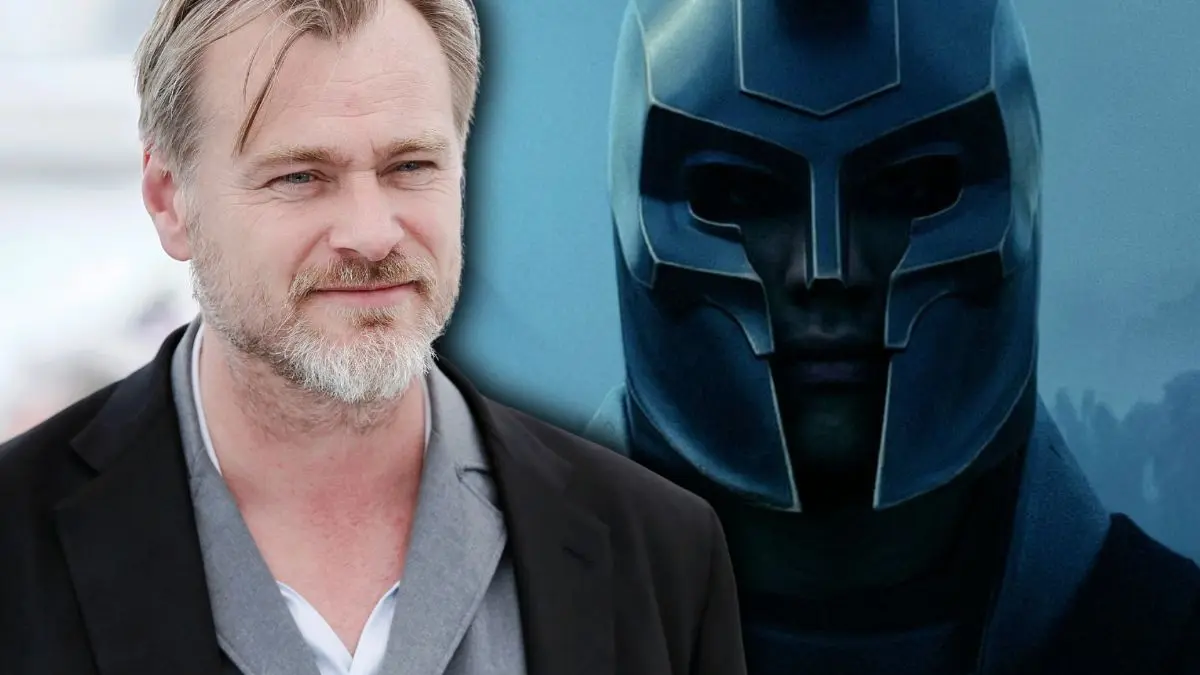

Adapting one of literature’s oldest and most celebrated works comes with an obvious challenge: deciding exactly how faithful to remain to source material written thousands of years ago for a very different audience. That balancing act became one of the defining creative decisions behind Christopher Nolan’s latest theatrical epic.
That decision has now generated fresh conversation as Nolan opened up about his approach to adapting Homer’s ancient poem for modern audiences. Speaking candidly about the choices behind bringing ‘The Odyssey’ to the screen, Nolan revealed exactly why he chose to depart from the source material in one particularly significant way.
Nolan explained that the poem’s original ending is so grim and so misogynistic that he had to exclude some of that material, telling Time he did not want to completely remove it from the conversation given what it says about men and how they wage war. That candid admission sheds real light on one of the more scrutinized creative choices audiences have debated since the film’s release.
The original text of Homer’s poem concludes with Odysseus violently reclaiming his household after returning home, including the execution of the suitors who had overrun his palace and the killing of household maids accused of disloyalty during his absence. That brutal final act has long been a point of critical discussion among scholars studying the poem’s treatment of gender and power.
Nolan’s film instead reshapes that ending into something considerably different, giving Odysseus and Penelope the kind of resolution Homer’s text never actually provides them. That shift reflects a broader creative philosophy Nolan described throughout the same conversation, framing the story’s bleak undercurrent as something that still carries an underlying sense of optimism.
He pointed specifically to Penelope’s belief that civilization will rise again, describing the poem’s central themes as cyclical rather than purely pessimistic. Nolan explained that while those cycles can be read as history doomed to repeat itself, they also contain genuine potential for rebirth and regrowth, a framing that clearly shaped how he chose to close out the film’s story.
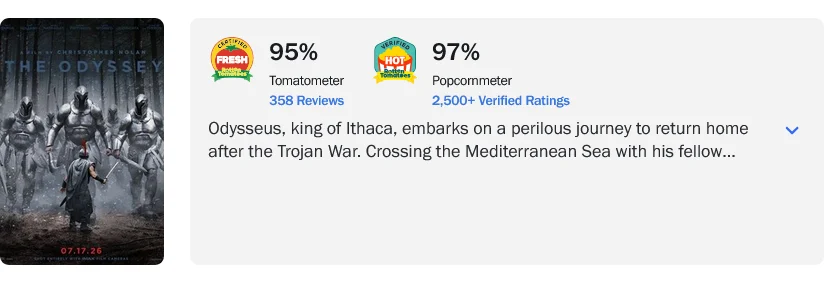
That approach to adaptation extends beyond just the ending itself. Nolan also discussed how Circe’s character helped articulate some of the poem’s more complicated themes, praising Samantha Morton’s performance in the role while acknowledging that certain choices in adapting the material required careful consideration of what to keep and what to leave behind.
The film also introduces its own interpretive layer through Zendaya’s character, whose exact nature as either a literal goddess or a manifestation of Odysseus’ guilt remains deliberately ambiguous throughout the story. That kind of psychological complexity fits within Nolan’s broader pattern of storytelling, where even his most mythologically grounded projects tend to explore deeply flawed central figures.
Nolan drew a direct comparison to his approach on ‘Oppenheimer,’ explaining that his form of storytelling typically centers on a hero burdened with significant flaws and complications. Applying that same lens to Odysseus, a character whose journey home is defined as much by his mistakes as his triumphs, gave Nolan a framework for reshaping the ending without abandoning the poem’s core themes entirely.
What do you think about Christopher Nolan changing the ending of ‘The Odyssey’?
With ‘The Odyssey’ continuing its strong theatrical run and generating sustained conversation among both casual audiences and longtime fans of the source material, this kind of insight into Nolan’s adaptation choices adds meaningful context to how the film ultimately took shape. Rather than a wholesale rewrite, Nolan’s approach reflects a deliberate effort to preserve the poem’s deeper questions while sparing audiences its most brutal conclusion.
For a story this ancient, choosing which parts to keep and which to leave behind says a lot about what a filmmaker believes still resonates today. What do you think of Nolan’s decision to change the ending of ‘The Odyssey ‘? Share your thoughts in the comments.