Christopher Nolan’s ‘The Odyssey’ Rewrites Homer in Ways Fans Didn’t See Coming, and Here Are the Biggest Differences


Christopher Nolan’s take on ‘The Odyssey‘ has finally hit theaters, and now that audiences have seen it, the conversation has shifted to just how far the director strayed from Homer’s original epic poem. The film is a sprawling adaptation that still manages to pack in sixteen or so major changes from the source material, according to a breakdown from GamesRadar+.
For anyone who grew up with the classic tale of Odysseus trying to get home after the Trojan War, some of these shifts are jarring. Others feel like the kind of bold reinterpretation only Nolan would attempt with a story this old and this beloved.
Trojan War Scenes Homer Never Wrote
One of the biggest structural differences comes right at the start. Homer’s original poem picks up after the Trojan War has already ended, meaning the Trojan Horse and the fall of Troy never actually appear on the page. Nolan, on the other hand, puts audiences right in the middle of that chaos.
The wooden horse itself barely gets a mention in Homer’s text, but Nolan reimagines it visually, showing it half stranded in the surf along the shoreline. That choice reportedly makes the ruse feel more believable, since a soggy, abandoned looking structure is easier to buy as bait than a massive wheeled siege engine.
Nolan also shows exactly what the soldiers hiding inside the horse went through, including the physical confinement, the incoming tide, and a tense moment where a Trojan guard stabs the wood with a sword to check for anyone hiding inside. It is a sequence that gives weight to a detail the poem mostly glosses over.
Then there’s Sinon, played by Elliot Page in the film. That character does not actually appear in ‘The Iliad’ or ‘The Odyssey’ at all, but comes from Virgil’s ‘Aeneid’ instead. Nolan reworked Sinon into an Ithacan shepherd boy who takes Antinous’ place in the war draft and gets manipulated by Odysseus into sacrificing himself so the Trojan Horse can make it inside the city walls.
Odysseus as a Broken Hero Instead of a Master Strategist
Homer’s version of Odysseus is constantly praised as clever and composed under pressure. Nolan’s film takes a noticeably different route with the character’s psychology.
Rather than the crafty, capable warrior Homer describes, Nolan’s Odysseus is portrayed as a broken man weighed down by guilt and trauma who has lost the respect of his own men. It’s a deconstruction that some critics have compared to how other modern blockbusters have handled legendary heroes in recent years.
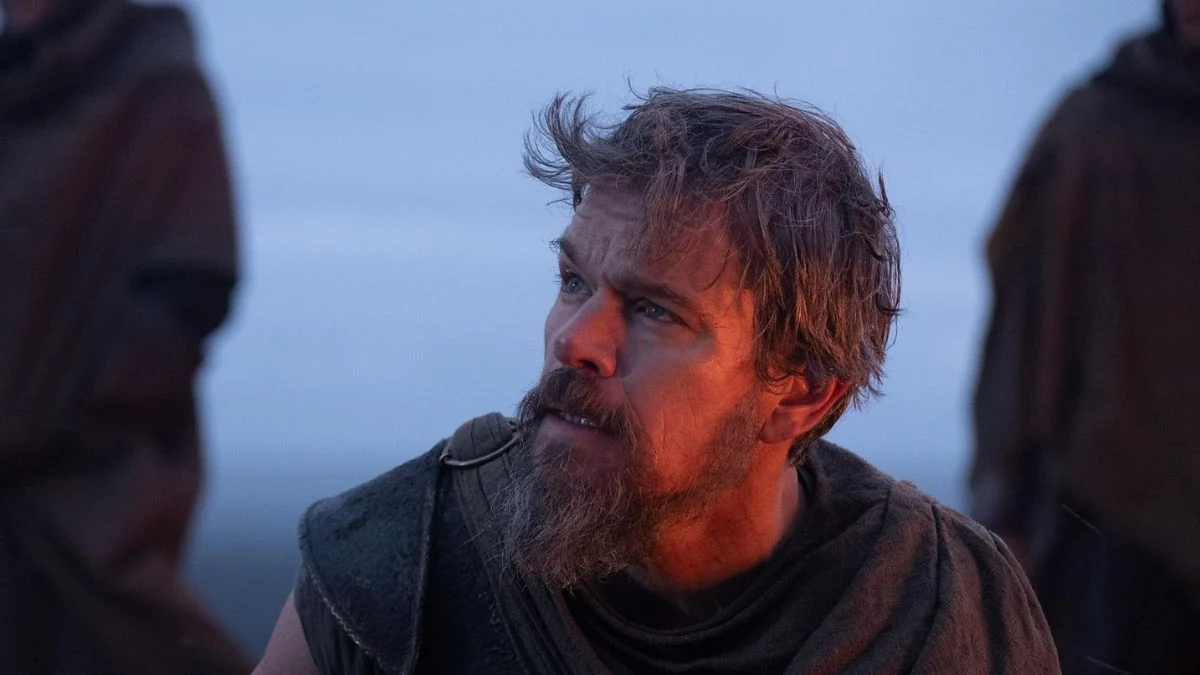
That tonal shift extends to how other characters are framed too. Agamemnon, for instance, is shown sacrificing his own daughter to the gods in exchange for favorable winds on the way to Troy, a moment that sets up much of the emotional weight of the story but gets far less explanation onscreen than it does in the classical texts.
Fans who came in expecting a straightforward hero’s journey have had mixed reactions to this darker framing. It fits Nolan’s broader filmography, though, since so many of his protagonists are men trying to find their way back to some version of home after doing terrible things along the way.
Penelope and Telemachus Get a Complete Role Reversal
Perhaps the most talked about family dynamic change involves Odysseus’ wife and son. In Homer’s text, Telemachus repeatedly talks down to his mother, at one point even ordering her back to her chambers and declaring that speech is the business of men.
Nolan flips that dynamic entirely. In the film, it’s Penelope who frequently scolds Telemachus for his immaturity, and she even says that if it were up to her, she would watch the suitors burn. It’s a striking update that gives Penelope a far more assertive presence than she has in the original poem.
The two also cross paths differently than in Homer’s version. In the movie, Odysseus actually finds Telemachus in Pylos and accompanies him into a temple dedicated to Athena, which lets him thwart a plot to kill his own son. That never happens in the poem, where Telemachus travels to Pylos with Mentor, who is secretly Athena in disguise, and meets King Nestor there instead, only reuniting with his father later at the hut of Eumaeus.
The Ending Sends Odysseus Away from Ithaca for Good
The finale might be where Nolan takes his biggest swing. In Homer’s epic, Odysseus returns to Ithaca disguised as a beggar, reunites with Telemachus, kills off Penelope’s suitors, and reclaims the throne before Athena steps in to restore peace.
Nolan’s film follows a similar path for most of that journey, but changes the outcome entirely by having Odysseus never retake the crown. Instead, he and Penelope choose to leave Ithaca to honor the soldiers lost in the Trojan War, letting Telemachus take over the kingdom in his place.
The movie also folds in a subplot Homer never touched at all. References to the mysterious “people from the sea” nod to real world theories about the Late Bronze Age collapse, a historical thread that has nothing to do with Odysseus’ personal story in the original poem. Even Athena’s presence gets reimagined, since the goddess appears in the film as a girl killed during the sack of Troy rather than the active guiding force she is throughout Homer’s text.
With so many liberties taken across the war, the characters, and the ending itself, it’s clear Nolan wanted to make this story his own rather than deliver a straight page to screen retelling. Which of these changes do you think honors the spirit of Homer’s original story, and which one crossed the line for you?