Were the Trojan War and Trojan Horse Actually Real? Here Is What Historians Found About One of ‘The Odyssey’s’ Biggest Moments

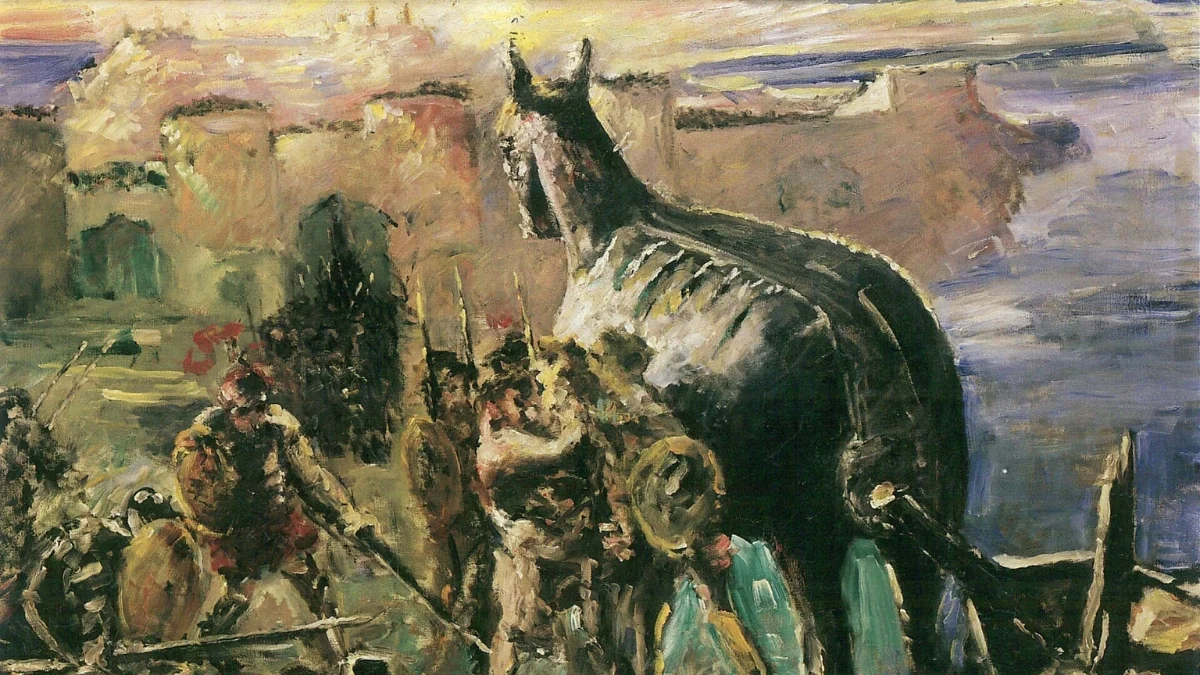

The idea of Greek soldiers hiding inside a giant wooden horse to sneak into Troy has been part of pop culture for centuries, and it is easily one of the most iconic images to come out of Greek mythology. But the question that keeps resurfacing among historians, archaeologists, and curious readers of ‘The Odyssey‘ is whether any of it actually happened.
The short answer is complicated. Some parts of the legend appear to be rooted in a real historical conflict, while other pieces, including the horse itself, are almost certainly invention.
Digging Into the Real City of Troy
Archaeological finds in Turkey suggest that the city of Troy did in fact exist, though a conflict on the scale of a ten year siege as described in the epics may not have actually occurred exactly as told. The ruins associated with ancient Troy sit at a site called Hisarlık, and the identification of that location as the real Troy is now accepted by the overwhelming majority of archaeologists and classicists.
Excavations at the site began in 1863 with Frank Calvert and continued more famously with Heinrich Schliemann starting in 1871, whose work confirmed that the legendary city was a real place, even though his aggressive digging methods ended up damaging some of the archaeological layers in the process.
More recent excavations have added new pieces to the puzzle. Newer archaeological discoveries at the Troy site include Bronze Age sling stones and weapons dating to roughly 3,200 to 3,600 years ago, a timeframe that lines up with when the legendary war is believed to have taken place. There is also evidence of a fire that severely damaged the city sometime around 1190 to 1180 BCE, a date range that closely matches the timeline ancient writers assigned to the fall of Troy.
Cuneiform tablets from the Hittite civilization also reference a conflict involving a city called Wilusa and a people called Ahhiyawa, terms some scholars connect to Troy and the Achaean Greeks. It is the kind of detail that keeps the door open for a historical kernel behind the myth.
What Historians Say About the Ten-Year Siege
Even with all of that physical evidence, most historians stop short of confirming the full Homeric version of events. Today many scholars agree that the Trojan War is based on a historical core of a Greek expedition against the city of Troy, but few would argue that Homer’s poems faithfully represent the actual events of the war.
Part of the challenge comes down to timing. If a Trojan War happened, it likely happened around the thirteenth or early twelfth century BCE, yet Homer composed ‘The Iliad’ roughly four centuries later, working from oral storytelling traditions that had been reshaped and dramatized by generations of singers long before anyone wrote the story down.
Some researchers have pointed out an odd detail in the archaeological record that seems to work against a simple story of Greek victory. There is evidence of a fire, some skeletons, and heaps of sling bullets left behind, and normally a people who successfully defended their city would have collected and stored their sling bullets for future use, while a victorious invading force would have simply left them behind.
Characters like Helen, meanwhile, are generally treated as fiction rather than fact by most historians, even if she may have been loosely inspired by a real noblewoman of the era.
Was the Trojan Horse Ever a Real Object
This is where the legend and the evidence really part ways. Historians generally agree that the Trojan War is based on a real conflict or series of conflicts, but they reject the idea that the wooden horse was anything more than a literary invention by Homer.
One popular theory suggests the wooden horse may have actually been a siege engine or battering ram, since war machines in that era were often given animal names and were commonly wrapped in wet horse hides to protect them from being set on fire. That detail alone may have inspired the entire image of a “horse” breaching the walls of Troy.
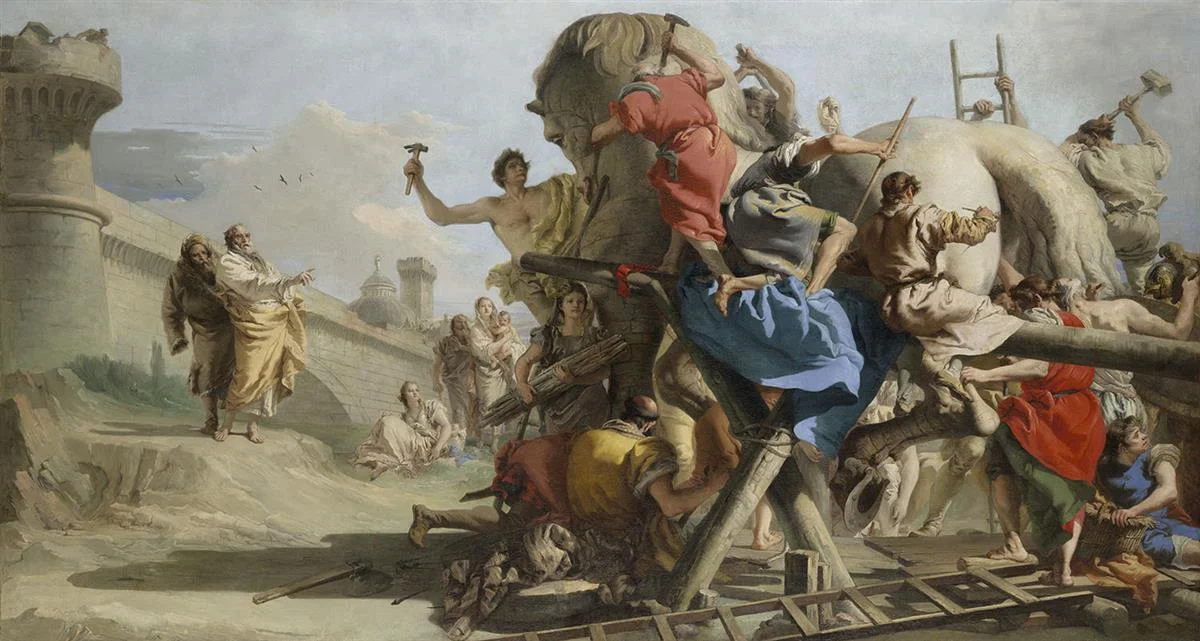
Another theory ties the horse to natural disaster rather than warfare at all. Some have speculated that the horse represented an earthquake, since Poseidon, the Greek god of both horses and earthquakes, is depicted in mythology as having favored the Greek side during the war. Under this theory, the “gift” that brought down Troy’s walls was seismic activity rather than a Greek trick.
There is also a symbolic reading worth mentioning. The Trojans were closely associated with horses in ancient sources, often described as “tamers of horses,” and Homer may have used the wooden horse purely as a literary device to represent the subjugation of the Trojan people rather than describing an actual object at all.
What This Means for Fans of ‘The Odyssey’ and ‘The Iliad’
It is worth remembering that the Trojan Horse does not even appear in Homer’s ‘The Iliad’, and is only mentioned briefly in ‘The Odyssey’, with the fullest account actually coming from the Roman poet Virgil in ‘The Aeneid’ centuries later. That alone tells you how much the story grew and evolved as it was retold across generations and civilizations.
For readers who grew up on ‘The Odyssey’ as their introduction to this world, the fact that the horse may be more metaphor than machine does not necessarily make the story less compelling. If anything, it adds a new layer to an already layered myth, one where a poet possibly took the memory of an earthquake or a siege weapon and turned it into one of the most enduring images in Western storytelling.
What do you think really brought down the walls of Troy, a wooden horse, a battering ram, or something the earth itself did.