‘Disclosure Day’ Is Spielberg’s Most Eerily Plausible Sci-Fi Yet — Here’s What’s Actually Real

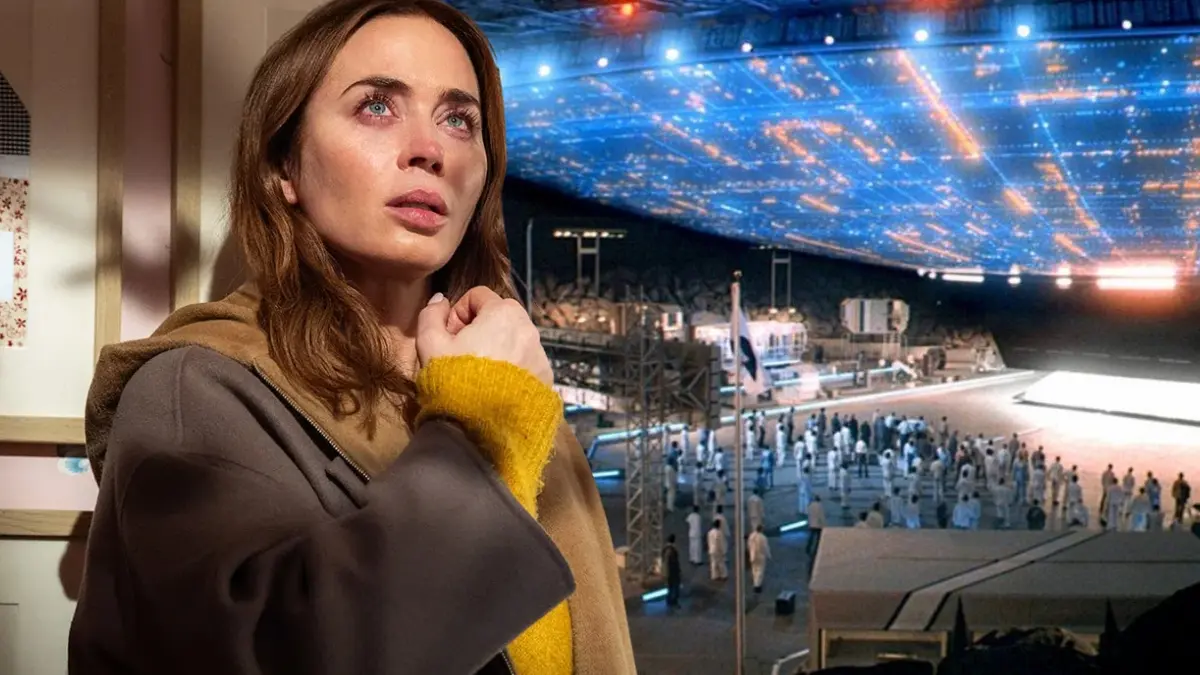

Steven Spielberg has spent five decades asking audiences to look up at the sky and wonder. With ‘Disclosure Day,’ he does something bolder than wonder — he builds a case. The new sci-fi thriller follows a cybersecurity whistleblower and a Kansas City meteorologist caught in the fallout of an 80-year government cover-up of extraterrestrial life, and it arrives at the kind of cultural moment that makes fiction feel uncomfortably close to fact.
The film opened in theaters on June 12, 2026, and lands during a period when political conversation surrounding Unidentified Anomalous Phenomena, or UAPs, has reached a fever pitch. For audiences walking out of multiplexes and immediately reaching for their phones to fact-check the plot, the short answer is: more of it is grounded in reality than you might expect.
The Real Pentagon Program That Started It All
Spielberg was inspired by the 2017 article “Glowing Auras and ‘Black Money’: The Pentagon’s Mysterious U.F.O. Program,” published in The New York Times, which he described as having rekindled his interest in the subject. That article landed like a grenade in mainstream culture, and Spielberg was not immune to its blast radius.
The piece, written by Helene Cooper, Ralph Blumenthal, and Leslie Kean, took a closer look at a top-secret $22 million slice of the Defense Department’s $600 billion budget, set aside for something called the Advanced Aerospace Threat Identification Program. The program identified and investigated strange aerial phenomena, including objects that move in ways that defy known engineering principles.
Spielberg’s own words capture the moment clearly. “That article blew up my interest again in the whole UFO/UAP phenomenon,” he said. “When that story came out, it grabbed the attention of people who never believed in UFOs to begin with, and so many more of us who have always believed that something’s been going on that we simply haven’t been told.”
The 2023 House Oversight Committee hearing, in which former intelligence officer David Grusch, Navy pilot David Fravor, and commercial pilot Ryan Graves testified under oath about UAP encounters and alleged government concealment programs, also played a direct role. Spielberg called it “a fascinating exchange” that “reinvigorated his decision to make the movie.”
The Government Cover-Up at the Heart of the Film
In ‘Disclosure Day,’ Josh O’Connor’s character Dr. Kellner works as a cybersecurity expert for WARDEX, described in the film’s press notes as “a shadowy agency that protects a vault of secrets about the UAPs and non-human entities that have visited Earth over the years.” It is a fictional organization, but its DNA is traceable to real-world programs.
The film’s central premise, involving exotic technology hidden by a secretive organization, parallels long-standing allegations from insiders about retrieved non-human materials. These claims gained renewed attention after former intelligence official David Grusch testified before Congress in 2023, alleging the U.S. government had operated such programs.
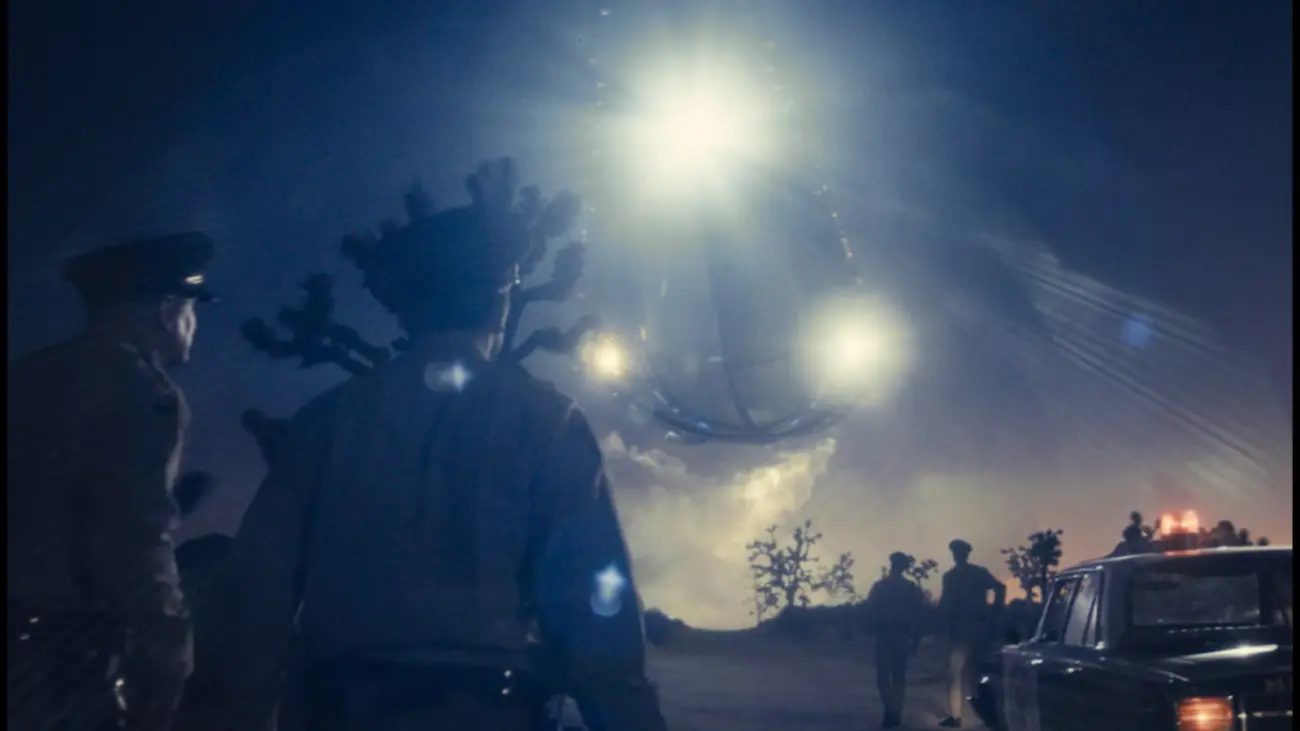
‘Disclosure Day’ also incorporates the Roswell incident into its continuity and references reports of alien abductions that have persisted in UFO culture for decades. The film presents classified archival footage of Air Force pilots encountering glowing balls of light and giant craft in the atmosphere, some of which are based on real-life events many believe were actual alien encounters.
MUFON field investigator and documentary filmmaker Joshua Golembeske told Fox News Digital that the film’s deep-state cover-up premise directly echoes actual Capitol Hill whistleblower testimony on UAPs. For believers already entrenched in this world, ‘Disclosure Day’ reads less like speculative fiction and more like a dramatized brief.
Where Spielberg Stretches Beyond the Facts
For all its grounding in documented events, ‘Disclosure Day’ is still a blockbuster, and Spielberg leans hard into dramatic license when the story demands it. The film significantly compresses timelines, invents psychic abilities tied to alien contact, and culminates in a global broadcast that instantly changes human history. None of this has a clear real-world analog.
Spielberg told CBS News directly, “If this truth were just known overnight, if the government announced, ‘Yes, we have been keeping this from you since 1947,’ that would mess up a lot of people.” The movie takes that premise seriously, exploring what such a reveal would do to global institutions, including organized religion.
Analysts have noted that real disclosure, if it ever comes, is more likely to be incremental, heavily caveated, and accompanied by years of scientific scrutiny rather than a single dramatic reveal. The movie’s portrayal of recovered technology being actively reverse-engineered at scale also remains firmly in the realm of speculation, as no verifiable public evidence has emerged to date.
How Spielberg’s Personal Belief Shapes the Film
Spielberg has spoken at length about reverse-engineered alien technology, noting that while it is all speculative, the idea has always been interesting to him. He developed the concept of a piece of alien tech in the film that WARDEX has never been able to analyze, one made to serve far nobler purposes than the way villain Noah Scanlon wields it.
In a notable moment at SXSW in 2026, Spielberg told the audience, “I don’t know any more than any of you do, but I have a very strong suspicion that we are not alone here on Earth right now.” For a filmmaker of his stature to say something like that from a stage, in public, ahead of a major studio release, it carries a particular kind of weight.
Co-star Emily Blunt confirmed in an Empire magazine interview that the movie “answers questions posed” by ‘Close Encounters of the Third Kind,’ positioning the two films as part of the same thematic continuum. Blunt also noted that the narrative speaks to a need for humans to understand their place in the universe. Coming from two people who spent years working on the film, that framing suggests ‘Disclosure Day’ is less interested in being a thriller than in being a reckoning.
The question the movie poses, whether humanity could actually handle the truth if it arrived all at once, may be the most realistic thing about it. If you’ve been following the UAP hearings over the last few years, drop your take below on whether you think ‘Disclosure Day’ got the government cover-up right.