Does Odysseus Actually Die in Christopher Nolan’s ‘The Odyssey’?

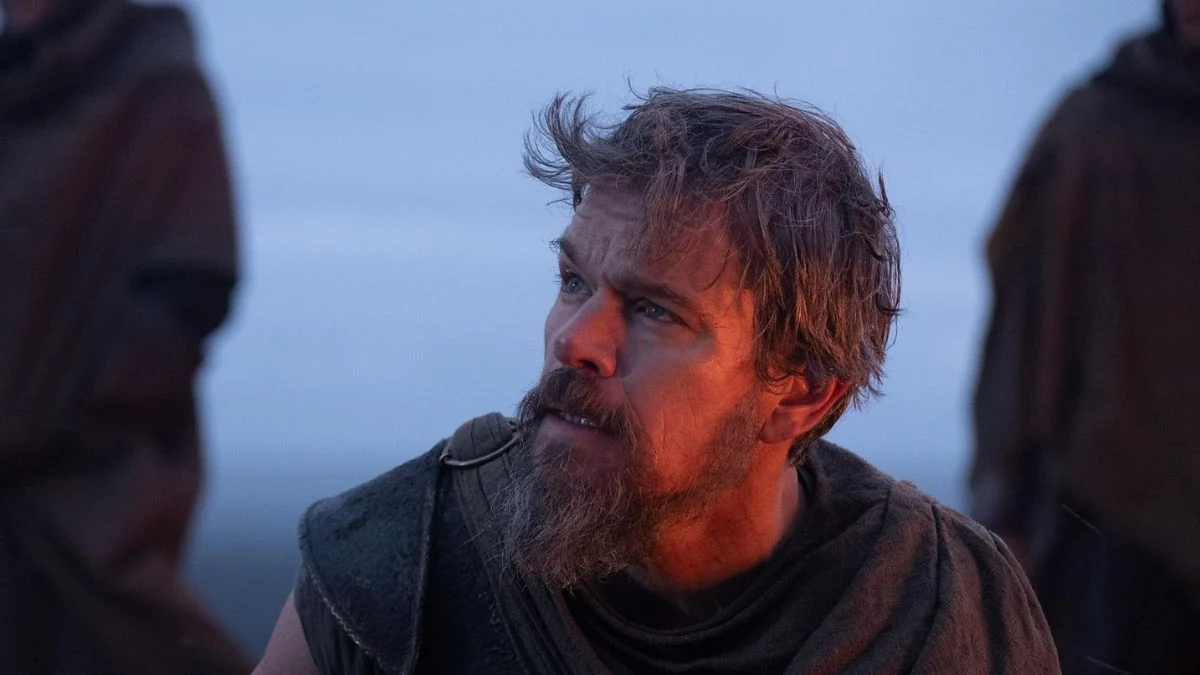

Fans walking out of Christopher Nolan’s ‘The Odyssey‘ have one burning question on their minds, and it has nothing to do with Cyclopes or Sirens. After watching Matt Damon’s battered hero stagger through a bloody final act, viewers want to know if all those wounds actually catch up with him.
The good news for anyone rooting for Damon’s take on the legendary king is that ‘The Odyssey’ does not end in tragedy the way some expected. The film reveals that Odysseus does not die, but instead goes into exile as punishment for killing all the suitors, a fate that was part of his plan all along. That twist alone has sparked plenty of debate about how faithful Nolan’s ending really is to Homer’s original text.
How Nolan’s ‘Odyssey’ Ending Handles Odysseus’ Fate
Nolan’s adaptation reimagines the closing chapter of Odysseus’ journey in a way that departs sharply from the source material. In Homer’s poem, the seer Tiresias predicts that Odysseus will die peacefully of old age after making a sacrifice to Poseidon, and classics scholar Jonathan Burgess has described the poem’s ending as a happy one. Nolan takes that framework and bends it into something far more bittersweet for the big screen.
The movie’s version is bittersweet for both Odysseus and his wife Penelope, played by Anne Hathaway, since after he murders the suitors who had been courting her, he is exiled from Ithaca. That exile becomes the emotional core of the film’s final stretch, replacing the poem’s tidy resolution with something messier and more human.
While Tiresias’ prophecy in the poem promises Odysseus a peaceful death from old age, the film instead forces him to face real consequences for the killings he commits inside his own palace. It is a choice that reframes ‘The Odyssey’ as less a tale of triumphant homecoming and more a meditation on the cost of violence.
Odysseus’ Wounds and What They Mean for His Survival
Odysseus spends much of the film’s back half absorbing brutal punishment, and audiences have every reason to assume those injuries could be fatal. Yet multiple breakdowns of the ending confirm that survival, not death, is where his story lands.
Rather than settling back into life as king after his triumphant victory, Odysseus chooses exile, a decision that suggests some wounds can never fully heal even after the fighting ends. The wounds in question are as much psychological as physical, tied to the guilt he carries from the fall of Troy.
Zendaya’s Athena is revealed in the film to represent a Trojan priestess whose beheading Odysseus witnessed during the war, and her haunting presence throughout the story reframes his entire journey as one driven by guilt and remorse. That guilt, more than any physical injury, is what nearly breaks him by the time he reaches Ithaca.
By the end, Odysseus opts to cede his throne to Telemachus and sails into exile alongside Penelope in search of peace. It is a survivor’s ending, but not a triumphant one, and that ambiguity is clearly intentional on Nolan’s part.
Matt Damon’s Fate Explained Scene-by-Scene
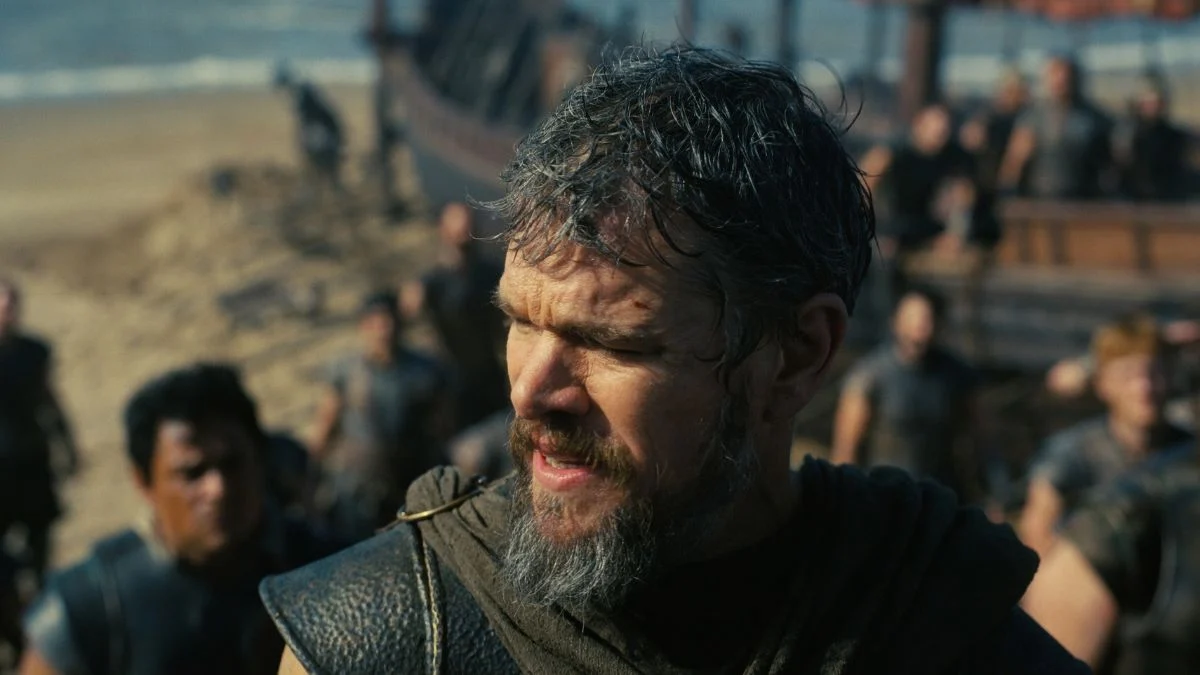
The path to that final exile is soaked in violence, which is exactly why so many viewers assumed the worst for Damon’s character. The film’s final act delivers a bloody palace battle and a heartbreaking confession to Penelope, leaving audiences questioning whether the legendary king truly survives all the way to the credits.
Odysseus finds that suitors led by Robert Pattinson’s Antinous have overtaken his court and even plotted to murder Telemachus before he can reclaim the throne. Saving his son from that plot becomes one of the final tests he has to pass before revealing his true identity.
Nolan spends the film’s final third focusing less on external curses and more on the turmoil inside its hero, eventually forcing Odysseus to confront the difficult truth that he does not actually want to go home. That internal conflict is arguably more dangerous to the character than any physical wound he suffers along the way.
It is only when Odysseus, disguised as a grizzled veteran of the Trojan campaign, finally speaks honestly with Penelope that he is willing to confront that truth head on. That confession sets up the quieter, more reflective ending that follows.
How the Movie Ending Differs from Homer’s Poem
Even with Odysseus surviving, Nolan makes clear changes to how that survival plays out compared to the ancient text. In the film’s final moments, Odysseus and Penelope sail off into the sunset together, just as she had once suggested he do before he ever left for the Trojan War, while Telemachus stays behind to rule Ithaca as king.
Nolan’s ending sees Odysseus and Penelope literally sailing into the sunset, hoping to pay tribute to everyone he lost along the way during his long journey home. It is a notably more open ended finish than the closure Homer gives his hero.
One of the bigger changes from the source material involves how Penelope actually recognizes Odysseus, since in the film he is identified through an icon he carried rather than through the test involving their immovable marriage bed found in the original poem. Fans of the epic have already started picking apart these deviations online.
The biggest question the movie leaves unanswered is one longtime fans of the poem have been asking since the film’s premiere, which is what Odysseus’ ultimate fate becomes after he sails away. Nolan seems content to let that mystery linger rather than spell it out.
Odysseus may walk away from Ithaca bloodied, exiled, and haunted by everything he has done, but ‘The Odyssey’ makes clear he is very much alive when the credits roll. Now that you know how Nolan chose to send his hero back out to sea, do you think Odysseus deserved a peaceful homecoming instead of exile, or does his punishment feel earned after everything he put Ithaca through?