Fact-Checked and Fascinating: Just How Accurate Is ‘For All Mankind’ About the Real Space Race?

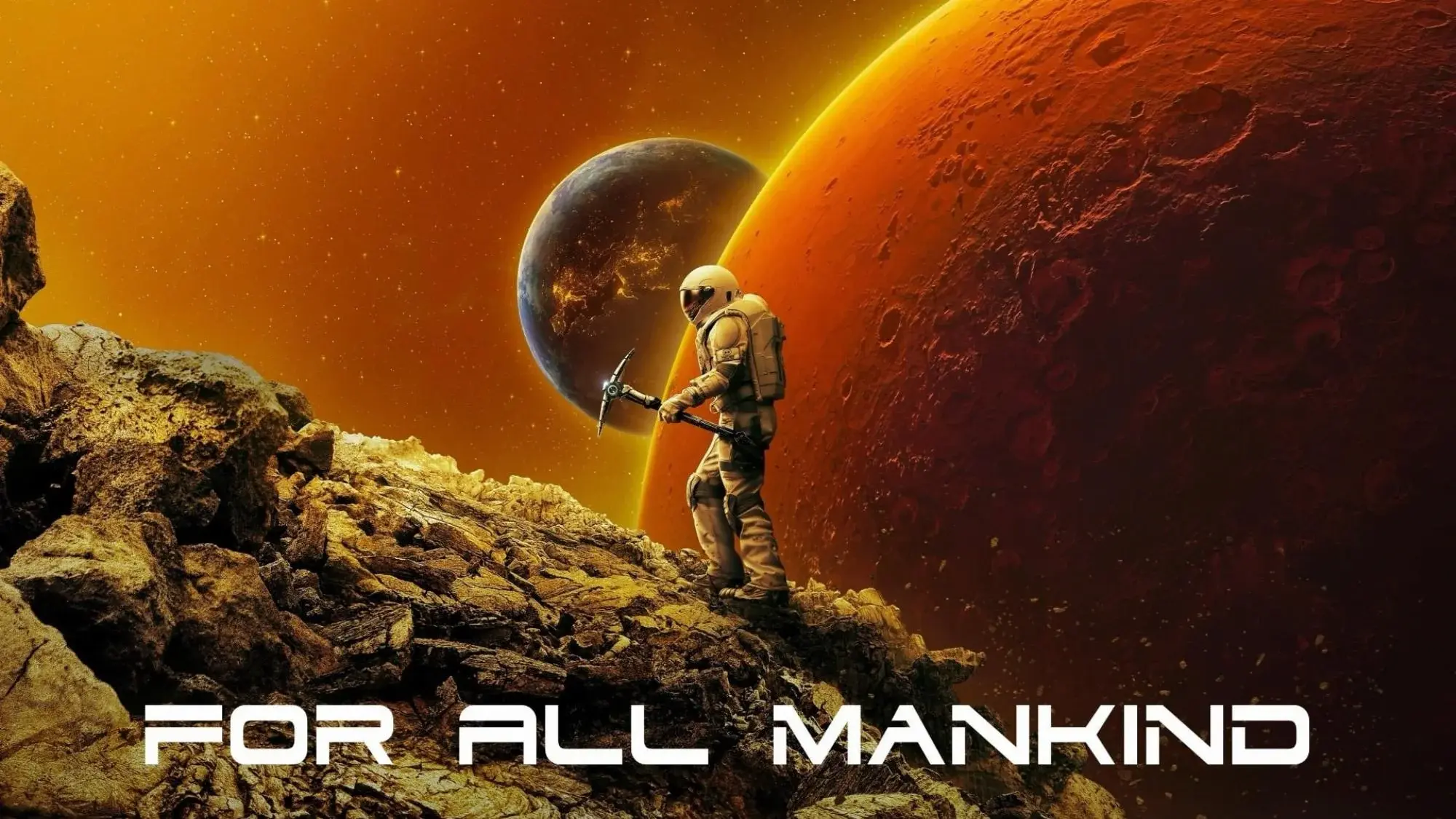

Apple TV+ built its reputation for prestige drama partly on the shoulders of ‘For All Mankind’, a show that dares to ask what history might have looked like if the Soviets had beaten America to the Moon. Since its debut in 2019, the series has earned a devoted following, critical praise, and a passionate community of space enthusiasts who turn to it not just for entertainment but as a surprisingly rich lens on real NASA history.
The show is, of course, alternate history at its core, and it never pretends otherwise. While some of the technology in ‘For All Mankind’ may seem far-fetched, there is a surprising amount of real-world science behind it, and the series takes its backstory and technological possibilities very seriously. The question fans keep asking is where exactly the line sits between the world that was and the world the show imagines.
The Alternate Space Race Timeline That Almost Happened
The single point of divergence that powers the entire ‘For All Mankind’ story is not as far-fetched as many viewers assume. Ronald D. Moore explained that the show’s pivot point involves Sergei Korolev, the father of the Soviet space program, who in reality died during an operation in Moscow in 1966. Moore’s premise was that Korolev lives, which allowed the Soviet Moon program to pull together and make their lunar landing happen.
Moore has spoken about how the inspiration for this premise came directly from a lunch conversation with former NASA astronaut Garrett Reisman, during which Reisman pointed out how close the Soviets actually came to reaching the Moon before the United States, a fact Moore admitted he had not fully appreciated before that conversation.
Having already taken its story to the Moon and Mars by the mid-1990s of its fictional timeline, ‘For All Mankind’ has constructed a vastly accelerated version of humanity’s exploration of the cosmos. Each season leaps forward in time, tracking a world shaped by a space race that simply never stopped, which is where the show’s blend of real history and creative invention becomes most interesting to untangle.
The alternate future demonstrated in the show is not very far off from what audiences actually lived, and everything that occurs feels plausible despite being somewhat untrue. The butterfly effect of just one incident altering the entire course of human history is something the series masterfully proves.
Where ‘For All Mankind’ Nails Its Historical Accuracy
The production team behind ‘For All Mankind’ did not simply guess at the details of the Apollo era. Showrunner Ronald D. Moore enlisted real-life astronauts as consultants to ensure maximum accuracy throughout the series, with engineer and former NASA astronaut Garrett Reisman serving as a central figure in that process.
Reisman, who logged more than 90 of his 107 days in space aboard the International Space Station, hosted a virtual tour of the Jamestown moon base set, pointing out that the fuel tanks, reaction control system thrusters, and four descent engines were all repurposed from Apollo lunar module designs, and that the base’s internal systems drew direct inspiration from the real-life Skylab orbital workshop.
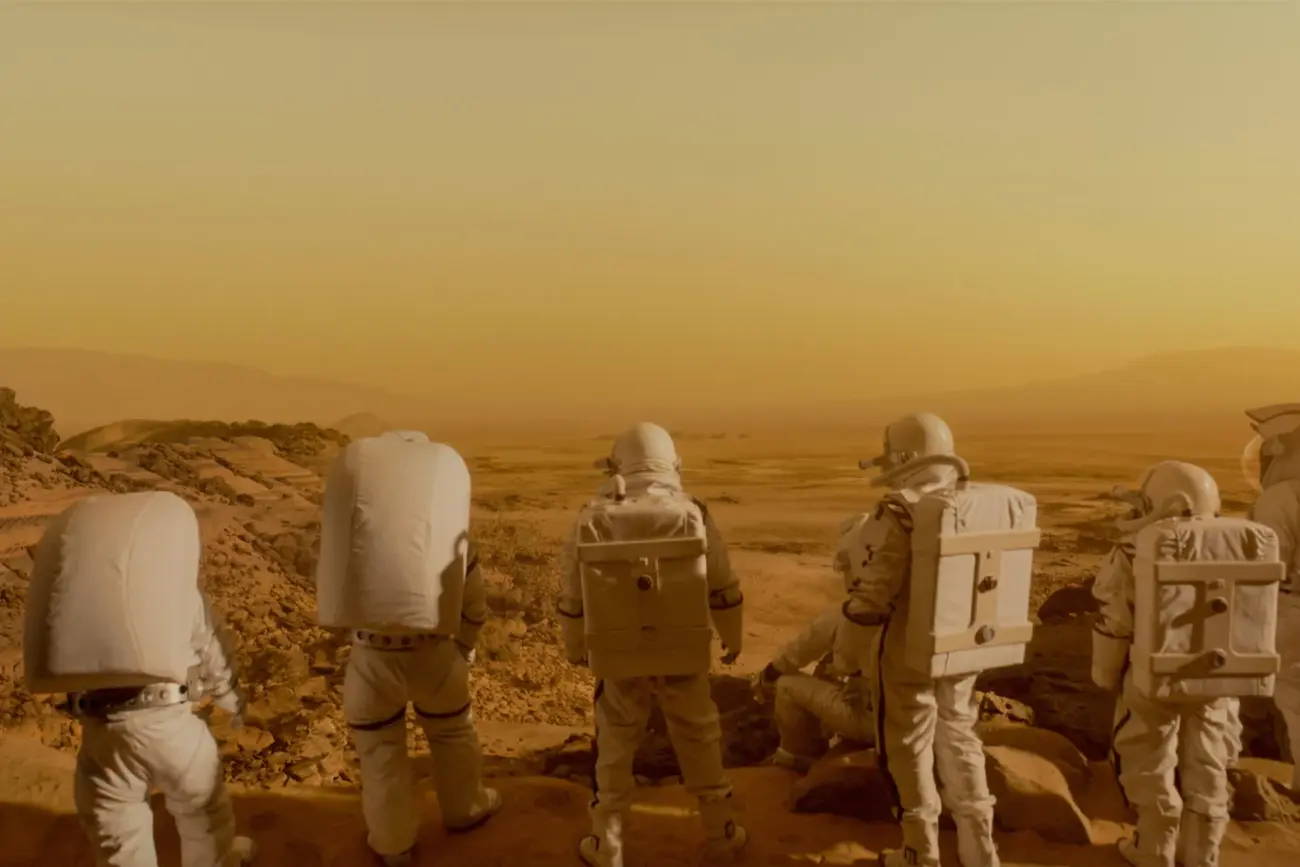
Unlike most alternate history shows, ‘For All Mankind’ pays significant attention to detail and maintaining realism. Where other works of historical fiction go for a more loose adaptation of events, this series actually incorporates as many historical facts as possible, and the clothing, accessories, and period-accurate props all reflect the aesthetic standards of their respective eras.
The main characters interact with real-life historical figures, from astronauts like Neil Armstrong and Buzz Aldrin to rocket scientist Wernher von Braun and various politicians, further grounding the story in historical verisimilitude.
The Mercury 13 Inspiration Behind the Show’s Female Astronauts
One of the most emotionally resonant threads in ‘For All Mankind’ is its depiction of women breaking into the astronaut corps, and this storyline is rooted in a genuinely forgotten chapter of real American history. In the show’s alternate history, a Soviet woman becoming the first woman on the Moon prompts President Nixon to instruct NASA to put together a crew of female astronauts, leading to a Mercury program that recruits an all-female crew including Molly Cobb, Dani Poole, Tracy Stevens, and Ellen Wilson.
According to series creator Ronald D. Moore, the Mercury 13 program was the original inspiration for the show’s premise. Speaking to Variety, Moore explained that in reality the program was canceled before the women ever actually took flight training, which made the show want to go back and revisit who the Mercury 13 were and where they might have been.
In the real 1959, the thirteen women recruited to the Mercury 13 program completed the same tests as the male astronauts in NASA’s Mercury 7 group, and in reality only twelve people have ever walked on the Moon, all of them men, with no women having ever set foot on the lunar surface.
The show’s character Molly Cobb is drawn directly from this real history. Sonya Walger’s character Molly Cobb is based on Jerrie Cobb, one of the most prominent figures from the real Mercury 13, while the character of Margo Madison was inspired by Margaret Hamilton, the pioneering NASA software engineer.
What a Real Astronaut’s Fact-Check Revealed
No discussion of ‘For All Mankind’s accuracy would be complete without addressing the most high-profile critique the show has received from someone who has actually been to space. In a video produced by Vanity Fair, retired astronaut and engineer Chris Hadfield viewed footage from ‘For All Mankind’ and stated that there is so much wrong that it is excruciating to watch, and that while the idea of an alternative history is interesting, the show quickly becomes cartoonish in his estimation.
Hadfield criticized how the spacesuits move during a confrontation scene on the Moon, as well as the behavior of the astronauts, pointing out that all of them would have had military backgrounds at the time and would not have acted the way the show depicts.
However, Hadfield’s verdict was not entirely negative. After initially describing ‘For All Mankind’ as excruciating to watch, Hadfield was actually impressed by the show’s depiction of gunfire on the Moon, confirming that the lack of air and oxygen would make bullets travel straighter and farther, and that a spacesuit catching fire is a realistic possibility given that the inside contains a hundred percent oxygen environment.
Reisman himself has spoken about trying very hard not to let the truth get in the way of a good story, acknowledging that what will make the show resonate with people is the story and the characters rather than whether the production has the right instrument panel configuration in every shot. That balance, between scientific credibility and dramatic necessity, is ultimately what defines ‘For All Mankind’ as a series, and it is a tension the show navigates with more care than most of its genre peers. If you have a background in aerospace, history, or simply love debating where fiction ends and fact begins, what is the detail in ‘For All Mankind’ that has surprised you most, or that you think the show gets most spectacularly wrong?