How Odysseus Broke Zeus’ Law in Nolan’s ‘The Odyssey,’ Explained

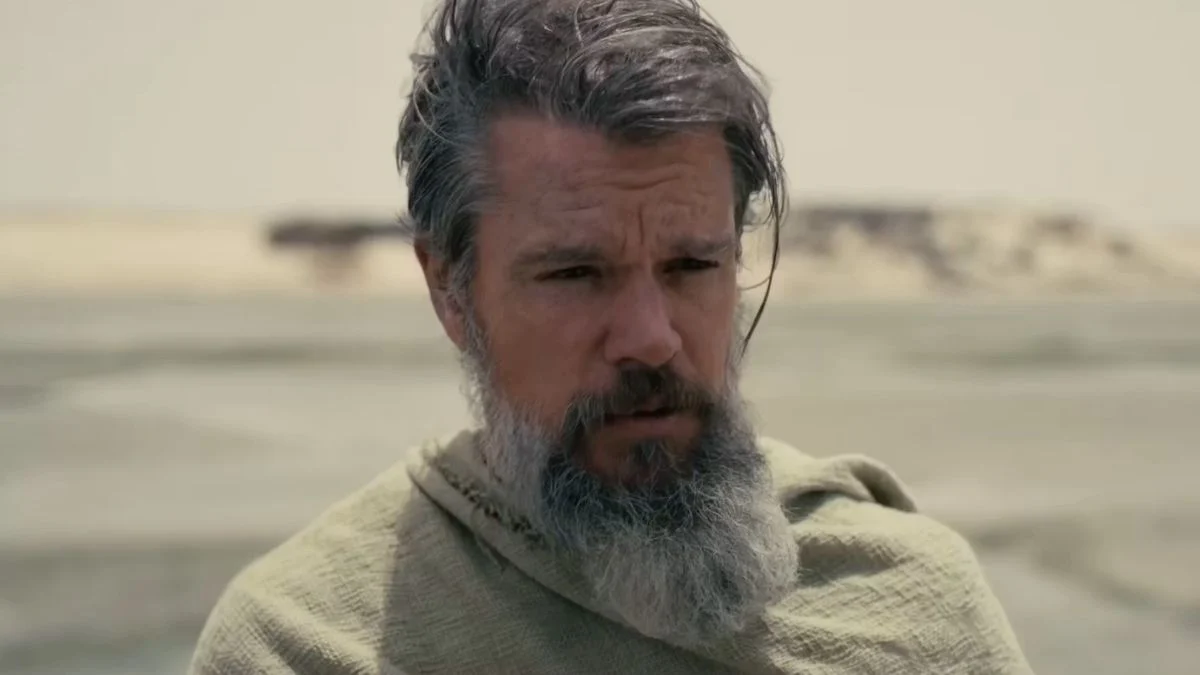

Christopher Nolan’s ‘The Odyssey‘ has audiences buzzing about a lot more than sea monsters and shipwrecks. At the center of the film’s moral architecture is a concept called Zeus’ Law, and understanding how Matt Damon’s Odysseus violates it is key to grasping what the director is actually trying to say.
The film, which stars Damon alongside Anne Hathaway, Tom Holland, and Zendaya, is being praised for treating this ancient rule not as background trivia but as the emotional core of the entire story. To understand the violation, you first have to understand the rule itself, and why breaking it carries such devastating weight in Nolan’s vision of the ancient world.
What Zeus’ Law Actually Means in the Film
Zeus’ Law comes from the ancient Greek concept of xenia, the sacred custom of hospitality between hosts and guests. In ancient times, travelers relied entirely on strangers for food, shelter, and protection, so welcoming a guest was considered a sacred duty, and any stranger could theoretically be Zeus or another god in disguise.
This is not a small detail Nolan tossed in for flavor. Nolan’s real subject in ‘The Odyssey’ is xenia itself, the ancient Greek custom of hospitality that enabled civilizations to rise and endure, allowing travelers to trade and commingle with people from faraway lands because they could count on the mercy of strangers.
Nolan has been direct about why this idea matters so much for his adaptation. Speaking to The New York Times, the director explained that for the world of the story, leaving your house for more than a couple of days meant throwing yourself at the mercy of strangers, and that this reliance on hospitality is essentially what holds civilization together and even defines it.
How Odysseus Violates Zeus’ Law on His Journey Home
The violations in ‘The Odyssey’ stretch back before Odysseus even leaves Troy. The Trojan War itself begins as a violation of xenia, since Paris steals away his host Menelaus’ wife Helen while a guest in his home, and the Greek invasion of Troy becomes the reaction to that original betrayal.
But Odysseus’ own hands are far from clean. Athena favored the Greeks and Odysseus throughout the war, but she grew displeased with their violations during the sack of Troy, which contributed to the suffering the Greeks faced on their journey home, alongside the wrath of Poseidon and Zeus over other transgressions like blinding the cyclops Polyphemus and eating the cattle of the Sun God.
The film does not shy away from the brutality that fuels this guilt. Though not directly shown onscreen, the mythology behind the film includes horrific acts committed by the Greeks, including the desecration of temples and unspeakable cruelty during the fall of Troy. That weight follows Odysseus for the entire runtime.
Even the infamous Trojan Horse becomes a symbol of this deeper betrayal. By transforming a gift into a weapon through the Trojan Horse, Odysseus becomes the architect of a broken world where the trust and mercy embodied by xenia have collapsed. It is a clever inversion, since the horse itself was presented as an offering, making its true purpose a corruption of hospitality’s most basic principle.
The Suitors and The Final Violation in Ithaca
Back home in Ithaca, Zeus’ Law works against Odysseus in a different way. Penelope spends years fending off increasingly aggressive suitors who invoke Zeus’ law of hospitality to justify gorging themselves on the palace’s food and wine while pressuring her to choose one of them as a husband. The suitors twist the sacred custom into an excuse for their own greed, occupying a home that was never offered to them.
That imbalance sets up the film’s climactic reckoning. In the end, Odysseus kills the suitors inside his own home, and in doing so, must accept banishment for further violating Zeus’ Law himself. The very rule meant to protect guests becomes the reason Odysseus cannot simply walk away clean, even after reclaiming his throne and his family.
Nolan frames this final act as the thematic backbone of the whole film. His closing rumination is that there are moments when civilized customs collapse entirely and the world slides into a dark age, but that light and reason always eventually rise again.
Why This Ambiguity Is the Point of Nolan’s Adaptation
Part of what makes the film’s handling of Zeus’ Law so compelling is its refusal to hand out easy villains. Nolan poses the question of who is really violating the laws of xenia in certain encounters, such as a shepherd unaware that strangers have infiltrated his cave versus the strangers themselves who are ready to take what they want. That moral fog is deliberate, and it is a big reason critics have been dissecting the film scene by scene.
Some viewers have reportedly struggled to fully grasp these layered ideas on a single viewing. One breakdown of the film’s themes notes that while much of the surrounding criticism has been performative, plenty of otherwise attentive viewers have missed points that seemed fairly clear, even though Nolan’s ambiguity is balanced by ideas that are ultimately legible and woven together logically.
The emotional aftermath of Odysseus’ choices is baked into the film’s structure itself. Odysseus is ultimately absolved by Athena, who appears in the form of an innocent priestess his men murdered back in Troy, and the goddess confirms his own realization about the shift into a darker era with a mournful look. It is a haunting final image, one that reframes the entire journey as a reckoning with guilt rather than a straightforward homecoming.
Between the suitors, the sack of Troy, and the moral gray zones scattered across the voyage, ‘The Odyssey’ asks its audience to decide whether Odysseus is a man punished for breaking sacred law or one just as much a victim of a world where the rules of hospitality were already crumbling, so which side of that argument does Nolan’s ending actually leave you standing on.