How ‘Spider-Noir’ Got His Powers Is Unlike Every Other Spider-Man Origin You Know

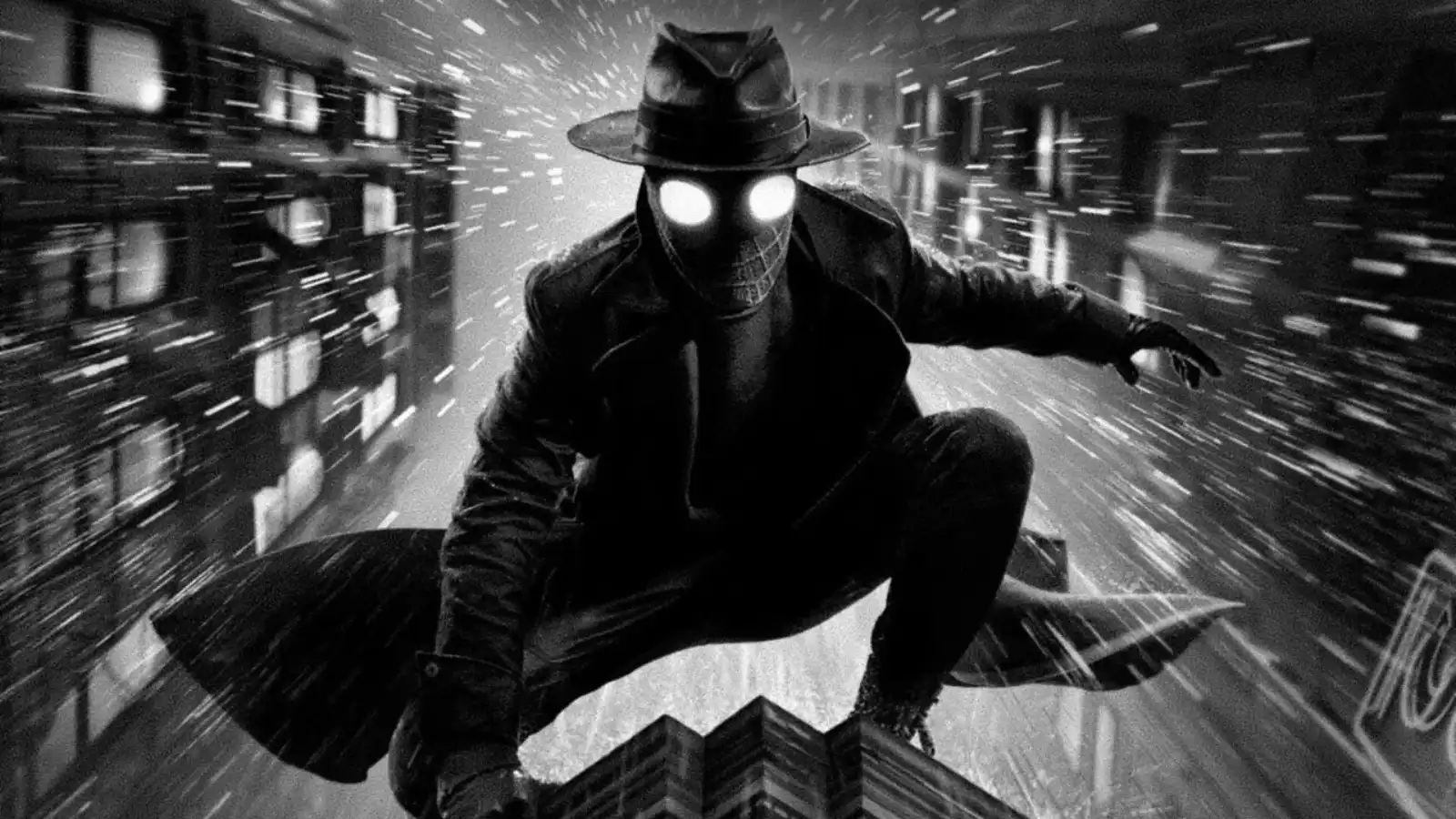

Not every spider bite comes from a school field trip gone wrong. The ‘Spider-Noir’ origin story stands as one of the most genuinely unusual power-granting moments in the entire Marvel multiverse, trading radioactive labs and genetic mutation for something far more ancient, unsettling, and steeped in the grime of the 1930s.
With Amazon Prime Video’s live-action ‘Spider-Noir’ now streaming, starring Nicolas Cage as a world-weary private investigator named Ben Reilly, the question of how this particular wall-crawler gained his abilities has never been more timely. The answer stretches back to a 2009 comic book run, a shattered antique idol, and a vision of something that exists well outside the boundaries of ordinary science.
The Broken Spider Idol Behind the ‘Spider-Noir’ Origin Story
‘Spider-Noir’ was initially conceived by writers David Hine and Fabrice Sapolsky, with artist Carmine Di Giandomenico, as part of the 2009 Marvel Noir event. Within the world of Marvel Noir, the familiar faces of the Marvel Universe were reimagined as very different people, and the rules governing how someone gains extraordinary abilities were rewritten entirely.
In the comics, the origin unfolds at a waterfront warehouse where a shipment of antiques, previously bound for the Metropolitan Museum of Art, is being unloaded by the Goblin’s criminal crew. When workers drop one of the containers, a swarm of spiders is released into the night, and one of them bites Peter Parker, telling him that the bite brings death to those of evil intent but will bestow a curse of power on him instead.
Rather than simply waking up with new abilities, this version of Peter experiences something profoundly stranger. After an ancient artifact was broken and the spiders crawled free, he had a vision of a spider-god that offered him power before he awoke inside a cocoon and discovered that his life had been changed forever. That cocoon is not a throwaway detail. It signals a transformation that is biological, spiritual, and irreversible all at once.
The supernatural framing is a deliberate creative choice that separates ‘Spider-Noir’ from virtually every other iteration of the character. The original story by Stan Lee and Jack Kirby back in the early 1960s simply established that Peter was bitten by a radioactive spider, and over time various writers expounded on that origin to explain the science behind it. The Noir version throws the science out entirely, rooting the transformation in myth, grief, and the will of something ancient.
Spider-Man Noir Powers Explained, From Webs to Weapons
The abilities that emerge from the bite are recognizable but carry a distinctly different energy in practice. After being bitten by a spider-like entity, Peter possesses enhanced strength, speed, reflexes, agility and durability, and he can shoot liquid silk out of his wrists to maneuver between buildings and rooftops, and create webs and nets from it as well.
What sets the power set apart from the mainstream Spider-Man is how those abilities are applied. Unlike the traditional Spider-Man, this version uses acrobatic agility to move across rooftops and prefers parkour over theatrical web-slinging. Despite his superpowers, Spider-Noir heavily relies on firearms, including pistols and revolvers, which adds to the character’s gritty aesthetic.
He is also a skilled investigative reporter who uses his detective instincts to determine the facts and discover the origins of a crime as well as the criminals behind it. The powers serve the investigation rather than the other way around, which is a fundamental part of why the character resonates differently from his more optimistic counterparts in the wider Spider-Verse.
How Amazon Prime Video Reimagines Ben Reilly as The Spider
The live-action ‘Spider-Noir’ series began streaming on Amazon Prime Video on May 27, opening in more than 240 countries and territories across North America, Latin America, Europe, Asia, and the Middle East. It tells the story of Ben Reilly, a seasoned and down-on-his-luck private investigator in 1930s New York who is forced to grapple with his past life, following a deeply personal tragedy, as the city’s one and only superhero.
In the show, Ben is haunted by his experiences during the First World War, and those wartime events are connected to how he came to possess his spider abilities. The trailer that preceded the premiere hinted at something more sinister than a mystical idol, showing glimpses of a military uniform, a spider in a jar, and what appears to be a medical procedure, raising the distinct possibility that wartime experiments played a role in his transformation.
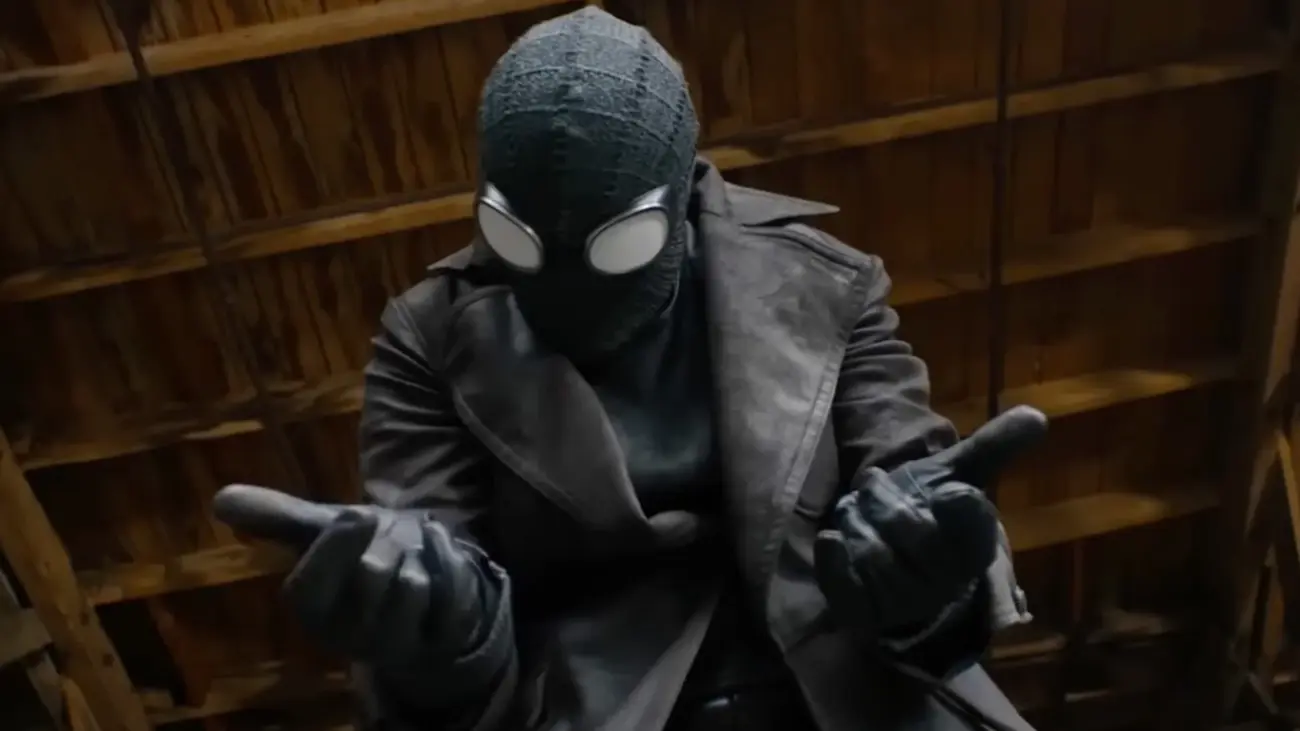
By using the name Ben Reilly, the show becomes a degree more distant from the strict requirements that have historically governed how Peter Parker can be portrayed on screen, giving the series room to do something truly fresh and new. His alter ego in the show is called simply The Spider, a moniker that suggests this iteration is operating entirely on its own terms.
Amazon itself has confirmed that the series and the animated ‘Spider-Man: Into the Spider-Verse’ are not narratively connected, meaning this version of Ben Reilly and his particular path to becoming The Spider exists in its own alternate universe. Cage voiced a different version of the character in the 2018 animated film, and despite sharing a costume aesthetic, the two portrayals are separate creative entities entirely.
The Dark Tone That Makes ‘Spider-Noir’ Unlike Any Marvel Show
The tonal distance between ‘Spider-Noir’ and the broader Marvel Cinematic Universe is not incidental. The 2009 comic series was conceived as a hard-boiled reimagining where familiar Marvel characters existed in morally compromised situations, and where justice did not arrive with quips or a smile. This alternate version of Spider-Man is set in 1933, during the Great Depression, a period when hope was scarce, corruption was rampant, and survival was never guaranteed.
The live-action series carries that spirit forward in a meaningful way. The show received a TV-14 rating, marking the first time any Spider-Man series has received that classification, as all previous series starring the wall-crawler were rated TV-Y, TV-Y7, or TV-PG. The production also offers viewers the option to watch in both color and black-and-white, a formal decision that underlines how seriously the team committed to the noir genre.
The Direct described the first season as an absolute triumph, with Cage shining as a grizzled superpowered private eye that the show is always evolving, keeping the story from getting old. Whether the origin lands as a supernatural curse born from a broken idol or a wartime experiment gone wrong in the show’s version, what remains consistent is that power here is never a gift.
It arrives wrapped in trauma, darkness, and a debt that can never quite be repaid. Now that the full season is available to watch, how do you think the live-action show’s take on Ben Reilly’s origin compares to the supernatural spider-god mythology that made the comic character so uniquely compelling in the first place?