‘Spider-Noir’ Season Finale: What the Ending Really Sets Up and Why Fans Are Desperate for a Season 2

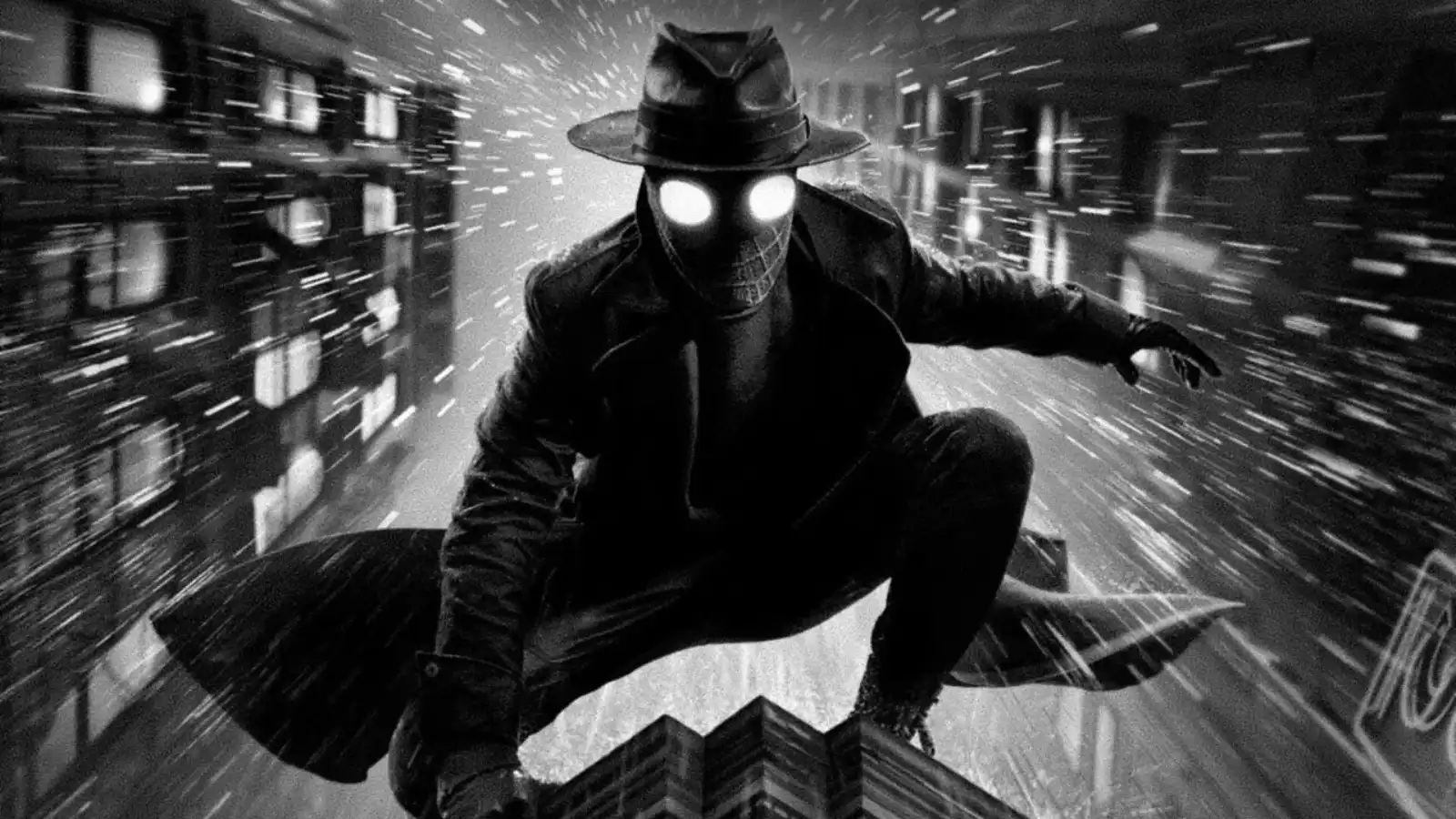

It has been a long time since Spider-Man swung into a live-action television series, but ‘Spider-Noir’ on Prime Video and MGM+ has made that wait feel more than worthwhile. With Nicolas Cage bringing a grizzled, hard-drinking version of Ben Reilly to the small screen for the first time, the eight-episode first season has landed with the kind of cultural weight that only the most buzzed-about superhero projects generate.
The season dropped on MGM+ in the United States on May 25 as a full-season linear binge before its global Prime Video release, and those who sat through to the very end of the finale have been buzzing ever since. With hints of future storytelling already planted by the showrunners and a finale that fundamentally reshapes this corner of the Marvel landscape, ‘Spider-Noir’ has made its end credits as hotly discussed as anything else in the season.
How the ‘Spider-Noir’ Season Finale Ending Lands
Ben Reilly successfully stops the total destruction of the Lower East Side by overloading Megawatt’s electrical converter, but the victory costs him his hard-boiled partner. It is the kind of bleak, costly win that defines the show’s tone throughout, where every triumph comes packaged with a devastating price.

In a devastating climax, the villainous Sandman shatters the mask of “The Spider,” exposing Ben’s identity to the public. To ensure his city’s safety, Ben uses a tactical, high-contrast smoke screen to force mob boss Silvermane and Sandman into cross-firing on each other. The resolution is deeply in keeping with the show’s hard-boiled spirit, relying on misdirection and wit over brute force.
The season ends with a wounded Ben retreating further into the shadows, now a wanted fugitive hunted by both the criminal underground and the NYPD. It is a closing image that leaves the character in a far more precarious position than when audiences first met him, with no clean resolution to offer comfort.
The End Credits Scene and What It Teases
While it wasn’t specified whether the reported episode runtimes take into account the end credits sequence, the runtime breakdown for the episodes suggests that fans should subtract around two to three minutes from each episode to obtain the length of the true, raw footage. This strongly implies that each episode carries its own credits roll, and the finale’s extended runtime is consistent with that pattern.
What has dominated fan discussion since the MGM+ airing is the broader question of what comes next. Co-showrunner Oren Uziel has revealed some potential details about what we could expect to see in a potential second season.
The first season is set in 1933, and he indicated to SFX Magazine that the early days of the Second World War could form a backdrop for the second run, noting, “Obviously, as time passes from 1933, we’re heading towards not just trouble in the financial markets in New York, but also a geopolitical struggle that would be an amazing canvas for any future storytelling.”
That kind of on-record statement from the showrunner reads almost like the verbal equivalent of a post-credits tease, seeding the ground for where Ben Reilly might next find himself if the show is renewed. With Ben now exposed and hunted, the idea of a WWII-era backdrop for season 2 transforms the show’s potential scope dramatically.
Nicolas Cage’s Performance and the Show’s Creative Vision
Cage bases his performance of Ben Reilly on Humphrey Bogart, and like Bogey’s greatest characters, a tragedy from the past has driven him to become cynical and selfish. It is a deliberate, classically rooted choice that gives the character an anchor in screen history rather than just comic book lore.
Showrunner Oren Uziel recently screened all episodes for Cage, who enjoyed watching them, and recalled the actor “speaking his own lines back with pleasure and glee,” calling it “one of the most rewarding things I’ve ever experienced.” That kind of mutual enthusiasm between lead actor and creative team is exactly the ingredient that tends to push a first season toward renewal.
Nicolas Cage can do anything, and he proves it here. Towards the end of the eight-episode season, he expands on the physicality of it far more than anticipated, and fans will love watching him put everything he has into it. The show has clearly unlocked something in the Oscar winner that his recent film work had only hinted at.
The ‘Spider-Verse’ Connection and a Standalone Universe
One of the most important things to understand about where ‘Spider-Noir’ goes from here is what it has deliberately chosen not to be. Showrunner Oren Uziel confirmed that the series bears no connection to the ‘Spider-Man: Into the Spider-Verse’ animated films, explaining the show will be a different flavor of the character that fans witnessed in the acclaimed animated movie.
Spider-Verse executive producers Christopher Miller and Phil Lord, who helped develop the concept and remain attached as executive producers, were asked about the series. Miller called it “a delight,” while Lord praised the edge Cage brought to the hard-drinking, hard-hitting private detective, saying, “He’s amazing. He had this great idea, which was, ‘I want to play this like a spider pretending to be a person.'” That approach pays off spectacularly in the finale, where the distinction between man and spider has never felt more painfully visible.
The ‘Spider-Man Noir’ comics actually featured a 1940s version of Peter Parker, so the decision to set this story in the 1930s with Ben Reilly rather than Parker gives the writers more creative freedom with the character’s tragic history. That freedom is evident in a season finale that feels genuinely earned rather than franchise-mandated.
What Season 2 Could Look Like
With Cage now enjoying a major career resurgence, it makes perfect sense for a new iteration of Spider-Noir to have his own TV series. The original ‘Spider-Man Noir’ comics have plenty of engaging source material to draw on, plus the idea of seeing Spider-Man in an old-school WWII-era setting is just too good to pass up. With the first season positioning Ben as an exposed fugitive in a city that no longer trusts him, season 2 has the kind of combustible starting point that great television seasons are built around.
Reviews praised Nicolas Cage’s unique and sometimes unhinged performance as Ben Reilly, while the mature tone was flagged as one of the show’s key strengths. An 8-episode season that left audiences immediately hungry for more is one of the clearest possible arguments for renewal, and if ‘Spider-Noir’ earns a second season, it will have earned every second of that credit sequence.
If you watched the ‘Spider-Noir’ finale on MGM+, we want to know what moment hit you the hardest and whether you think Ben Reilly’s unmasking is a wound this version of the Spider can ever truly recover from.