Is Netflix’s The Marked Woman Based on a True Story? Here’s What You Need to Know

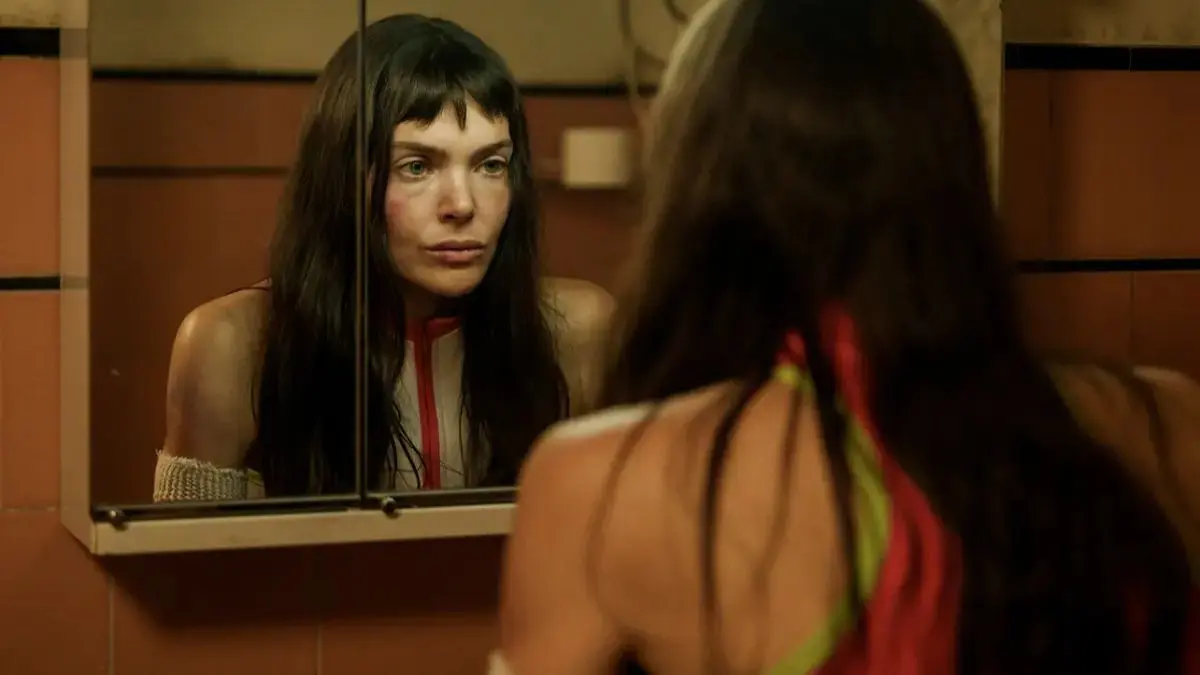

Spanish crime cinema has a long tradition of pulling real anxieties to the surface, wrapping social urgency inside tight, propulsive plots that refuse to let go. Netflix’s latest entry into that tradition, ‘The Marked Woman,’ known in Spain as ‘La Desconocida,’ arrives with a premise so visceral it begs the question almost immediately: could something like this really have happened?
The story kicks off at the port of Barcelona, where an unconscious young woman is discovered locked inside a shipping container, bound, gagged, and completely devoid of her memories. The stakes are immediately raised when a sudden attempt is made on her life while she recovers at the hospital. It is exactly the kind of opening that feels ripped from a headline, which is perhaps why so many viewers have gone searching for the real-life case behind it.
The short answer is that there is none. ‘The Marked Woman’ is a fictional story adapted from the novel ‘La Desconocida,’ co-authored by Spanish writer Rosa Montero and French writer Olivier Truc. The film is not drawn from any documented criminal case, and no real woman was discovered in those circumstances at the Barcelona docks. But the story’s origins are more layered and interesting than a simple yes-or-no answer can capture.
The source novel was co-written almost as a stylistic exercise, with each author apparently taking turns chapter by chapter. The book’s structure consists of eight chapters written alternately by Rosa Montero, who handled the odd-numbered chapters, and Olivier Truc, who wrote the even ones, each building the story from what their colleague had previously written. The initiative came from the Quais du Polar crime fiction festival in Lyon, as part of its Polar à 4 mains programme.
What makes this story particularly unique is how the alternating structure mirrors the narrative itself, with one chapter written by Rosa in Spanish and the next by Olivier in French, a bilingual creative experience that ties directly into the premise, which involves both Spanish and French police officers combining their resources. It is a genuinely unusual way to construct a thriller, and it gives the source material an organic cross-border texture that most crime novels manufactured by a single author would struggle to achieve.
While the specific events are fictional, the plot revolves around the trafficking of women and clandestine prostitution networks, linked to machismo and poverty but also very specifically to racism and the experience of migration, drawing on the most marginal realities that modern societies tend to hide and ignore. That thematic foundation gives ‘The Marked Woman’ a moral weight that purely invented stories sometimes lack. The film is not recreating a real case, but it is engaging honestly with a real crisis.
Rosa Montero expressed her excitement about the Netflix release, telling Netflix, “It was a fascinating, incredibly fun, and somewhat crazy project that gave our unknown character’s story an unusual intensity.”
The feature is directed by Gabe Ibáñez and penned by screenwriter Lara Sendim, whose credits include the acclaimed Spanish thriller ‘God’s Crooked Lines.’ Production took place across multiple locations in Spain, specifically filming in Barcelona, Catalonia, and Algeciras, Cádiz. The film stars Candela Peña as steadfast detective Anna Ripoll, a human trafficking investigator returning to work after a personal tragedy, alongside Ana Rujas and Pol López.
The production company behind the film is K&S Films, the same Argentine studio responsible for the massively popular Netflix sci-fi series ‘The Eternaut.’ That pedigree signals a production with genuine ambition behind it, and the finished film backs that up with a visual language that critics have noted leans heavily into mood. Director Ibáñez treats the city as a system rather than a backdrop, shooting the container yard, the morgue, and the precinct in a palette of steel, tile and water under sodium lamps, surfaces that hold no warmth and give nothing back.
The Marked Woman succeeds largely because it balances suspense with character development, investing in Ripoll’s emotional journey and the unknown woman’s gradual recovery. The film’s exploration of corruption, exploitation and institutional failure gives it extra weight, and while the narrative itself is fictional, its themes feel grounded enough to resonate.
Viewer reactions have reflected that duality. Many praised the film’s atmosphere, performances and unpredictable narrative, particularly the gradual unveiling of the unknown woman’s identity, while others highlighted the bilingual nature of the story as one of its strongest qualities, arguing that the Spanish-French dynamic gives the thriller a distinct identity compared with more conventional crime dramas.
Have something to add? Let us know in the comments!