Is ‘The Breadwinner’ Based on a True Story? Nate Bargatze’s Family Comedy Explained



The theatrical comedy landscape has witnessed a steady resurgence of nostalgic, wholesome entertainment driven by stand-up superstars expanding into narrative cinema. In 2026, record-breaking stand-up sensation Nate Bargatze made his feature acting debut alongside Mandy Moore in ‘The Breadwinner’. The project aimed to revitalize the lighthearted studio comedies that once defined family movie nights.
Directed by Eric Appel from a screenplay co-written by Bargatze and Dan Lagana, the TriStar Pictures release arrived in theaters in May 2026 before heading to home streaming platforms. As moviegoers watched the chaotic domestic tribulations of salesman Nate Wilcox, questions quickly spread regarding whether the onscreen domestic turmoil mirrored real events. Audiences naturally wondered if the fatherhood journey was pulled straight from the comedian’s personal life.
To answer the burning question directly, ‘The Breadwinner‘ is not based on a true story. The characters, company names, and specific narrative plotlines—such as a stay-at-home mother securing a viral deal on ‘Shark Tank’ that sends her overseas—were entirely conceived as original cinematic fiction. The film functions as an inventive, heightened scenario designed to engineer comedic tension.
Rather than recounting a literal biographical timeline, the narrative serves as an affectionate pastiche of classic 1980s suburban cinema, paying homage to hits like ‘Mr. Mom’. The filmmakers deliberately engineered a situational playground where common household missteps escalate into wild suburban mishaps. This framework allowed the production to explore marriage, parenthood, and unexpected role reversals without being bound by real history.
Real-Life Anecdotes That Inspired the Script
Even though the overarching narrative of ‘The Breadwinner’ remains fictional, Bargatze actively injected genuine milestones and comedic observations from his personal life into the script. Over his 20-year marriage to his wife Laura, the clean comic has routinely mined domestic misunderstandings for his bestselling comedy specials. Those lived-in moments became the emotional bedrock for Nate Wilcox’s bumbling domestic efforts.
Several specific set pieces in the film directly mirror true situations that Bargatze previously tested before arena crowds. For instance, an extended gag in which Nate realizes his house has a new roof only after a neighbor mentions it is pulled straight from the comic’s real life. Comedic actor Will Forte appears as the roofer, translating one of Bargatze’s favorite real-world stand-up stories onto the silver screen.
Mandy Moore’s character, Katie Wilcox, likewise channels the enduring competence of Bargatze’s real wife, who spent years running their household while he built his touring career. The fictional dynamic required Moore to showcase entrepreneurial enthusiasm against high-stakes pressure. Reflecting on that balance, Moore admitted that pitching the fictional product before real-world investors was “the most nerve-wracking” experience of the project during an appearance on TODAY.
Nate Bargatze’s Vision for Wholesome Storytelling
When developing the 99-minute comedy with TriStar Pictures and producer Jeremy Latcham, Bargatze insisted on delivering accessible entertainment without vulgarity. Having established a record-setting live comedy brand around clean material, the comedian remained steadfast in bringing that family-friendly sensibility to the multiplex. He sought to create a timeless theatrical outing that children, parents, and grandparents could all enjoy simultaneously.
The comedian was candid about seeking a tone reminiscent of modern crowd-pleasing television hits rather than cynical parodies. “You want it to have that Ted Lasso effect,” he said, “where it’s a feel-good story you can go back and watch again,” in an interview with Us Weekly. That deliberate creative focus anchored the narrative firmly in warm, relatable family dynamics rather than shock-value humor.
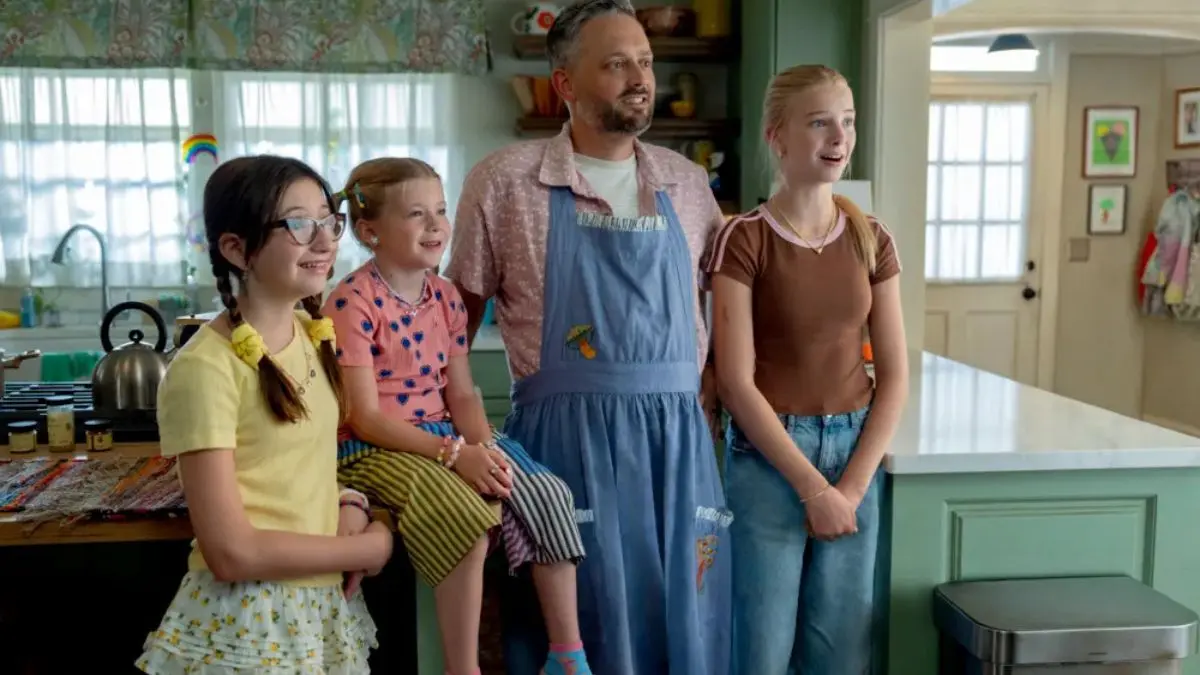
The story’s fatherhood arc was also colored by Bargatze’s real experiences raising his 13-year-old daughter, Harper. While the fictional Wilcox household features three young girls—portrayed by Stella Grace Fitzgerald, Birdie Borria, and Charlotte Ann Tucker—the comic leaned heavily into his paternal instincts during production. The young performers helped guide the first-time movie lead through the pacing and technical demands of narrative filmmaking.
Emotional Truths in an Imaginary Household
Ultimately, ‘The Breadwinner’ feels grounded to viewers because it taps into the very real identity shifts that happen when household routines abruptly change. While the script relies on classic sitcom tropes, the emotional adjustments of renegotiating domestic responsibilities reflect challenges that married couples navigate every day. Bargatze and Lagana successfully utilized personal vulnerability to make an entirely imaginary tale feel authentic.
By filtering genuine domestic memories through a scripted Hollywood lens, the film achieved its goal of celebrating modern parenting with affection. Nate Wilcox might be an invention born in a writer’s room, but the love and domestic absurdity driving his journey are drawn from genuine experience.
Do you think ‘The Breadwinner’ captured the real realities of modern parenting, or do you prefer Nate Bargatze sticking to his stand-up specials—let us know your thoughts in the comments below!