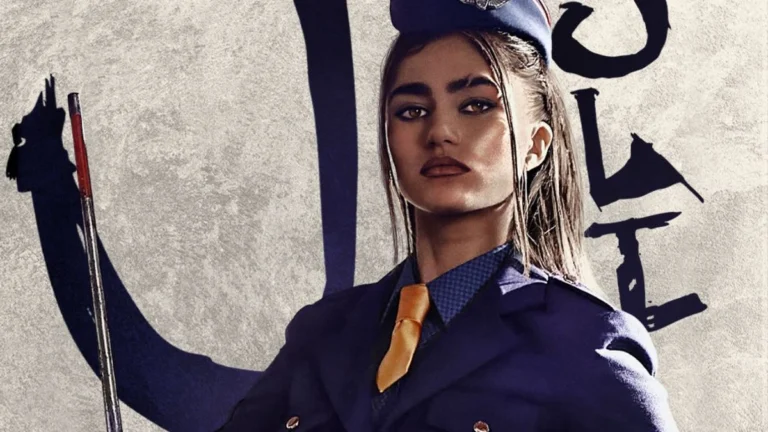
‘La Bola Negra’ Recap & Ending Explained: How Three Timelines Unravel a Century of Secrets


Spanish cinema has continuously wrestled with historical trauma, excavating long-buried wounds to interrogate modern identity. Over several decades, European auteurs have turned wartime devastation into sweeping cinematic parables. That expressive tradition recently reached a major milestone on the festival circuit, capturing top honors at Cannes and Toronto.
At the heart of this artistic impulse lies the shadow of the Spanish Civil War, an era defined by violent repression and systematic erasure. Among the cultural figures targeted by Nationalist forces, poet Federico García Lorca remains an enduring symbol of queer resistance. For nearly a century, remnants of his unfinished projects lingered in obscurity, waiting for visionary artists to give them voice.
That ambition comes alive in ‘La Bola Negra‘, the visual epic directed by Javier Calvo and Javier Ambrossi, famously known as Los Javis. Co-written with Alberto Conejero, the film expands on Lorca’s surviving four pages alongside Conejero’s play ‘La piedra oscura’. Refusing to soften historical brutality, Calvo confessed, “I don’t think queer movies have to be kind or nice. They can show the harshness of the world,” in an interview with The Advocate.
The Triptych Structure of ‘La Bola Negra’
The 155-minute film weaves three separate eras across nearly a century, establishing unique tonal signatures for each protagonist. In 1932, young aristocrat Carlos (Milo Quifes) attempts to join an elite gentlemen’s casino in Granada to secure his family’s standing. His dreams shatter when members conduct a secret ballot, dropping black balls into an urn to ostracize him over rumors regarding his sexuality.
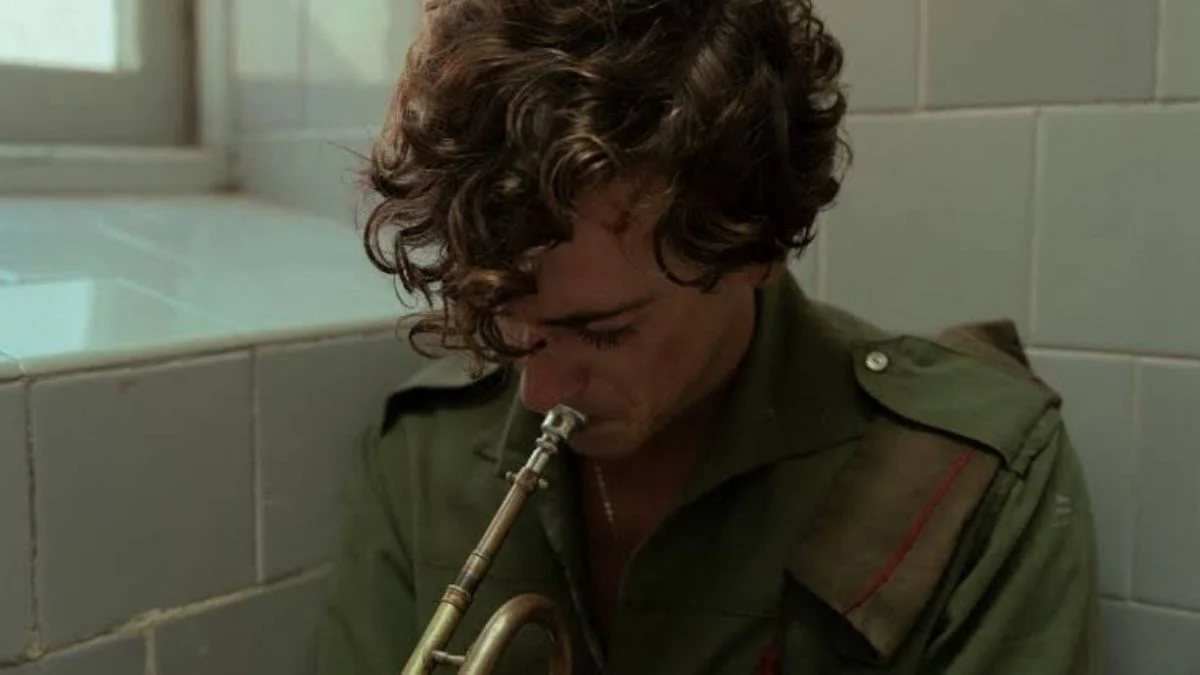
The narrative then plunges into 1937 amidst the chaos of the Spanish Civil War after Italian bombers strike a quiet village. Conscripted into General Franco’s Nationalist ranks to survive, innocent trumpeter Sebastián (Guitarricadelafuente) is ordered to guard a wounded Republican prisoner. That captive is Rafael Rodríguez Rapún (Miguel Bernardeau), Lorca’s real-life former lover and theatrical secretary.
Confined together inside a makeshift outpost, the two soldiers form a tender romance that defies political divides and impending execution. Rafael entrusts Sebastián with a crucial literary relic: the surviving draft of Lorca’s unfinished play titled ‘La Bola Negra’. When Rafael succumbs to his wounds, Sebastián survives the conflict determined to protect his lover’s final request.
Connecting the Threads Across Generations
The third storyline leaps to 2017, following Alberto (Carlos González), a conflicted Madrid researcher and playwright. Alberto struggles with an emotionally distant relationship with his mother Teresa (Lola Dueñas) while studying early twentieth-century queer art. His routine changes when an attorney informs him that his estranged maternal grandfather has passed away and left him an inheritance.
Alberto discovers that the bequest contains the original manuscript of Lorca’s lost play, launching an investigation into his family’s past. Collaborating with scholar Isabelle Durand (Glenn Close), Alberto authenticates the four pages and reconstructs the historical timeline. Following immense festival praise for the sweeping drama, The Guardian reported that the directors declared connecting with audiences in such a profound way was “the greatest gift we could receive”.
‘La Bola Negra’ Ending Explained: Unmasking Sebastián’s Legacy
The emotional climax of ‘La Bola Negra’ reveals that Alberto’s mysterious grandfather was none other than Sebastián. After the war, Sebastián spent decades living in the countryside with another man under the protective cover of being cousins to evade Francoist persecution. Despite their estrangement, Sebastián followed Alberto’s theatrical career from afar, lovingly preserving press clippings of his grandson’s accomplishments.
Alberto journeys to the rural homestead to meet his grandfather’s surviving partner, who confirms that Sebastián was immensely proud of his work. Returning to Madrid, Alberto reconciles with Teresa, dismantling decades of familial tension and unspoken grief. This unexpected inheritance transforms an artifact of historical repression into an emblem of intergenerational healing.

Meanwhile, the film resolves Carlos’s 1932 storyline through an allegorical sequence that finishes Lorca’s incomplete text. Carlos meets a mythical figure named Snow inside the silent casino as flurries drift indoors, fearing that queer youth will be forgotten by history. Yet, as Alberto cradles the recovered manuscript in 2017, the narrative answers Carlos’s fear by proving that buried truths eventually reemerge.
Ultimately, ‘La Bola Negra’ celebrates queer memory, historical resistance, and artistic immortality across changing generations. By connecting Carlos, Sebastián, and Alberto across three timelines, Los Javis show that stories silenced by authoritarian violence refuse to remain hidden forever. The falling snow shifts from an omen of death into a preservation blanket, holding the past intact until the future arrives.
What did you think of the generational connections in ‘La Bola Negra’, and how did the emotional ending resonate with you—let us know your thoughts in the comments below!