‘Lucky Strike’ Ending Explained: What It Actually Means and Why It’s Leaving Audiences Divided


Rod Lurie’s new war film had all the ingredients for a gripping wartime thriller, yet ‘Lucky Strike’ is landing in theaters with as many questions as answers. Released on June 26, the movie has sparked a heated conversation, not just about its merits as a combat picture, but specifically about what its ending is trying to say and whether it earns the emotional weight it is clearly chasing.
The film is inspired by true events and follows one soldier trapped behind enemy lines during the last major German offensive of the Second World War, the Battle of the Bulge, armed only with a Motorola SCR-300 radio as he attempts to evade the advancing Nazi Panzer army and find his way back to safety. That deceptively simple survival premise is where things get complicated, because the movie wraps itself in a structural device that critics and audiences are still trying to untangle.
The Battle of the Bulge Survival Story at the Center of It All
Scott Eastwood plays Captain Castle, a soldier who was eligible for a deferment due to his stateside work as an engineer but enlisted anyway. It is December 1944 in the Ardennes forest in Belgium, and Castle is ordered to lead half a dozen of his men to a destination several hours away from base camp, where they are to block a key road with explosives.
While the blockade mission is successful, Castle is the last man standing after machine gun snipers and arriving scouts wipe out his team. What follows is a one-man trek across wintry, hostile terrain that forms the spine of the movie, with Castle improvising his way through a series of close calls against German forces.
When Castle calls headquarters with his team’s trusty radio, one they have nicknamed “Lassie” for its reliability, he learns the nearest safe haven is Elsenborn, more than 30 kilometers, roughly 19 miles, away. His truck will not move, meaning he must walk those miles behind enemy lines with a bullet in his leg and a radio on his back.
The episodic storyline features several effectively suspenseful sequences, including one in which Castle is forced to play dead for an excruciatingly long time with German soldiers nearby. For stretches, this is exactly the kind of wire-tight combat filmmaking that Lurie built his reputation on with ‘The Outpost.’
The Framing Device and What the Ending Reveals
The film’s most debated structural choice is its framing device, which bookends the entire survival story with scenes set after the war ends. The film begins in greyscale, following a group of Black soldiers driving a truck through the Ardennes Forest in December 1944. Evans and his First Sergeant share their angst about the endless conflict before German soldiers arrive to gun them down.
The film just as abruptly re-centers on Castle, a white man working for Galvin Industries, who appears at Mrs. Caldwell’s door to discuss her unpaid benefits. The connection between this visit and the wartime story only becomes clear at the very end, and it is the reveal that has generated the most discussion online.

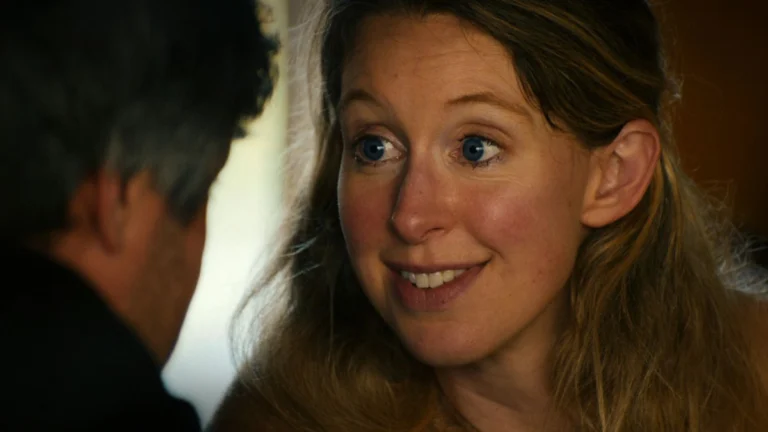
Mrs. Caldwell is revealed to be a super-bright woman who designed the Motorola FM radio that ultimately saves Castle’s life, and so after the war he drops by to pay his respects and, to show his gratitude, helps her with a pension problem. The implication is that a Black woman on the American home front was the unsung architect of the technology that kept Castle alive throughout his ordeal, drawing a pointed parallel to films like ‘Hidden Figures.’
After World War II ends, the film returns to this conversation between the two characters, culminating in the statement, “One day, people will understand why this story matters.” It is a line that has become something of a lightning rod for the film’s detractors.
What the Radio Named Lassie Was Really Trying to Say
The portable radio nicknamed “Lassie” serves as Castle’s lifeline and has larger implications in the movie, but those reasons arrive so late, with Lurie pulling another rug out from under the audience, that they miss their symbolic mark. Critics writing for RogerEbert.com pointed out that the film seems to be making a plea for the diversity of unsung scientists, yet it buries that argument so deeply into the final act that it registers as an afterthought rather than a thesis.
Going along with Castle’s team is a backpack-mounted SCR-300 FM radio transceiver nicknamed “Lassie” and made by the Galvin Manufacturing Company, which would later become the household name of Motorola. The film wants the audience to feel the weight of knowing that the radio saving a white soldier’s life was invented by a Black woman denied her due recognition, but the screenplay never gives that idea enough room to breathe.
The postwar framing device of Castle visiting Mrs. Caldwell is well-meaning but unnecessary, and introducing the hero none the worse for wear in a post-war setting syphons the suspense from everything that follows. Structurally, showing the audience that Castle survives before the survival story even begins is a creative gamble that most reviewers feel does not pay off.
Scott Eastwood, Colin Hanks, and the Performances Behind the Camera
Castle shows almost no emotion outside of frustration, and the people he meets along the way rarely stick around long enough to inspire any further personal revelations from him. Eastwood, son of Hollywood icon Clint, has faced consistent scrutiny over whether he has the screen presence to anchor a film entirely on his own shoulders.
Eastwood carries the film with a certain badass action star presence, but it is an emotionally flat performance, and a more vulnerable protagonist struggling to keep a cool head while fighting back panic would have made for a more engaging film. The second-generation Hanks delivers a solid effort but has very little screen time, amounting to an extended cameo.
Principal photography took place in late 2024 at Nu Boyana Film Studios in Bulgaria, with Roadside Attractions and Saban Films acquiring North American distribution rights in March 2026 and scheduling the film for a theatrical release on June 26. The production pedigree is real, and Lurie’s eye for combat staging occasionally shines through, but audiences are finding that ambition alone cannot paper over the narrative cracks.
Why the Ending Has Split Critics and Viewers
Even more bafflingly discussed is the end credits sequence featuring World War II photographs of soldiers with no connection to the cast members whose names appear on screen or to the characters they play. For some, this slideshow gesture toward real soldiers feels genuine and moving. For others, it reads as a hollow attempt to borrow emotional credibility the film has not earned on its own terms.
When the movie finally does make its plea for relevance, which hinges on the life-saving importance of Castle’s radio, it seems to come out of another film entirely, namely ‘Hidden Figures,’ with its homage to the diversity of unsung scientists. That comparison cuts to the heart of what frustrates so many viewers: the bones of something genuinely compelling are present in ‘Lucky Strike,’ but the film keeps abandoning its most interesting ideas.
The right pieces were present, just misaligned. Whether that misalignment is a fatal flaw or a forgivable stumble in an otherwise earnest war picture seems to depend entirely on how generously you are willing to engage with Lurie’s intentions, and if you have already seen ‘Lucky Strike,’ your take on that closing scene with Mrs. Caldwell is probably the most revealing thing about where you land on the whole film.