‘The Invite’ Ending Explained: What the Movie Means for Joe and Angela’s Broken Marriage


A24 knows how to sell a premise, and the one at the center of ‘The Invite‘ sounds almost dangerously simple. Two couples. One dinner party. A night that starts with charcuterie and ends somewhere nobody planned. Olivia Wilde’s third directorial effort hit limited theaters on June 26, carrying the weight of serious critical momentum and a Sundance standing ovation.
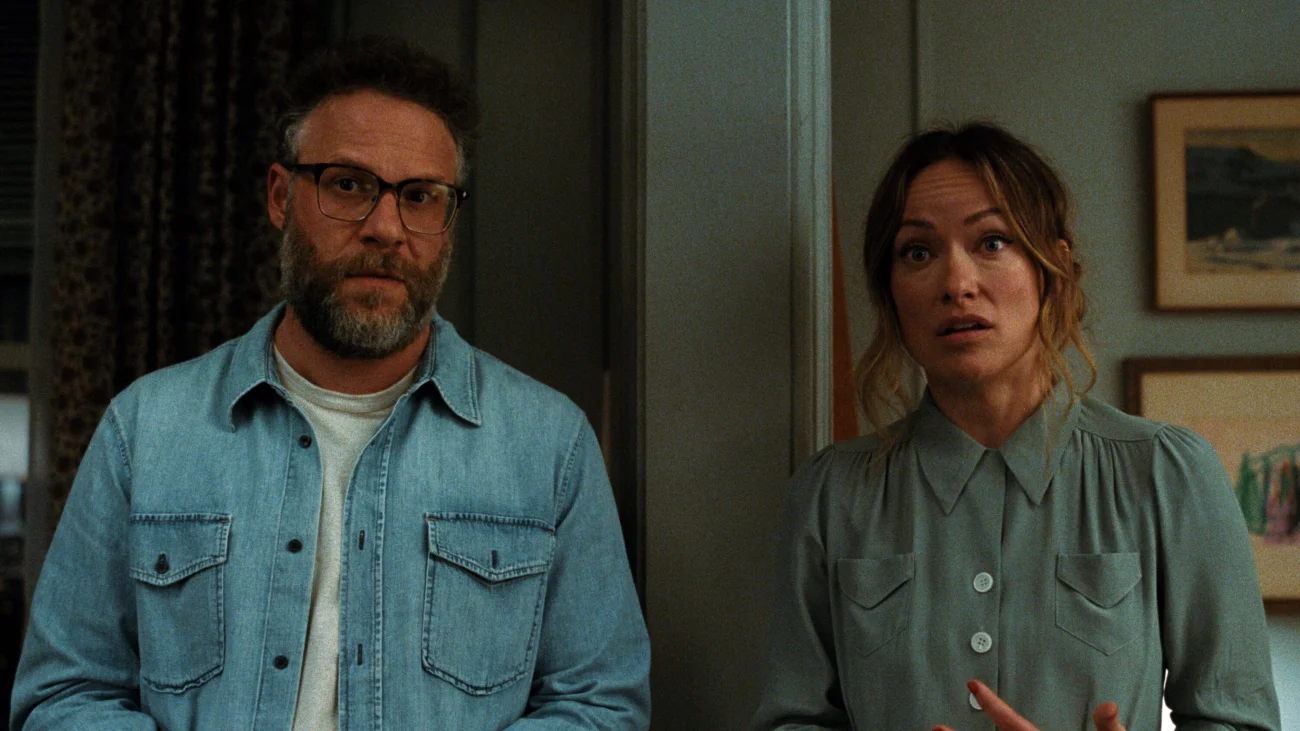
The film follows Joe and Angela, a married couple whose relationship is on thin ice, as they invite their enigmatic upstairs neighbors for a dinner party, only for the night to spiral into unexpected places. That deceptively breezy logline hides a film that, by its final act, has transformed into something far more emotionally bruising than most summer comedies dare to attempt.
The Dinner Party That Dismantles a Marriage
Joe was a once-promising indie-rock artist whose career flamed out after one big hit, and he now teaches music at a Bay Area conservatory where his sense of failure is eating him alive. Angela, meanwhile, hasn’t made much use of her art-school degree, and spends her days renovating and redecorating the apartment as her sole creative outlet.
From the very start, we know that Joe and Angela’s relationship hasn’t had a true spark for a while, but we learn everything we need to know about each character through the lightest of touches to the wordplay. The bickering begins before the guests even knock. Wine was forgotten, the cheese went untouched, and the invitation itself becomes a dispute about who was or wasn’t listening.
Their neighbors are Hawk, a retired firefighter, and Piña, a psychotherapist and sexologist, who have been dating for less than a year, and whose loud sex life has repeatedly disturbed Joe and Angela. Joe’s plan to confront them immediately sets a combative tone, while Angela wants nothing more than their approval. The friction between those two impulses drives the film’s funniest and most excruciating stretches.
Cruz is too vivid to be reduced to a stereotype, and Piña is ultimately the one character the movie refuses to mock, being too comfortable in her own skin and too ruthlessly accurate in her assessments of Joe and Angela’s troubled marriage.
The Swinging Proposal That Forces the Real Conversation
Hawk casually reveals during the evening that Angela often walks naked in front of her apartment windows because she enjoys being watched, a revelation that infuriates Joe. Angela explains that it started accidentally after a shower but became a ritual because Joe barely notices her anymore. That single confession cracks the film wide open.
Hawk then reveals the real reason for the dinner invitation: he and Piña want Joe and Angela to join them for group sex. Recognizing the resentment between the married couple, Piña suggests they shouldn’t do it that night. Instead, she proposes that they pair off separately, with Joe heading to his office with Piña while Hawk and Angela retreat to the kitchen. Both encounters quickly become awkward.
Rising to the surface throughout the film is the emotional honesty of what Angela needs to be happy sexually, bringing up feelings of being desired that Joe never knew were there. The proposal from Hawk and Piña functions less as a scandalous plot device and more as the crowbar the screenplay needed to force two people to finally say the things they have spent years swallowing.
After prodding from Joe, Hawk reveals that his real name is Howard, and that he changed it after his late wife died from cancer, explaining how grief consumed him until meeting Piña through psychotherapy. Joe undercuts the vulnerable moment with a tasteless joke, disappointing Piña.
What the Ending of ‘The Invite’ Actually Means
Piña tells Joe and Angela directly that they are mean to each other. The couple admits they haven’t had sex in over a year, and then bicker again, blaming each other for why they don’t have sex anymore and why they’re miserable. The accusations spill out without elegance, which is precisely the point.
The movie’s third act veers in an almost completely different direction tonally, diving into a raw conversation about the sense of happiness disappearing within Joe and Angela’s relationship and reflecting on whether keeping a broken marriage afloat is worth it when wallowing in resentment for each other, and naively thinking it’s for the better for your children if you stay together.
‘The Invite’ caps its near ninety minutes of uneasy hilarity and harsh truths with a somber and sweet ending that ties everything together through essentially a therapy session, and it works wonders for the film, providing genuine insight into the uncomfortable topics it revels in. This is where the film earns its emotional payoff. The evening goes from awkward to cozy to strangely sexual before disaster and probable divorce, but then the ending leaves us feeling like there is light at the end of the tunnel.
Olivia Wilde’s Strongest Work and Why Critics Can’t Stop Talking About It
The emotional honesty Wilde builds toward lands in a way that completely disarms the viewer, and the score helps enormously there, with a gorgeous piece of music that carries the final stretch into something genuinely moving. That score, composed by Devonté Hynes, has become one of the most discussed elements of the film’s closing stretch.
On the review aggregator Rotten Tomatoes, ninety-two percent of critics’ reviews are positive, with an average rating of 7.5 out of 10, while Metacritic assigned the film a score of 77 out of 100, indicating generally favorable reviews. The consensus is that Wilde has delivered her most controlled and confident directorial effort yet.
Edward Norton and Penélope Cruz are both four-time Oscar nominees, with Cruz winning in 2009, while Seth Rogen is a four-time Emmy winner, and Wilde herself won an Independent Spirit Award for directing ‘Booksmart’. That pedigree shows in the way each actor finds something different and specific to do with their role, particularly in the film’s more emotionally demanding final passages.
The Bigger Question ‘The Invite’ Leaves You Asking
‘The Invite’ asks the question of what you do when your life didn’t pan out as you thought and leaves a lot for the viewer to unpack, functioning as an entertaining therapy session that makes you laugh, smile, and think. The film never promises Joe and Angela a tidy resolution. What it offers instead is something rarer in mainstream cinema: the possibility of honesty as a first step.
Cruz and Norton act as the couple’s comic foils and, in many ways, as ghosts of Christmas future, offering a present look at how life could be different while also encouraging the pair to think about the self-destructive path they’re on. The neighbors were never meant to save the marriage. They were meant to hold up a mirror.
Celebrity psychotherapist Esther Perel is listed as a consultant on the film, and that influence is felt in how the closing stretch handles the language of grief, desire, and self-deception. The ending does not tell you whether Joe and Angela stay together. It asks whether they now finally want to.
Whether you think that ambiguity is earned or evasive likely says something about where you stand on your own relationships, so tell us: does ‘The Invite’ ending feel like the beginning of something real for Joe and Angela, or just a beautiful night that changes nothing by morning?