‘Marty Supreme’ Isn’t Really A Ping-Pong Movie, And That Confusion Is The Whole Point

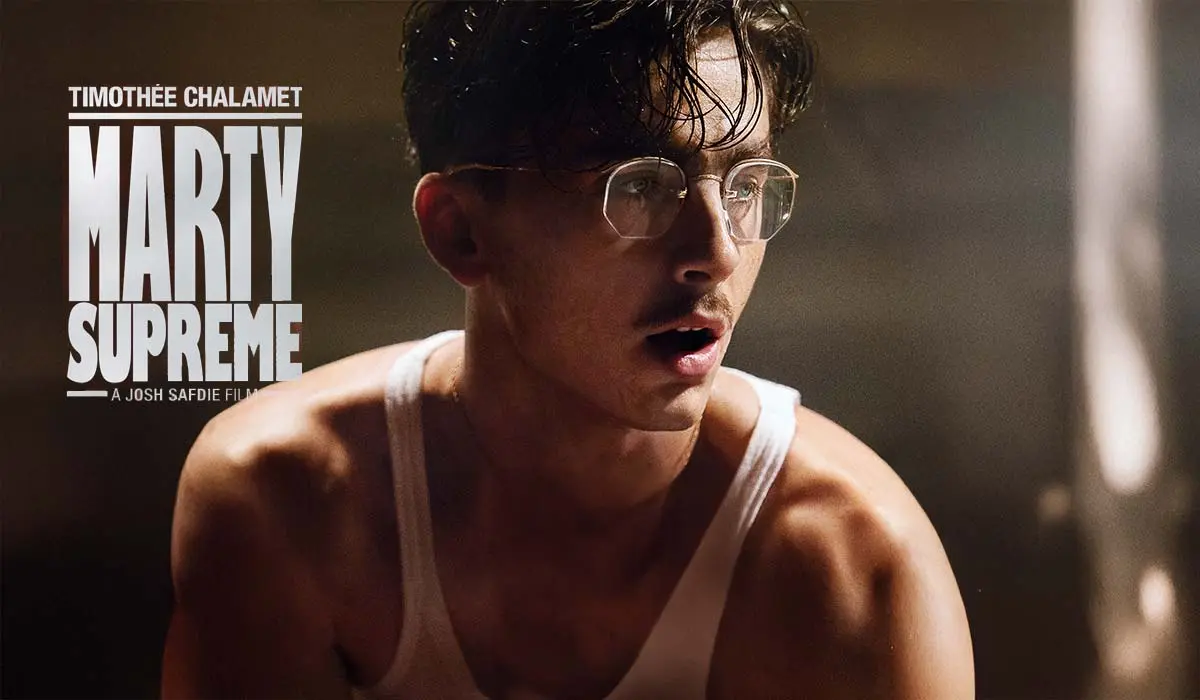

Most audiences walking out of ‘Marty Supreme’ share one slightly bewildered reaction. They are not entirely sure what the point of the whole thing was supposed to be. Josh Safdie’s solo debut stars Timothée Chalamet as a 1950s table tennis hustler, yet anyone expecting a tidy underdog story leaves with a very different feeling in their chest.
That confusion is not a flaw, it is the entire design. The film is loosely inspired by real-life champion Marty Reisman, and it has earned a 93 percent score on Rotten Tomatoes from 353 critic reviews along with universal acclaim on Metacritic. What the actual subject of the movie turns out to be is something far stranger and sadder than a sports biopic.
The Hustle Behind Marty Mauser’s Quest For Greatness
The film opens in 1952 New York, where Marty Mauser sells shoes in his uncle’s shop on the Lower East Side. He is twenty-three, working a dead-end retail gig, and convinced he is destined to be the greatest table tennis player on the planet. The catch is that getting to championship tournaments in London and Tokyo costs money he simply does not have.
So Marty hustles. He cons opponents at the local club, intimidates a coworker into emptying the store cash locker, and tries to launch a custom orange ping-pong ball merchandise scheme that nobody asked for. In one early sequence, Chalamet’s character pitches the orange ball as if he has been selling them for years, only to flame out and resort to threatening robbery to make his flight.
His relentlessness powers the picture. The character barely sits down, scheming his way through London hotels, an affair with a faded Hollywood actress, and a chaotic homecoming back in Manhattan. Critics have repeatedly compared Marty to the propulsive antiheroes of ‘Uncut Gems’ and ‘Good Time’, only this time dressed up in postwar period clothes.
How ‘Marty Supreme’ Dissects The Postwar American Dream
The film’s deeper concern is the country Marty thinks he is conquering. Safdie and co-writer Ronald Bronstein have framed the project as a Jewish experience story rooted in post-Holocaust pride. Marty wears a Star of David around his neck and snarls to a roomful of journalists that he is Hitler’s worst nightmare, the ultimate product of Hitler’s defeat.
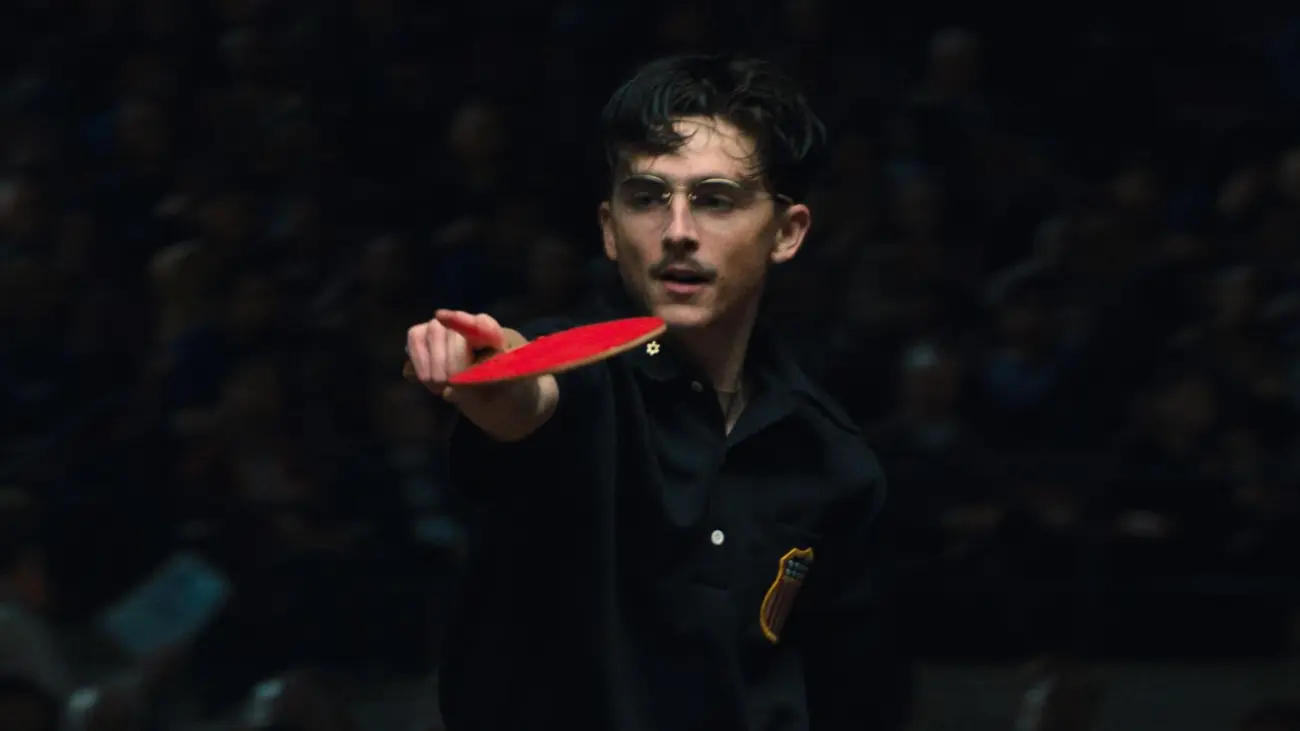
That bravado is also where the film starts twisting the knife. Marty’s individual ambition keeps colliding with corporate ambition, embodied by Kevin O’Leary’s character Milton Rockwell, a pen mogul looking to use a Tokyo exhibition match to expand his business in postwar Japan. Rockwell wants Endo, the Japanese champion, to be his company’s mascot, which means Marty has to lose for the brand to win.
Speaking to Dazed, Safdie laid out exactly why the salesman archetype runs through every scene. He argued that the Second World War reshaped how individuals imagined their capacity to remake the world, with selling yourself becoming inseparable from the dream itself. The film essentially asks whether Marty’s hunger is freedom or just another form of being merchandised.
The Final Shot And The Real Meaning Of ‘Marty Supreme’
The ending quietly pivots the entire film away from the sports genre it has been pretending to inhabit. After being humiliated by Rockwell in Tokyo and refusing to throw his exhibition match against Endo, Marty wins a meaningless rematch that carries no title and no payday. He flies home not in Rockwell’s private jet, but with American soldiers heading back to New York.
He then heads straight to the hospital, where his on-and-off lover Rachel has just given birth to their child. After reuniting with his mother, he confesses his love to a recovering Rachel and breaks down in tears upon meeting her newborn. The man who refused responsibility for an entire runtime suddenly cannot run anymore.
The credits then roll over Tears for Fears. Everybody Wants to Rule the World plays as Marty sobs at the sight of his baby, the lyric reading like an indictment of everything he has chased. One reading frames the moment as a narcissist finally realizing the world does not end at the edge of the table, with Marty winning the game and losing the hustle in the same breath.
Why Josh Safdie Built ‘Marty Supreme’ Around Pathological Dreaming
The film’s emotional core comes directly from Safdie’s own life. Speaking with CBC’s Q, he revealed that chasing ‘Uncut Gems’ for a decade left him strangely empty once he finally got the film made. He called it almost pathological dreaming, and admitted he sacrificed years of life that he is still trying to catch up on.
That admission reframes the whole movie. Marty is not really an underdog or even a conventional antihero, he is a portrait of what unchecked ambition costs the people orbiting it. Safdie has noted that Marty differs from Adam Sandler’s Howard Ratner because Marty is chasing happiness rather than a high, which makes the gut punch of the ending feel even more bruising. He finally gets what he wanted and discovers it never matched the daydream.
That is also why the period piece is laced with 1980s needle drops by Tears for Fears, Peter Gabriel, and Public Image Ltd. Safdie has said the 1980s felt like a rebirth of the American Dream in air quotes, with Reagan-era prosperity reaching back for a remembered postwar glory. The dissonance between decades is the dissonance inside Marty himself, a young man so busy becoming someone that he forgets to be anyone, so what did those final tears in the hospital actually mean to you when the Tears for Fears track kicked in over the credits?