‘Murder 101’ Recap and Ending Explained: What Really Happened to the Redhead Murders Cold Case

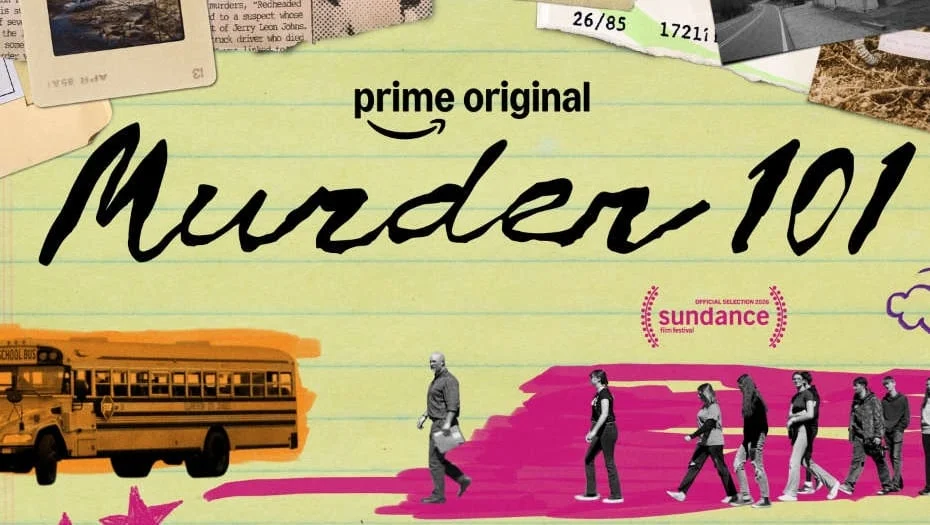

Prime Video’s newest true crime offering is proving that you do not need a badge or a press pass to crack open a cold case. ‘Murder 101’ dropped all three episodes on July 13, 2026, and it is already generating buzz for its unusual premise built around a Tennessee classroom rather than a squad room.
The docuseries follows a small town sociology class as its members chase down decades old leads tied to the so called Redhead Murders. It is a fresh spin on the genre, and viewers are curious about how the season wraps up and what it means for the real people at the center of the story.
The Redhead Murders Cold Case at the Heart of the Show
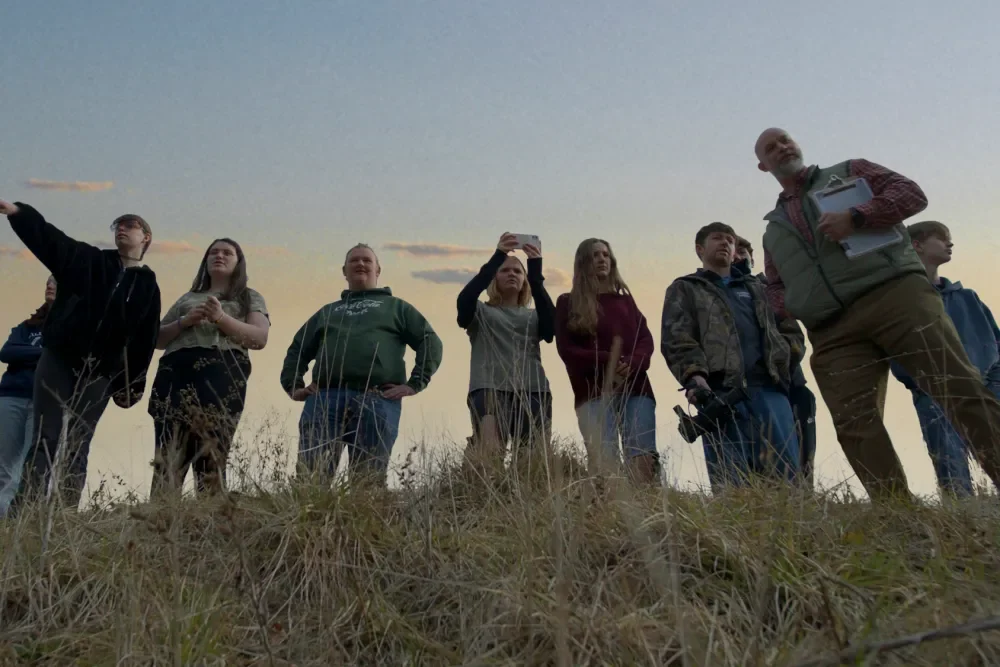
The series opens at Elizabethton High School, where sociology teacher Alex Campbell has spent years turning his classroom into a working investigation. The show establishes that Campbell first had students look into a 2018 cold case using old newspaper clippings, which eventually pointed toward what national media dubbed the Redhead Murders.
That original class discovered more than a single suspect, uncovering what appeared to be numerous victims connected to one man. The docuseries picks up nearly a decade later as a new group of students continues the work, hoping to identify additional victims and tie their deaths to Jerry Leon Johns, the man convicted of attempting to murder the case’s sole surviving victim.
Throughout the three episodes, Campbell walks his students through an enormous amount of material including old interviews, autopsies, court documents, and crime scene photos. The show also spends real time on the misogyny that surrounded the original investigations, since several of the women were sex workers and addicts, a factor that allowed the victims to stay unidentified and the case to lose urgency for decades.
By the end of the season, the class has made significant progress in identifying potential victims and understanding the scale of the crimes, though the docuseries is upfront that not every question gets answered before the credits roll.
The Elizabethton High School Sociology Class Becomes the Real Investigative Team
What separates ‘Murder 101’ from a typical true crime entry is that its detectives are teenagers rather than professionals. The show frames Campbell’s project as a legacy that gets passed down year after year, with each new class building on the discoveries of the students who came before them.
For the first time, this current class partners directly with investigators, visiting crime scenes, talking to locals, and launching a public campaign to generate new tips. The series is careful to note that this is not the tidy version of justice viewers might expect from streaming true crime, since real change moves slowly and often stays incomplete.
One especially resonant thread follows a student named Lacey, who begins tracking down the investigators originally assigned to her own mother’s case after years of being left without answers. Watching her piece together what happened the night her mother died becomes one of the more personal throughlines in the season.
Director Stacey Lee told wthr that she was drawn to the project because of how rarely true crime gets paired with the hopeful energy of high school life. According to Lee, “you don’t often have the aspect of feel-good, hopeful wonder of high school life mashed up with the dark mystery of true crime, and so that juxtaposition was incredible to me.”
The Ending Explained ad What Happens to the Case
The finale does not deliver a clean resolution in the way a scripted crime drama might. Instead, the class ends the school year with unresolved leads, forcing both the students and the audience to sit with the uncomfortable question of whether justice can exist without full closure.
The season makes clear that the students’ work still matters even without a tidy conclusion, since their efforts help identify more potential victims and reframe how the public understands the scope of the killings tied to America’s highways. The docuseries closes on the idea that the investigation itself is ongoing, with future classes likely to continue where this group left off.
Critics have noted that the show’s crime elements, while compelling, are not really the main draw. The emotional weight comes from watching Campbell’s teaching style transform how his students see themselves and their capacity to make a difference, even when the mystery itself refuses to wrap up neatly.
Cast, Crew, and the Production Team Behind the True Crime Docuseries
‘Murder 101’ is based on the true crime podcast of the same name from KT Studios and iHeartMedia, and the show is produced by KT Studios and Freshman Year. Jon Watts, who directed the ‘Spider-Man’ trilogy, serves as an executive producer alongside Dianne McGunigle and Stephanie Lydecker.
Director Stacey Lee, previously known for ‘The Secrets of Hillsong’ and ‘Olivia Rodrigo: Driving Home 2 U,’ helms the three episode season. The show first screened its pilot at the Sundance Film Festival in January 2026 as part of the Nonfiction Pilot Showcase before Prime Video confirmed a wide release.
Prime Video released the official trailer, key art, and premiere date on June 16, 2026, ahead of the show’s global rollout across more than 240 countries and territories. A local premiere was also held at the Historic Bonnie Kate Theatre in Elizabethton, giving the community and the real students featured in the series a chance to watch the finished product together.
Since its real cast is made up of Campbell and his actual students rather than actors, the show carries a documentary weight that has already earned it comparisons to more traditional docuseries fare, while still standing apart because of its classroom setting.
With the full season now streaming, ‘Murder 101’ leaves plenty of room for discussion about whether Mr. Campbell’s students got the answers they were chasing, and viewers who just finished the finale may find themselves wanting to weigh in on whether the Redhead Murders case can ever truly be closed.