‘Paper Tiger’ Review: Charisma Collides with Quiet Desperation in 1980s New York

With ‘Paper Tiger’, writer and director James Gray steps back into the New York territory of his early career after spending recent years exploring the Amazon in ‘The Lost City of Z’, deep space in ‘Ad Astra’, and his own youth in ‘Armageddon Time’. Originally conceived as a continuation of ‘Armageddon Time’ before scheduling shifts led Miles Teller and Scarlett Johansson to replace Jeremy Strong and Anne Hathaway, the 1986 crime drama premiered in competition at Cannes, opened the New York Film Festival, and arrived in American theaters through Neon in November. Gray reunites with cinematographer Joaquín Baca-Asay on 35mm film and composer Christopher Spelman for this $15 million production set across the outer boroughs.
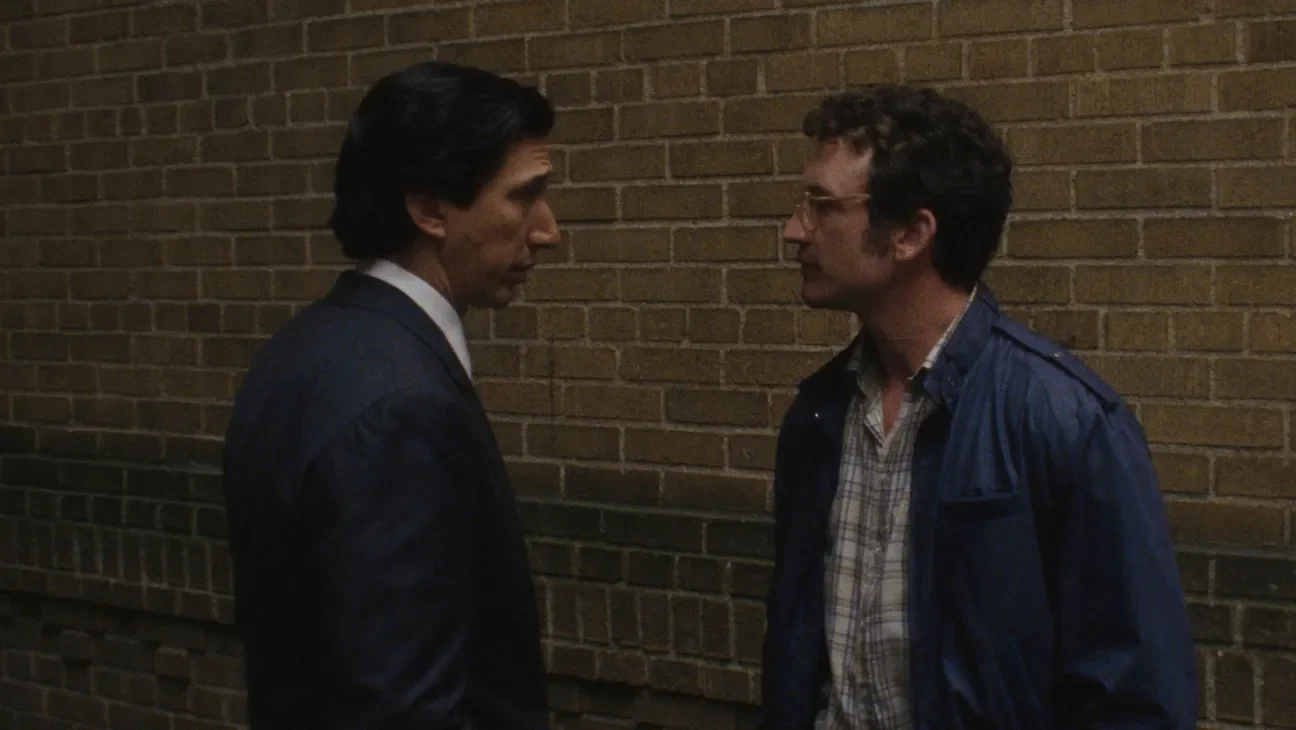
The story opens on Labor Day in 1986 inside a modest Queens home where earnest engineer Irwin Pearl, played by Teller, worries about affording Ivy League tuition for his teenage sons Scott and Ben, portrayed by Gavin Goudey and Roman Engel, alongside his wife Hester, played by Johansson. That quiet routine fractures when Irwin accepts a consulting offer from his flashy, divorced older brother Gary, played by Adam Driver, a former police officer who pitches an easy payday working with Russian owners along Brooklyn’s polluted Gowanus Canal.
Gary dismisses the risks as empty bluster, yet an unfortunate nighttime visit uncovers illegal oil dumping at the waterfront, pulling the Pearl household into a brutal spiral of mob threats and a chilling intrusion inside their own home.
Rather than chasing slick underworld escapism, ‘Paper Tiger’ reveals itself as a patient, bruising tragedy about decent people who overestimate how cleanly they can bargain with corruption. Gray favors simmering emotional dread over constant pyrotechnics, showing how fragile suburban stability becomes the moment financial pressure and wounded pride override better judgment. While that grounded focus lends real weight to the brothers’ predicament, familiar crime rhythms and an uneven domestic subplot keep the film just shy of true brilliance.
At the center of the picture sits a magnetic, deeply felt performance from Driver, who plays Gary not as a loud caricature but as an ambitious striver masking quiet despair behind flashy suits and easy bravado. Driver commands every scene he enters while letting subtle cracks show beneath Gary’s polished confidence, turning a reckless fixer into an achingly human figure. Opposite him, Teller brings genuine vulnerability and stubborn decency to Irwin, giving their shifting sibling bond a volatile pulse that drives the entire story.
Where the screenplay falters is in how it handles Johansson’s role, centering much of Hester’s arc on a secret cancer diagnosis that she hides from her husband and boys. Johansson brings real warmth and fierce maternal instinct to her scenes, especially once outside threats close in on her family, yet the illness thread feels curiously detached from the criminal fallout around her. Instead of sharpening the main conflict, Hester’s private crisis often reads like a separate melodrama competing for space alongside the brothers’ collapse.
Even when the plot settles into slower stretches or echoes ground Gray previously covered in ‘Little Odessa’, ‘The Yards’, and ‘We Own the Night’, the craft on display remains absorbing. Shot on 35mm by Baca-Asay, the shadowy interiors, harsh bursts of glare, and cavernous Brighton Beach meeting spots conjure an unvarnished 1980s city, backed by Spelman’s brooding score. Parts of the second half drag slightly as the tension plateaus, yet when Gray finally unleashes violence during a late confrontation in a field of tall grass, the sudden brutality lands with unforgettable force.
What lingers longest after the final frame is Gray’s unflinching refusal to glamorize easy money or soften the cost of poor choices. By keeping the focus locked on family members who struggle to speak plainly with the people they love most, ‘Paper Tiger’ turns a local waterfront scheme into a sobering portrait of regret and quiet isolation.
In the end, ‘Paper Tiger‘ succeeds as a compelling, handsomely staged crime drama elevated by towering work from Driver and steady conviction from Teller. Its isolated subplot for Johansson and occasional reliance on familiar Gray motifs prevent every element from locking together seamlessly, yet its emotional sting stays sharp to the very end. I give ‘Paper Tiger’ an 8 out of 10 for offering a tough, deeply humane look at how swiftly good intentions can unravel.
Will you be watching 'Paper Tiger'?
Share your thoughts in the comments below and let me know whether you agree with my verdict on ‘Paper Tiger’.