The 10 Most Politically Charged Jimmy Kimmel Moments


Jimmy Kimmel has been in late-night long enough to see American politics reshape his monologues, guests, and even his show’s rhythms. Over the years he’s waded into health care fights, spoken after mass shootings, sparred with cable-news hosts and lawmakers, and hosted sitting presidents—all on a national stage where jokes and policy often collide.
These moments aren’t about punchlines so much as the news they generated: a senator’s pledge that turned into the “Jimmy Kimmel test,” emotional on-air pleas after tragedies, high-profile interviews from the White House and beyond, and clashes that spilled from his desk into Congress and courtrooms. Here are ten of the biggest.
President Biden’s gun-policy and abortion interview on ‘Jimmy Kimmel Live!’

In June 2022, President Joe Biden sat down on ‘Jimmy Kimmel Live!’ for a wide-ranging conversation that focused on gun legislation and abortion access. The interview followed a string of mass shootings and arrived as lawmakers negotiated measures on background checks and crisis-intervention funding. The booking underscored how the White House used entertainment platforms to target audiences that might not watch traditional political programming.
Kimmel pressed on executive actions, Senate dynamics, and what the administration could do amid gridlock. The episode packaged policy discussion alongside the show’s familiar bits, illustrating how late-night formats can deliver granular legislative updates while keeping a broad audience engaged.
The health-care monologues and the “Jimmy Kimmel test”
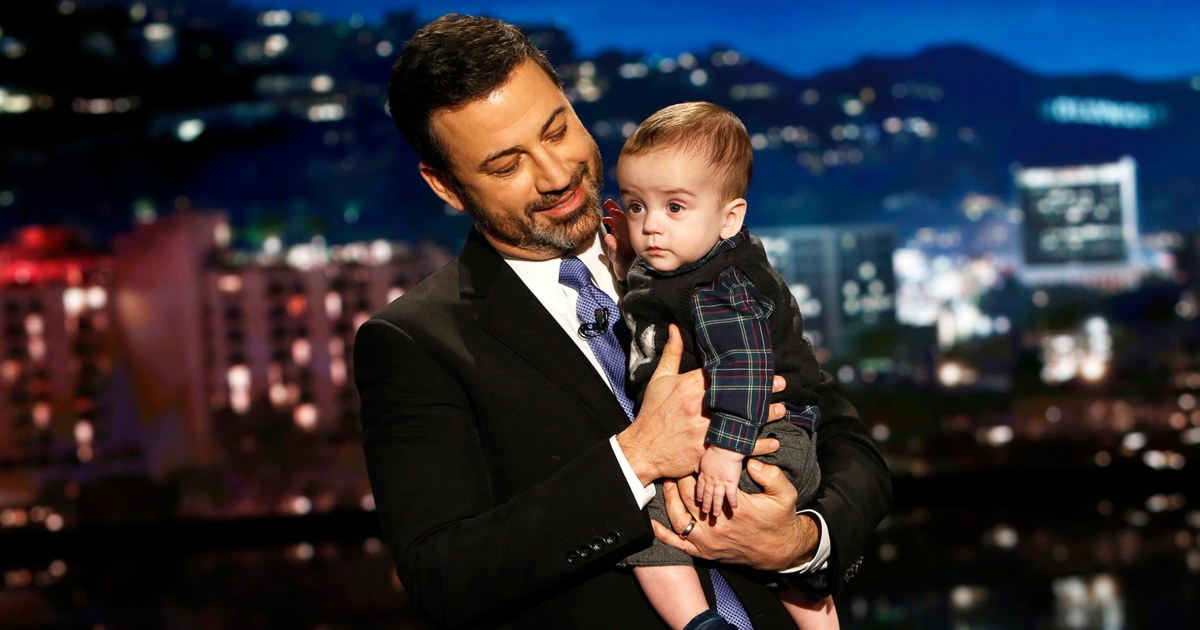
In May 2017, Kimmel described his newborn son’s emergency heart surgery and linked the story to access to coverage for pre-existing conditions. The monologue quickly became part of the national conversation over efforts to repeal and replace the Affordable Care Act, drawing responses from lawmakers and health-policy experts.
Days later, Senator Bill Cassidy introduced the “Jimmy Kimmel test,” a shorthand for guaranteeing that a child with a serious condition would get needed care regardless of cost. When the Graham-Cassidy repeal bill advanced that September, Kimmel revisited the topic and argued the proposal fell short of that standard, helping frame public scrutiny as the bill stalled in the Senate.
After the Las Vegas mass shooting, a call for action

Following the October 2017 mass shooting in Las Vegas, Kimmel—who grew up there—opened with a detailed account of what had happened and urged action on gun policy. The segment became one of the most-shared monologues of the week, summarizing casualty figures then known and outlining measures under active debate.
The show followed with resources and updates as lawmakers weighed responses, reflecting how late-night platforms can relay verified information quickly while the news cycle is still developing. The monologue’s reach amplified pressure on Capitol Hill and kept specific policy ideas in circulation.
Parkland response and direct appeal to Washington
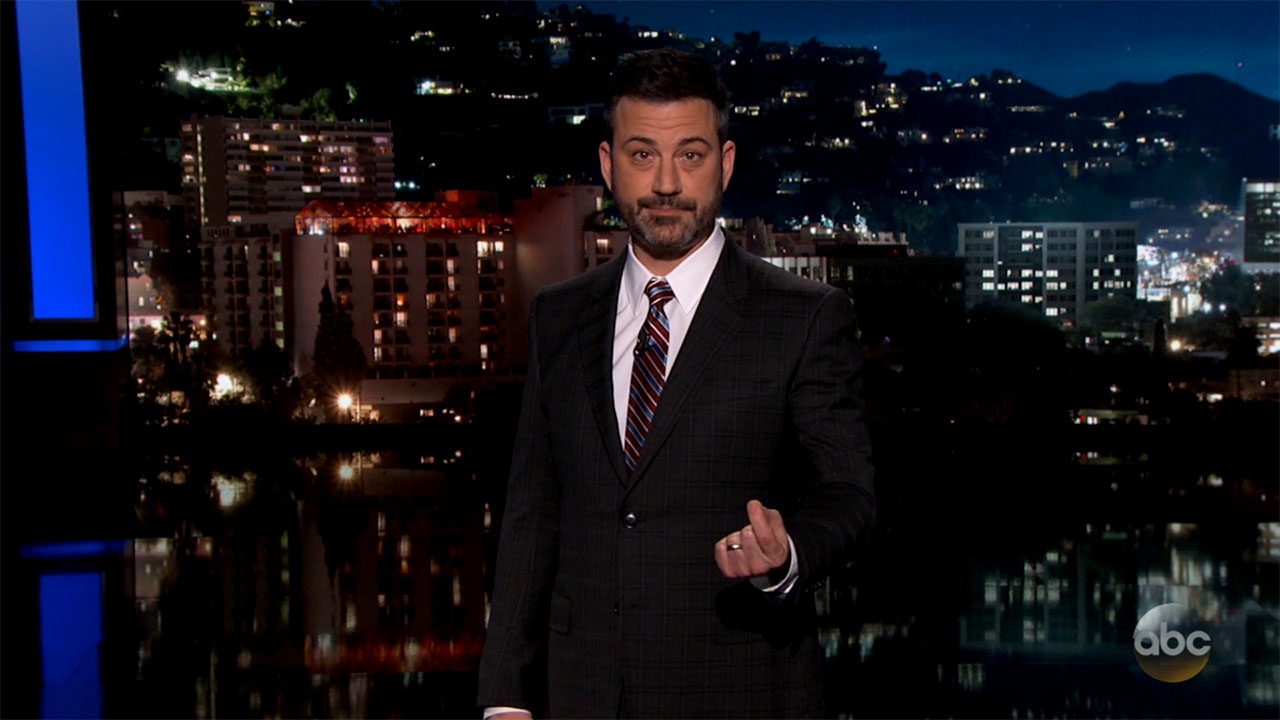
After the February 2018 school shooting in Parkland, Florida, Kimmel devoted his opening to the events and addressed federal leaders directly. He highlighted current proposals—such as background-check expansions and school-safety funding—and pointed viewers to the legislative steps being discussed in Congress.
The segment joined a wave of student-led advocacy and national coverage that tracked what the White House and lawmakers said they would consider in the weeks that followed. It demonstrated how late-night shows can serve as clearinghouses for concrete policy options during moments of intense public attention.
Feud with Sean Hannity spills across shows and years

In April 2018, Fox News host Sean Hannity criticized Kimmel’s comedy bits, prompting a back-and-forth that jumped from television to social media and back. The dispute drew in audience bases from both programs and culminated in Kimmel announcing a truce after several days of exchanges.
The rivalry resurfaced periodically, including a renewed flap in 2021 tied to a gubernatorial recall campaign in California. Each round produced parallel monologues that recapped claims, aired clips, and pointed viewers to the political stories driving the conflict, turning the feud itself into a recurring media-politics storyline.
President Obama’s ‘Mean Tweets’ and policy messaging on late-night
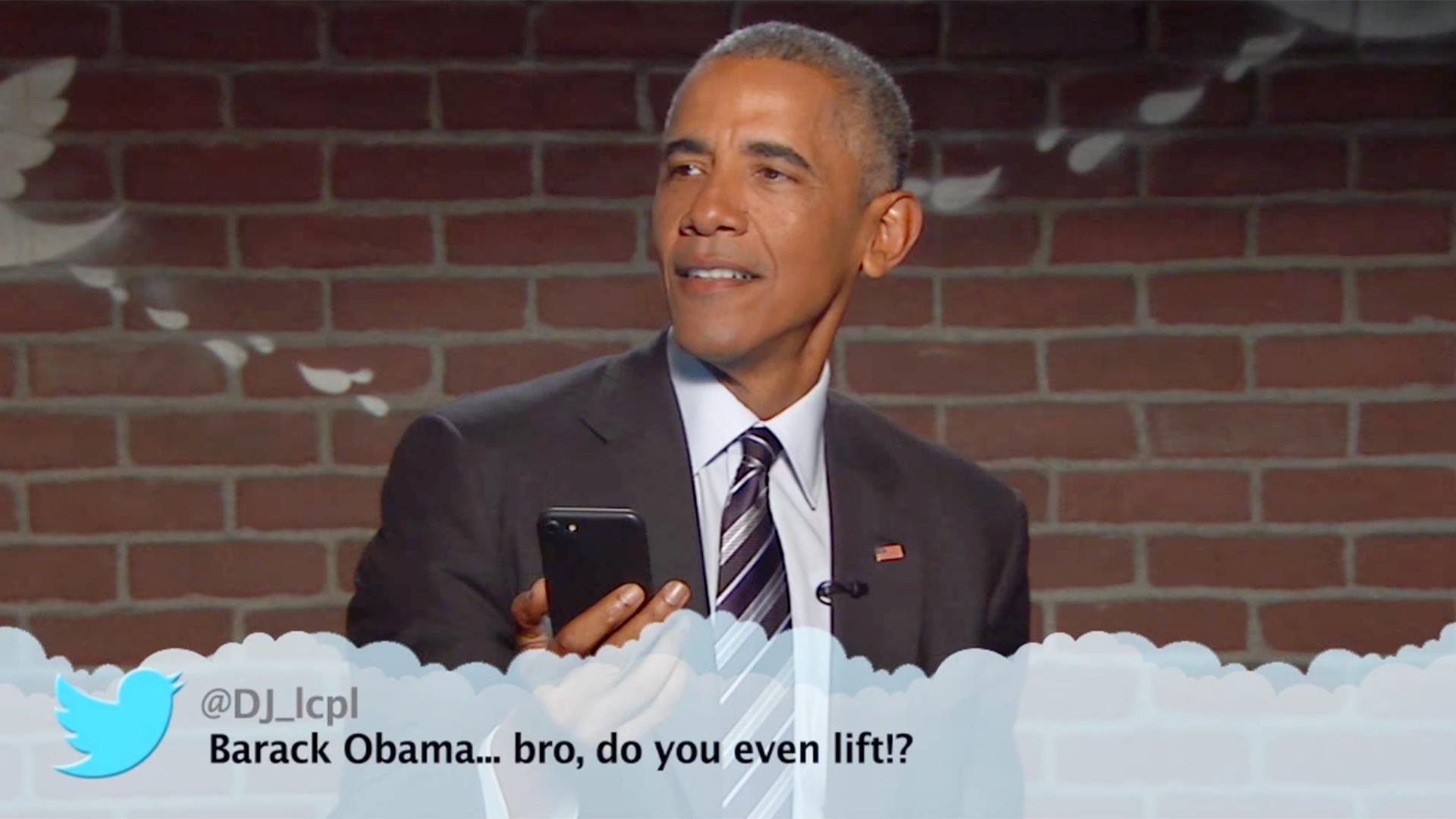
When President Barack Obama appeared on ‘Jimmy Kimmel Live!’ in 2015, he read ‘Mean Tweets’ and then shifted into policy topics such as race, policing, and college affordability. The segment showcased how a White House can mix light-touch entertainment with substantive talk to reach nontraditional news consumers.
The booking also illustrated how ‘Jimmy Kimmel Live!’ packages a president’s appearance within a familiar comedy framework without losing the policy thread. Audiences encountered a high-profile guest in a recognizable bit, then stayed for a discussion that covered specific programs and administrative priorities.
Trump’s canceled appearance during the 2016 campaign
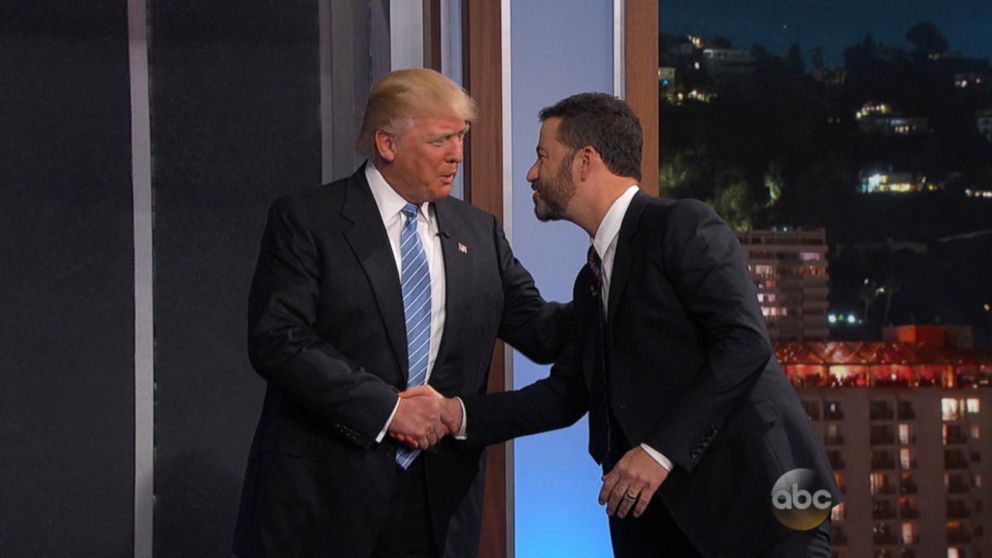
During the 2016 election cycle, Kimmel told his audience that then-candidate Donald Trump had been scheduled for the program but canceled. The dropped booking was noted across outlets tracking candidates’ media strategies and the late-night circuit’s role in campaign messaging.
The cancellation later became part of a longer arc of friction between Trump and late-night hosts. As campaign and presidential media habits evolved, the incident was often cited in rundowns of how candidates used, or avoided, high-visibility entertainment platforms.
Marjorie Taylor Greene files a complaint over a Kimmel joke

In April 2022, Representative Marjorie Taylor Greene said she reported a Kimmel joke to the U.S. Capitol Police, citing safety concerns. The show addressed her statement on air, and the exchange continued online as both sides posted updates and reactions.
Coverage laid out what was said in the original monologue, what Greene alleged in her complaint, and how the program responded on subsequent nights. The dust-up highlighted how televised political humor and public-figure security claims can intersect in real time.
George Santos, prank Cameo videos, and a lawsuit

In late 2023 and 2024, Kimmel aired prank Cameo videos purchased from former Representative George Santos, presenting them as comedy segments on ‘Jimmy Kimmel Live!’. Santos later filed a lawsuit alleging misuse of his likeness and other claims tied to the way the clips were obtained and broadcast.
The case drew attention to how satire, consent, and platform terms collide when short-form creator content migrates to network television. Legal filings and hearings focused on questions such as fair use, expectations around paid shout-outs, and what constitutes permissible parody in a broadcast setting.
Post-Dobbs monologues on abortion rights

After the Supreme Court’s Dobbs decision in June 2022, Kimmel devoted multiple openings to explaining how the ruling affected access to abortion across states. The show summarized key legal changes, pointed viewers to verified resources, and tracked how state-level laws were shifting week by week.
As legislatures and courts adjusted, the monologues helped audiences follow practical impacts on health care providers and patients. The segments became recurring touchpoints for understanding what changed, where, and how policy debates were evolving outside Washington.
Share your thoughts on these moments in the comments—which one stands out most to you and why?