‘The Boys’ Finale Explained: Creator Breaks Down Major Deaths and Teases Canceled Gen V Season 3 Plans


After five seasons of chaos, The Boys has finally wrapped up its story with a finale that did not hold back on major deaths and emotional endings.
The series ended with a brutal final showdown between Butcher and Homelander, and creator Eric Kripke has now opened up about why those deaths mattered so much and how they connect to a bigger plan that was always in place from early on.
The information comes from an interview with Kripke published by Variety, where he breaks down the final episode and also talks about how a planned continuation through “Gen V” Season 3 would have carried the story forward.
The biggest moment in the finale is the long-awaited fight between Billy Butcher and Homelander. After years of hatred building between them, the two finally clash in a deadly confrontation.
Homelander is first stripped of his powers when Kimiko uses radiation against him, a turning point that allows Butcher to overpower him. In the end, Butcher kills Homelander by driving a crowbar into his head. Kripke explained that this moment was something they had known for a long time. He said, “We 100% knew that Butcher was going to kill Homelander with a crowbar.”
Even though Homelander’s death feels like the final victory, the story does not stop there. Butcher himself becomes the next threat. After Homelander’s fall, Butcher decides he wants to wipe out all supes using a virus.
This puts him directly against Hughie, who refuses to let that happen. The emotional conflict between the two leads to another major death. Hughie shoots and kills Butcher to stop him from destroying everyone. Kripke explained that this was always part of the emotional core of the story. He said the idea of Hughie and Butcher reaching a final breaking point had been planned for years and was built into their relationship from the start.
The finale also uses Kimiko in a key way that changes the outcome of the entire battle. Her ability to absorb and release radiation becomes the tool that removes Homelander’s powers. Kripke said this idea came from early season planning, when the writers spent weeks shaping how each character’s ending would work. The goal was to make sure the final defeat of Homelander felt earned, not random.
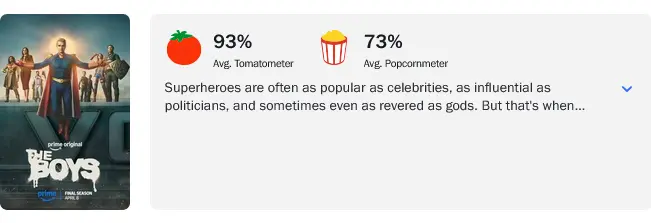
Alongside these deaths, the show also closes the story for several other major characters. Frenchie’s absence is felt deeply, even after his earlier exit, and his work indirectly helps Kimiko’s role in the final fight. Mother’s Milk, Annie, and Hughie survive the chaos and are shown trying to rebuild their lives. Ryan, Butcher’s stepson, also survives but chooses to walk away from Butcher, rejecting any family connection with him after everything that happened.
Kripke explained that while the finale focuses on destruction and loss, it was also designed to leave space for something new. That is where “Gen V” comes in. According to him, a planned continuation of “Gen V” Season 3 would have directly explored the aftermath of the fall of Vought’s control and the collapse of superhero structure in society.
Kripke said that if “Gen V” had continued as originally intended, it would have followed young supes trying to survive in a world where there is no longer order or protection. Vought’s system is gone, leaving characters without guidance, jobs, or direction. He described it as a world full of uncertainty, where some supes would try to become heroes while others would turn into villains.
He explained that Marie and the other younger characters were meant to be at the center of this next phase. The finale of The Boys was already planting that idea, especially with the passing of responsibility from Annie to Marie. Kripke said this shift was intentional and part of a larger plan to expand the universe.
He also spoke about Stan Edgar’s return and how that could have played into future stories. With Vought leadership shifting again, Kripke described the situation as “loose nukes,” where powerful people and dangerous supes are now operating without control. This would have been the core idea behind “Gen V” Season 3, showing how young characters adapt when the system that once controlled them no longer exists.
Kripke confirmed that these ideas were real plans for “Gen V” Season 3, not just loose thoughts. He said the season would have explored how young supes deal with independence, morality, and power in a broken system. However, he also admitted that these ideas are still in an early stage now, and it is not certain how or when they will be used.
Even with the major deaths of Homelander and Butcher, Kripke made it clear that the story was never just about endings. It was also about what comes after. The final moments of the series show that while the main conflict is over, the world it leaves behind is still unstable, and that is where future stories could continue exploring the fallout.
Have something to add? Let us know in the comments!