‘The Evil Lawyer’ Ending Explained: What Mek’s Verdict, Jittri’s Past, and That Kosol Twist Really Mean



Netflix has a new Thai thriller to obsess over, and it landed without warning on June 11. ‘The Evil Lawyer’ comes from the award-winning director of ‘Mad Unicorn,’ Nottapon Boonprakob, and has been described as Thailand’s first courtroom drama of this scale, one that reimagines legal storytelling for a global audience through grounded research, dark humor, and a refusal to look away from social wounds and systemic injustice. For viewers who just devoured all eight episodes, the finale leaves plenty to unpack.
The series drops you into moral quicksand from the very first scene and never lets you climb out. By the time the credits roll, ‘The Evil Lawyer’ ends with Mek walking free, Jittri uncovering the truth about her father, and a shocking Kosol twist that could change everything moving forward. Here is a breakdown of what it all means.
What Happened to Mek and the Murder Charge
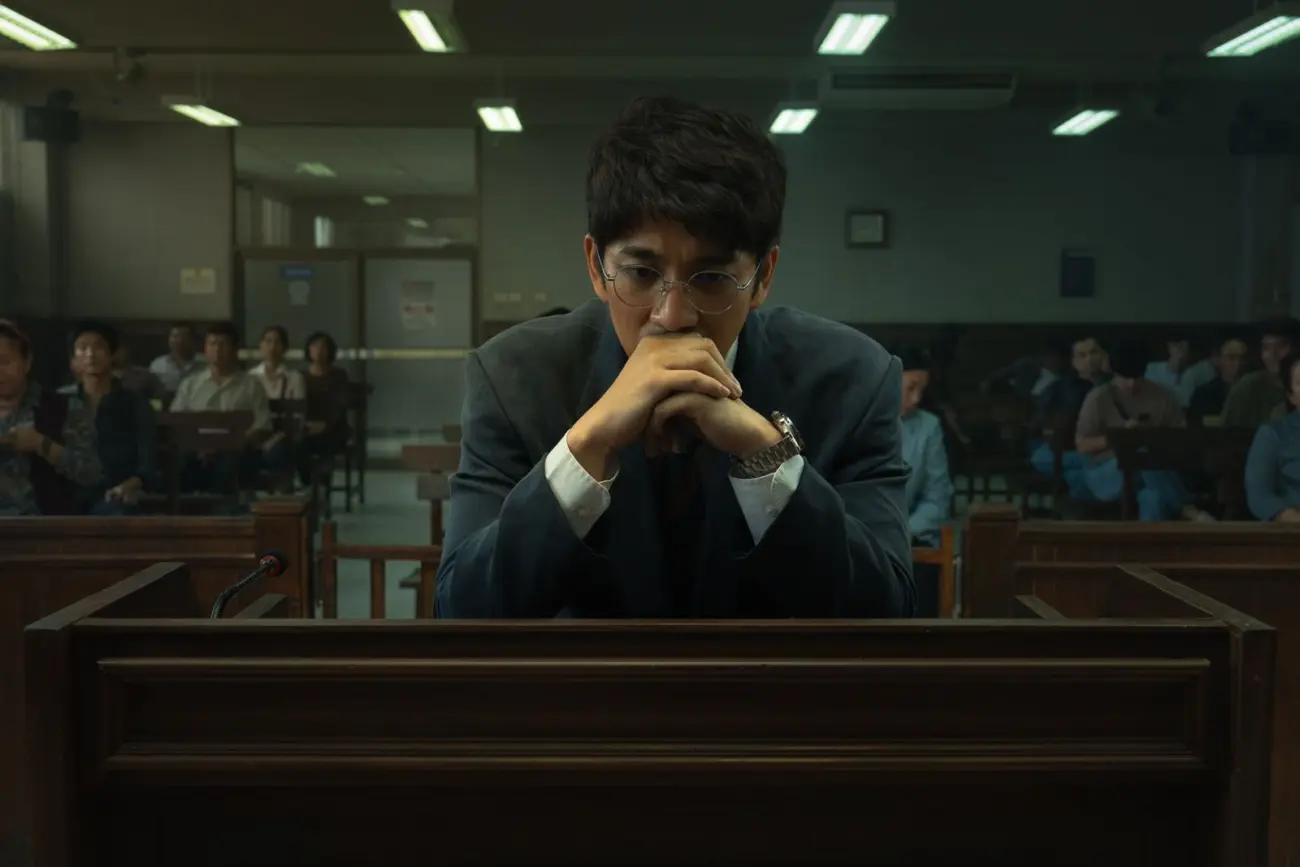
The entire engine of the show is built around one brutal act of injustice. Mek, played by Nat Kitcharit, is an idealistic young lawyer who believes the law should protect the powerless, and that belief shatters when he is framed for the murder of the son of Anan, a powerful police chief played by Songsit Roongnophakunsri.
From that point, the show becomes a relentless pressure cooker as Mek’s own faith in legal institutions is dismantled piece by piece.
Backed into a corner, Mek turns to Jittri, a fearsome defense lawyer infamous in legal circles as the “Evil Lawyer,” known for exploiting loopholes, bending rules, and using any tactic necessary to win. She takes Mek’s case on one condition: he must work for her. This partnership forces Mek to become something he never wanted to be.
The season reaches its climax as Mek’s trial enters its final stage, with Jittri and Ang attempting one last bold move to expose corruption and reveal the truth. That move pays off, and Mek is ultimately acquitted, though not through the clean, principled justice he once believed in.
Jittri’s Father and the Hidden Personal Stakes
The most emotionally resonant thread of the finale is not Mek’s verdict at all. It is what Jittri discovers about herself. Throughout the series, her ruthless methods seemed purely tactical, a professional posture built over years of navigating a corrupt system. The ending reveals that her motivations run much deeper and far more personal.
Netflix’s ‘The Evil Lawyer’ ends with Jittri uncovering the truth about her father. This revelation reframes everything that came before it, casting her entire career and her willingness to take Mek’s case in a new light.
Director Nottapon Boonprakob has said that what he hopes viewers will eventually ask, once they have moved past her toughness and her morally ambiguous methods, is a simpler and more human question: what happened to this woman. The finale answers that question with considerable weight.
“She’s not simply an ‘evil lawyer’ or an anti-hero,” Boonprakob has said. “She’s someone whose choices and worldview have been shaped by everything she’s been through.” Jittri’s identity as the woman who weaponizes the law’s own loopholes is not cruelty for its own sake. It is survival, shaped by a past the show has been concealing all season.
The Kosol Twist That Changes Everything
If Mek’s acquittal is the emotional resolution, the Kosol twist is the narrative grenade the finale throws just as you think it is over. The shocking Kosol twist could change everything moving forward. Without giving away the full mechanics of the reveal, it repositions a character whose role in the conspiracy has been deliberately obscured throughout the eight-episode run.
Unlike traditional courtroom dramas that focus on a single case, ‘The Evil Lawyer’ unfolds through multiple interconnected cases, with each storyline revealing a different aspect of the justice system, from political influence to social inequality, while Mek’s personal case serves as the emotional backbone connecting each subplot into a larger narrative about power, truth, and accountability.
The Kosol twist is the seam that stitches all of those subplots together in a way that feels genuinely earned. It also makes a potential second season an intriguing prospect rather than a forced continuation.
The Moral Question the Show Was Always Really Asking
‘The Evil Lawyer’ is not ultimately about whether Mek survives. It is about what survives of Mek. The ending is deliberately ambiguous on that front. The series makes viewers question whether justice and legality are always the same thing. Mek walks out of that courtroom a free man, but he is not the same lawyer who walked in at the beginning of the story.
Director Boonprakob explained that he wanted the series to push audiences toward questions with no easy answers, about the justice system, its loopholes, society, and moral boundaries, and that he wants viewers to question what is right and wrong and why those questions are so difficult, or even impossible, to answer.
The finale honors that promise entirely. It does not hand you a tidy bow. It hands you a contradiction and trusts you to sit with it.
The creative team visited courts regularly, consulted lawyers, judges, prosecutors, and NGO workers, and had legal experts review each case in the script to ensure the series’ arguments, procedures, and loopholes all feel authentic and believable. That groundwork pays off in the finale specifically, where the courtroom mechanics feel less like drama and more like a true portrait of how power actually operates inside a legal system.
What the Ending Means for a Potential Season 2
As part of Netflix’s push to expand its footprint in Southeast Asia, ‘The Evil Lawyer’ stands out as one of their premier crime dramas, and given the platform’s track record with Thai originals reaching international audiences, expectations are high. The Kosol twist feels precisely engineered to leave that door open. A second season would not need to retread Mek’s murder charge. It would have an entirely new conspiracy to excavate.
Early audience response already points to a series with considerable crossover potential for viewers who follow international legal dramas. The ending positions both Mek and Jittri at a new beginning rather than a conclusion.
Mek starts as a lawyer upholding noble beliefs and rules but becomes entangled in dark secrets, and the story ultimately explores his internal struggle between maintaining his principles or using every sharp tactic and trick to escape the case. Where that internal struggle lands him next is the real cliffhanger the finale leaves behind.
Now that you have seen how ‘The Evil Lawyer’ ends, we want to know which revelation hit harder for you, Mek’s acquittal, Jittri’s father truth, or that Kosol twist you did not see coming.