‘The Furious’ Director Teases a “Very Complicated” Climactic Fight Fans Won’t Forget

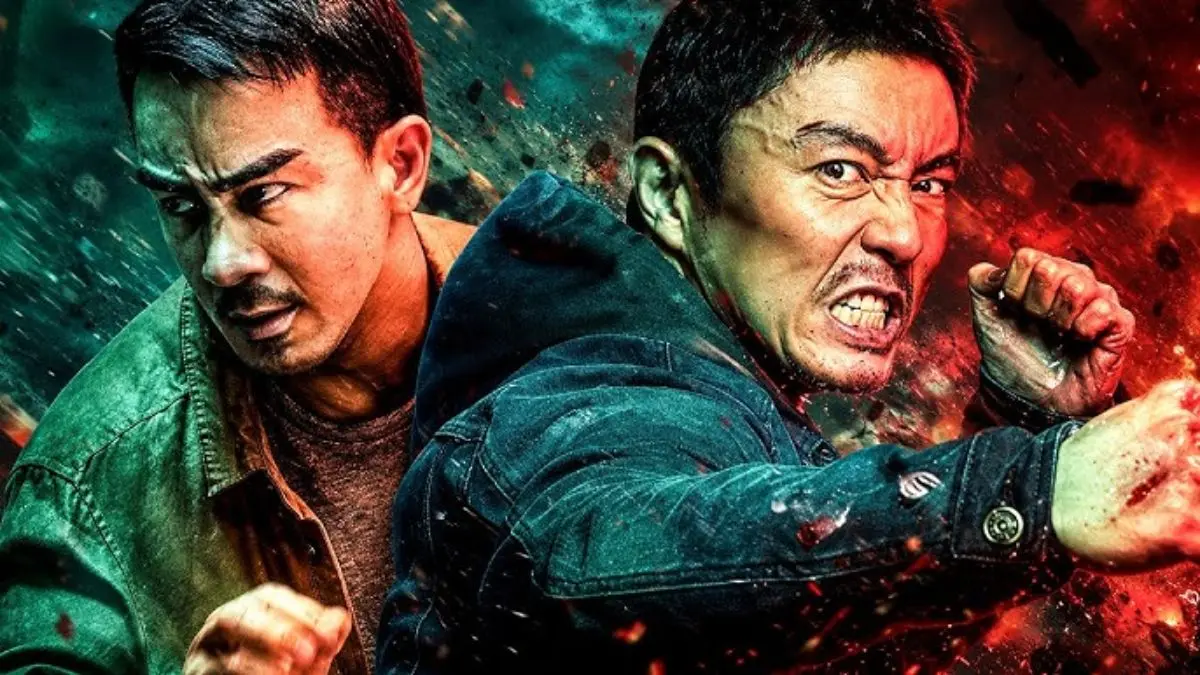

Kenji Tanigaki’s The Furious is built around one clear idea: action should come from character, not from spectacle alone. In a conversation with /Film, Tanigaki explained how he approaches fight scenes and why the film avoids big Hollywood-style set pieces like car chases or explosions.
He said he does not follow a strict philosophy when designing action. Instead, he adapts everything to the characters and their fighting backgrounds. The cast brings different martial arts styles into the film, and that becomes the foundation for every fight.
Tanigaki explained, “My philosophy is no philosophy, because I work for the stories and I work for the character.” He added that the performers’ real skills shape how scenes are built, pointing to Xie Miao’s wushu background, Joe Taslim’s judo training, and Yayan Ruhian’s pencak silat style.
For him, choreography is not about actors simply memorizing moves. It is about them fully understanding and adapting the movement in the same way they would understand dialogue.
He said, “Remembering choreography doesn’t mean anything. It’s not the goal, but the starting point.”
This approach pushes the cast to go beyond repetition and turn the action into something more natural and expressive. Tanigaki believes this raises the quality of the fights and makes each character feel distinct. Every fighter behaves differently depending on their background and style, which keeps the action varied throughout the film.
He also made it clear that The Furious does not try to copy Hollywood blockbusters. The film focuses on hand-to-hand combat and grounded martial arts instead of large-scale destruction.
He explained, “We are not good at shooting a car chase or car explosion… Our strong point is back to the basic martial arts.”

Despite the grounded approach, the film still includes moments of humor inside the violence. Tanigaki said he is not interested in gore for its own sake. Instead, he prefers action that occasionally becomes exaggerated in a way that makes audiences react with surprise or even laughter.
He said, “Even the violence [should be] over-the-top, make the audience laughing.”
One of the most unusual ideas in the film comes from the climactic fight sequence, which includes chaotic elements like improvised weapons and unpredictable movement. Tanigaki shared how even simple objects became part of the action during development. For example, a bicycle was added during planning as both a practical tool and a weapon after a creative discussion with the screenwriter.
As the film progresses toward its final act, the complexity of the action increases significantly. Tanigaki described the ending fight as the most difficult part of production. It took 18 nights to film and involved multiple characters fighting across shifting alliances.
He said, “I must say the ending fight for sure, because it was very complicated… we spent 18 nights on that set.”
The final battle involves five fighters from different sides all interacting at once, with constantly changing matchups. According to Tanigaki, this structure made it both exhausting and innovative.
He explained, “It’s very complicated… but very fun. At least I have never watched this kind of situation in a fight.”
The Furious is now playing in theaters, and Tanigaki hopes strong audience support will make a sequel possible.
Have something to add? Let us know in the comments!