The Real Reason ‘Disclosure Day’s Margaret Can’t Stop Singing That Gwen Stefani Song

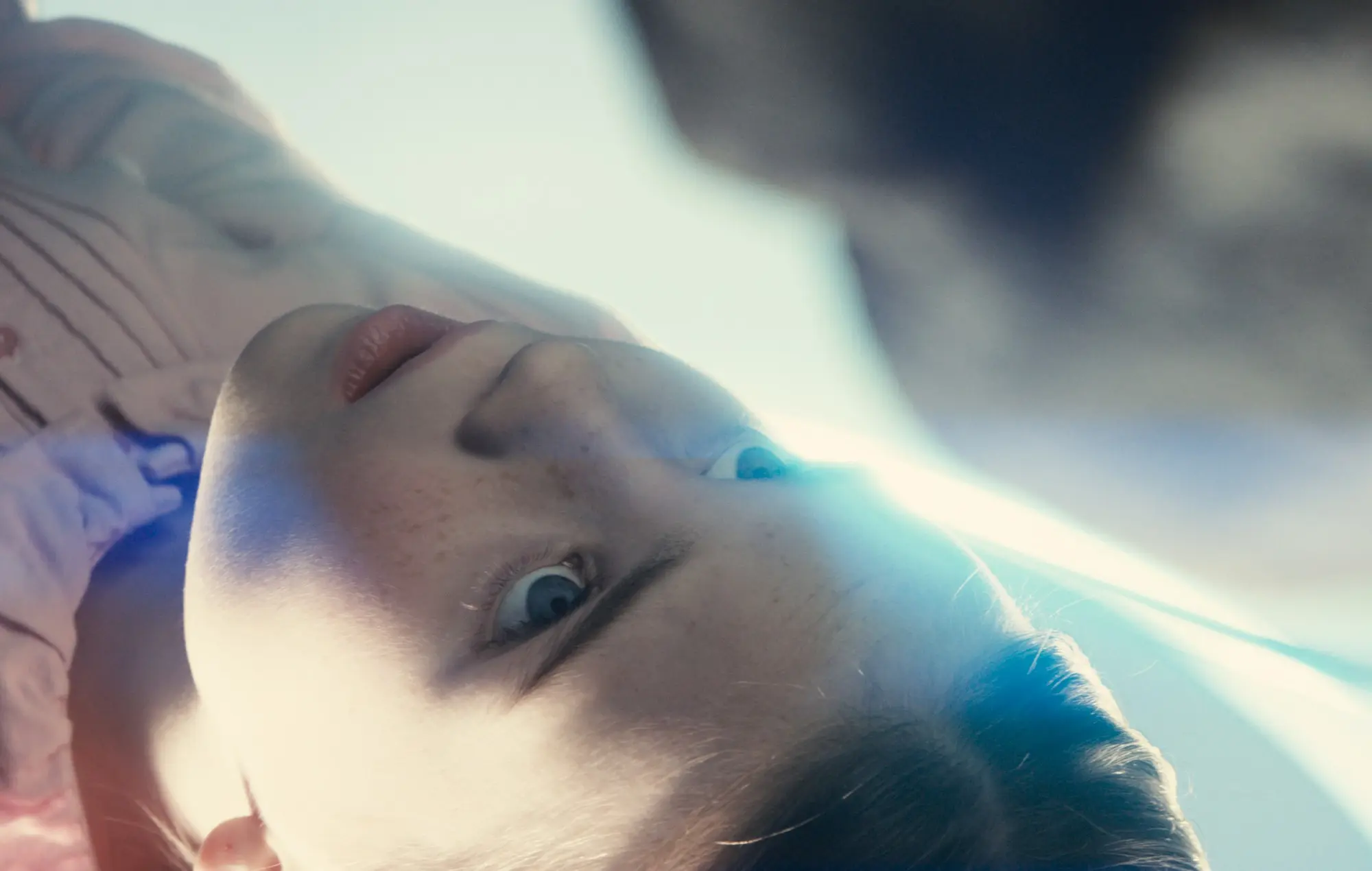

Steven Spielberg’s ‘Disclosure Day‘ is the kind of film that hides its most interesting questions in plain sight. While audiences are busy processing alien conspiracies, psychic abilities, and a government cover-up stretching back to Roswell, one seemingly throwaway scene keeps surfacing in reviews, fan forums, and comment sections alike. It involves a car, a speed limit violation, and a grown woman giving her absolute all to a 2006 Gwen Stefani pop track.
That woman is Margaret Fairchild, played by Emily Blunt, and the song is “The Sweet Escape.” Blunt’s character sings the song in the car as she drives to work, which results in her getting stopped by the police. It plays like a comedic bit, a moment of levity before everything spirals into sci-fi chaos. But as the film unfolds, that moment refuses to stay comedic.
The Sweet Escape Scene and Why It Lands Differently on a Second Watch
‘Disclosure Day’ features one needle drop in the form of Gwen Stefani’s 2006 track, and Blunt’s character is absolutely belting it out and getting a little too familiar with the acceleration. Critics noted that the scene should have felt jarring against John Williams’ restrained, tonally precise score, but it somehow worked. It rang true with the peaks of humor found in Spielberg’s work against even the darkest of themes.
What makes the scene feel stranger in retrospect is the specific song Spielberg and screenwriter David Koepp chose.
At least one reviewer openly questioned whether Margaret’s unbridled passion for “The Sweet Escape” is a symptom of extraterrestrial interference, and noted that the answer remains tantalizingly unresolved. That is a loaded observation, and one the film earns only once you understand what happened to Margaret as a child.
“The Sweet Escape” is a song by American singer Gwen Stefani from her 2006 second solo studio album of the same name, written by Stefani, Akon, and Giorgio Tuinfort. It is, on its surface, a breezy apology song about a domestic spat and dreaming of a better life together. In the context of ‘Disclosure Day,’ its title alone starts to feel like a wink. The word “escape” is doing a lot of work.
Margaret Fairchild’s Alien Backstory Changes Everything
The Act Three reveal is that Daniel and Margaret were not just random targets. They were abducted as children in 1996 by the aliens to serve as translators for the exact moment of disclosure on the world. This is the heart of the entire film, and it reframes every detail of both characters’ lives in a new light.
Margaret was given a new capacity as an empathetic. A brief encounter with a cardinal, suggested by Hugo to be one of the animal disguises the aliens use to connect with humans, activates her abilities to connect with other minds, allowing Margaret to speak several languages fluently, hear thoughts, and even appear as people from others’ lives. These abilities were dormant until the events of the film triggered them. The memories of what happened to her as a child were deliberately hidden.
Margaret and Daniel are drawn together by a psychic bond that seems inexplicable at first, but is later explained as the result of a shared traumatic event that happened when they were both children. In a flashback, the child versions of both characters are shown side-by-side on alien research tables, holding hands as they are imbued with their extraterrestrial powers. That image sits very uncomfortably next to the cheerful car singalong at the start of the film.
The film leaves a lot of these details undefined, allowing gray area around how long either of them was gone and the logistics of the aliens obtaining two kids from totally different places and then returning them. That ambiguity is intentional, and it is what gives the “Sweet Escape” moment its secondary charge.
Was the Song Itself Part of What Was Done to Her
This is where ‘Disclosure Day’ gets genuinely unsettling in the quietest possible way. Several massive theories have emerged regarding the true nature of the Wardex conspiracy, the theological implications of the aliens, and the ultimate meaning of the film’s enigmatic conclusion. The Gwen Stefani question has become one of the more stubborn threads in those discussions.
Margaret was given extraordinary empathic abilities which were so powerful that they seem like she’s able to read minds, and she was totally unaware of these powers until she was “activated” by the appearance of the strange red bird at the beginning of the film.

If her capabilities were installed without her knowledge and sat dormant for decades, the suggestion that certain behavioral compulsions could also have been embedded is not much of a leap. An obsessive, deeply felt attachment to a song about longing for escape would fit.
The film never confirms this. It does not need to. The question of whether Margaret’s passion for the song is connected to her alien encounter is left tantalizingly unresolved by the film itself. Spielberg has always understood that the most powerful science fiction works by implication, not by explanation.
What Spielberg Deliberately Leaves Open
‘Disclosure Day’ is not a film that hands you all its answers. The alien’s message to Daniel is deliberately kept secret, and the film keeps it to the viewer’s interpretation. Margaret delivers a single word, “Listen,” before the film cuts to black. That ambiguity is a feature, not an oversight.
The film moves away from the pure escapism of traditional science fiction and leans heavily into modern anxieties about the weaponization of classified intelligence, the manipulation of global media, and deep-seated societal trauma. Against that backdrop, the question of whether a woman’s favorite song was put there by something she cannot remember is not a throwaway detail. It is the film’s anxiety made personal.
Spielberg revealed that John Williams said he wanted to write music under the film to give it a slight nudge forward, rather than lead it, and the director described the result as restrained and subtle in a way that enriches the experience. The Williams score and the Stefani needle drop are in direct conversation with each other for exactly that reason. One is invisible and beneath the surface. The other is loud, cheerful, and right there in front of you. Just like everything the film is hiding.
Whether Margaret’s love for “The Sweet Escape” is a planted memory, a cosmic coincidence, or just the best car song ever recorded, the fact that Spielberg chose it and left the question open is reason enough to think he knew exactly what he was doing. If you caught that scene and something felt off about it, share your theory in the comments because this one clearly has a few layers left to peel back.