10 Things in ‘The Dark Knight’ Trilogy That Made Absolutely No Sense (& 10 Things That Made Perfect Sense)

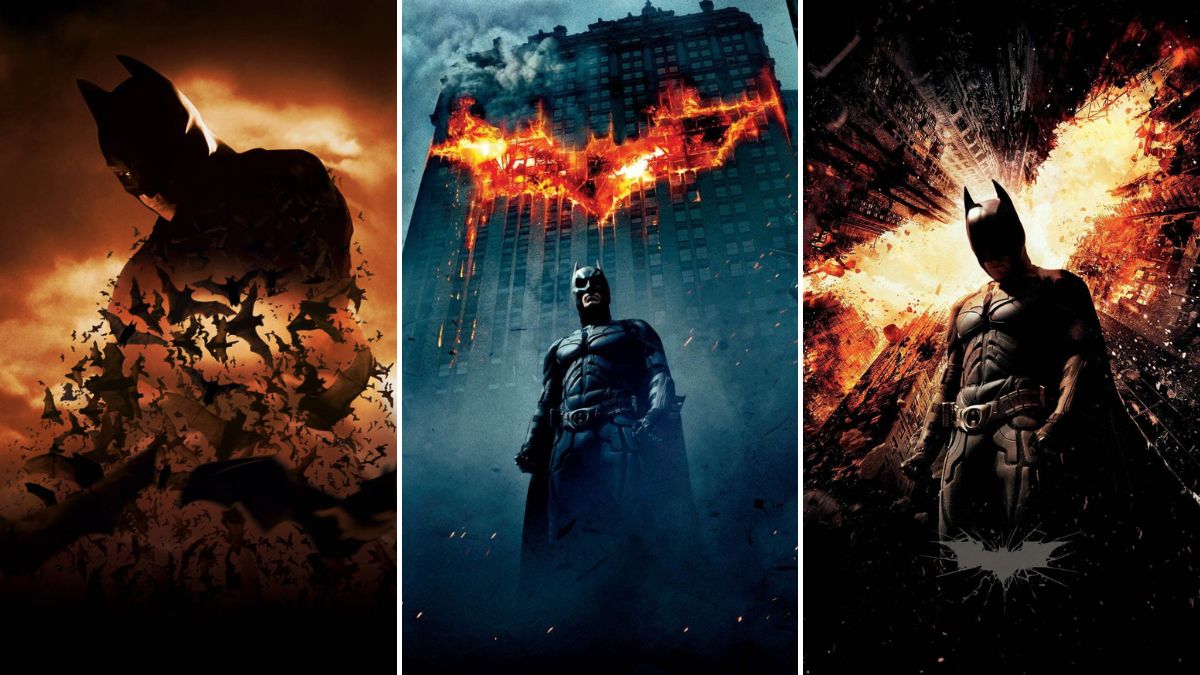

Christopher Nolan’s ‘The Dark Knight’ Trilogy, which includes ‘Batman Begins’ (2005), ‘The Dark Knight’ (2008), and ‘The Dark Knight Rises’ (2012), is often praised for its realistic and gritty take on the Batman mythology. The series was a critical and commercial success, redefining the superhero genre with its complex characters, intricate plots, and grounded approach. Fans and critics alike lauded the trilogy for its mature themes and practical effects, creating a believable world for its iconic hero and his formidable villains.
However, despite its commitment to realism, the trilogy is not without its flaws. Upon closer inspection, certain plot points and character actions stretch the boundaries of logic, leaving audiences to question their plausibility. From miraculous survivals to convenient coincidences, some elements of the narrative require a significant suspension of disbelief. This list will explore ten aspects of ‘The Dark Knight’ Trilogy that didn’t quite add up, alongside ten that were perfectly executed, creating a balanced view of this celebrated film series.
Made no sense: Bruce Wayne’s miraculous return to Gotham in ‘The Dark Knight Rises’

After being defeated by Bane, Bruce Wayne is left in a subterranean prison located in a remote part of the world. The journey back to Gotham would be long and arduous for anyone, let alone someone with a severely injured back. The film, however, shows Bruce making a seemingly impossible climb out of the pit and then appearing in Gotham almost immediately.
The movie doesn’t explain how he managed to travel thousands of miles with no money or resources in such a short amount of time. Gotham had been under lockdown for months, with all bridges and tunnels closed. Bruce’s sudden reappearance to save the day is a dramatic moment, but it lacks a logical explanation, feeling more like a convenient plot device than a believable event.
Made perfect sense: The Joker’s philosophy of chaos

The Joker, as portrayed by Heath Ledger in ‘The Dark Knight’, is an agent of chaos. His motivations are not driven by money or power in the traditional sense, but by a desire to disrupt the established order and expose the hypocrisy of society. This is a core aspect of his character from the comic books, and the film captures it perfectly.
His actions, from robbing a mob-owned bank to burning a pile of money, are all in service of his chaotic philosophy. He wants to prove that anyone can be corrupted and that the rules people live by are fragile. This clear and consistent motivation makes him a terrifying and compelling antagonist, as his goals are ideological rather than material.
Made no sense: The entire Gotham police force going into the sewers

In ‘The Dark Knight Rises’, the Gotham City Police Department makes a questionable tactical decision. A large portion of the force ventures into the city’s sewer system to hunt for Bane and his mercenaries. This move proves to be a massive blunder, as Bane’s forces trap them underground by detonating explosives at the tunnel entrances.
This leaves Gotham virtually unprotected and allows Bane to take control of the city with little resistance. It is difficult to believe that a major metropolitan police force would commit such a large number of its officers to a single, high-risk location without a proper exit strategy. The decision seems designed to create a dire situation for the plot rather than reflecting realistic police procedure.
Made perfect sense: Batman’s use of fear as a weapon

From the very beginning of ‘Batman Begins’, Bruce Wayne understands that to fight criminals, he must become a symbol that strikes fear into their hearts. He chooses the bat persona precisely because of his own fear of the animals, turning his personal trauma into a weapon. This psychological approach to crime-fighting is a fundamental element of the Batman character.
Throughout the trilogy, Batman’s effectiveness often comes from the fear he inspires. Criminals are hesitant to operate when they hear he might be nearby, and his dramatic entrances are designed to intimidate. This focus on psychological warfare is a realistic and intelligent way for a single individual to take on a city’s criminal underworld.
Made no sense: No one recognizing Bruce Wayne as Batman

Despite being one of Gotham’s most famous and recognizable public figures, Bruce Wayne manages to operate as Batman without his identity being compromised. While he wears a cowl, the lower part of his face is clearly visible. It is hard to believe that no one, especially intelligent adversaries like the Joker or shrewd journalists, would be able to make the connection.
The trilogy attempts to address this with Lucius Fox providing alibis and Bruce cultivating a reckless playboy persona. However, given the high-tech surveillance and constant media scrutiny in a modern city, it stretches credibility that he could maintain this secret for so long. The physical resemblance alone should have been enough for someone to put the pieces together.
Made perfect sense: The evolution of Batman’s suit and equipment

In ‘Batman Begins’, Bruce Wayne starts with a modified Nomex survival suit. As he continues his crusade, he realizes he needs more protection and mobility. He goes to Lucius Fox at Wayne Enterprises, who provides him with advanced technology, explaining the practical origins of his suit and gadgets.
In ‘The Dark Knight’, the suit is redesigned to be lighter and more flexible, allowing for faster movement, though at the cost of some protection. This progression makes logical sense. As Batman gains experience, he understands his needs better and adapts his equipment accordingly. This realistic approach to his gear grounds the character in a believable reality.
Made no sense: The Joker’s impossibly detailed planning
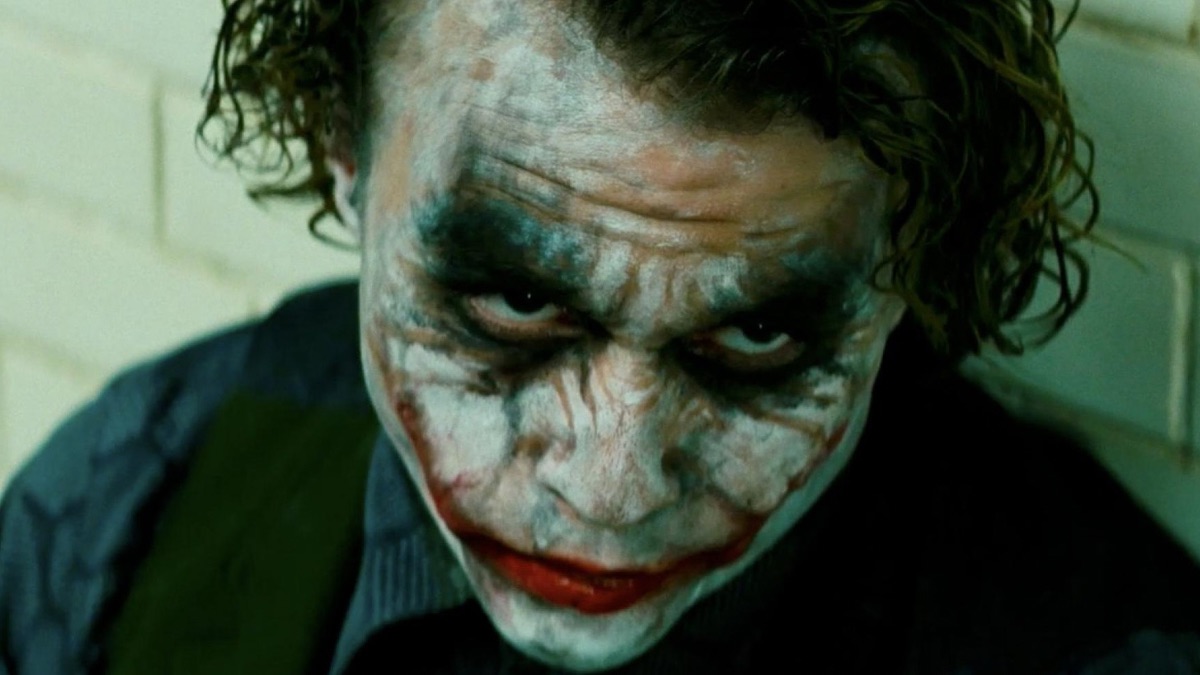
The Joker’s schemes in ‘The Dark Knight’ are incredibly intricate and rely on perfect timing and a series of unlikely events to succeed. For example, his plan to assassinate the mayor requires a 21-gun salute to go off at a precise moment to cover the sound of his own shot, and for Harvey Dent to react in a specific way.
While he is presented as a brilliant strategist, the sheer complexity and flawless execution of his plans often defy belief. He seems to have an almost supernatural ability to predict human behavior and control every variable. This makes him a formidable foe, but it also makes his successes feel less earned and more like the result of plot convenience.
Made perfect sense: Harvey Dent’s transformation into Two-Face

The downfall of Harvey Dent is a central and tragic element of ‘The Dark Knight’. He begins as Gotham’s “White Knight,” a crusading district attorney dedicated to lawfully taking down organized crime. His transformation into the vengeful Two-Face is a direct result of the trauma and loss he suffers at the hands of the Joker.
This character arc is both psychologically sound and thematically powerful. The physical disfigurement he endures is a mirror of his internal corruption and shattered ideals. His descent into madness is a believable consequence of a good man being pushed past his breaking point, perfectly illustrating the Joker’s philosophy that even the best of people can fall.
Made no sense: Bruce Wayne’s retirement and the clean slate program

At the end of ‘The Dark Knight Rises’, it is revealed that Bruce Wayne survived the nuclear explosion and is living a quiet life in Europe with Selina Kyle. He was able to do this thanks to a “clean slate” program that erased his digital footprint. However, Bruce Wayne is an internationally known billionaire, not just a name in a database.
The idea that he could simply disappear and live anonymously is far-fetched. His face is too famous, and his absence would be a major global news story. The “clean slate” concept feels like a convenient way to give him a happy ending, but it doesn’t hold up under scrutiny in the context of the modern, interconnected world the trilogy otherwise tries to portray.
Made perfect sense: The League of Shadows’ motivation to destroy Gotham

In ‘Batman Begins’, the League of Shadows, led by Ra’s al Ghul, targets Gotham for destruction. Their reasoning is that the city has become a decadent and corrupt hub of crime that is beyond saving. This is not just random villainy; it is an extreme and fanatical form of justice, which is consistent with the organization’s history of toppling civilizations they deem unsalvageable.
This ideological motivation provides a clear and compelling reason for their actions. They see themselves as a cleansing fire, necessary to restore balance to the world. This makes them more than just generic terrorists; they are antagonists with a coherent, albeit terrifying, worldview, which gives their conflict with Batman a deeper philosophical dimension.
Made no sense: The chaotic stock exchange heist

In ‘The Dark Knight Rises’, Bane and his mercenaries orchestrate a raid on the Gotham Stock Exchange. Their goal is not to steal money directly but to execute a series of fraudulent trades to bankrupt Bruce Wayne. While the concept is clever, the execution depicted in the film has several logical gaps.
The attack happens in broad daylight, yet security seems minimal, and the police response is slow and easily misdirected. It’s difficult to believe that a major financial institution wouldn’t have more robust security protocols to prevent such a breach and that all transactions made during a known terrorist attack wouldn’t be immediately flagged, investigated, and reversed. The plot requires the heist to succeed perfectly for Bruce’s financial ruin to occur, which feels highly improbable.
Made perfect sense: Lucius Fox’s role as the tech provider

A common question in superhero stories is where the hero gets their amazing technology. ‘The Dark Knight’ Trilogy provides a very logical answer: from the Applied Sciences division of Wayne Enterprises. Lucius Fox, a brilliant but overlooked executive, is the man in charge of this department, which develops prototypes for military applications.
This setup explains not only where the Batmobile (the Tumbler), the Batsuit, and other gadgets come from but also why no one else has them. These are experimental technologies that were never put into mass production. Lucius’s position allows him to supply Bruce with this gear while maintaining “plausible deniability,” making the existence of Batman’s arsenal entirely believable within the world of the films.
Made no sense: Rachel Dawes not recognizing Bruce’s voice

Rachel Dawes is Bruce Wayne’s closest childhood friend. She knows him better than almost anyone. Yet, throughout ‘Batman Begins’ and ‘The Dark Knight’, she has several conversations with Batman and never seems to recognize his voice.
While Batman does disguise his voice, it’s not so drastically altered that a lifelong friend wouldn’t notice some familiarity, especially during their more intimate conversations. In one scene in ‘Batman Begins’, after he rescues her from Scarecrow’s toxin, he speaks to her in a voice very close to his own. The fact that she never makes the connection, while others like John Blake figure it out, is a stretch of logic.
Made perfect sense: Gotham’s acceptance of the Dent Act

After the chaos and terror inflicted by the Joker in ‘The Dark Knight’, the city of Gotham is desperate for peace and security. This desperation makes the public’s and government’s acceptance of the Dent Act in ‘The Dark Knight Rises’ completely understandable. The legislation gives the police expanded powers to arrest and imprison criminals involved in organized crime without the possibility of parole.
In the wake of a city-wide crisis, it is plausible that citizens would be willing to sacrifice certain civil liberties for the promise of safety. The act, named after the city’s fallen “hero,” Harvey Dent, effectively eradicates organized crime for several years. This period of peace, born from a controversial law, is a logical consequence of the traumatic events that preceded it.
Made no sense: The conveniently strong frozen river

A pivotal sequence in ‘The Dark Knight Rises’ involves Bane’s Kangaroo Court exiling Gotham’s elite, forcing them to walk across a frozen river. Later, a massive battle between Batman’s freed police force and Bane’s army takes place on the same ice.
The visual is dramatic, but the physics are questionable. It’s highly unlikely that a frozen river, especially one that was shown to be cracking under the weight of single individuals, could support a full-scale battle with hundreds of combatants and vehicles. The ice holding firm for the heroes’ charge but cracking for the villains feels more like a symbolic choice than a realistic possibility.
Made perfect sense: Scarecrow’s fear toxin

The main weapon of Dr. Jonathan Crane, the Scarecrow, is a powerful, weaponized hallucinogen. When inhaled, this “fear toxin” causes victims to experience vivid hallucinations of their deepest fears. This concept is grounded in real-world science.
Hallucinogenic drugs that can induce anxiety, paranoia, and terrifying visions exist. While Scarecrow’s version is a more potent and targeted version, the fundamental idea of a chemical that attacks the mind and exploits a person’s psychological vulnerabilities is scientifically plausible. It makes for a uniquely terrifying weapon that is more cerebral than a simple explosive or gun.
Made no sense: Joker’s loyal army of henchmen

Throughout ‘The Dark Knight’, the Joker is shown to be completely unpredictable and has no regard for the lives of his own followers. He manipulates them, uses them as disposable pawns, and even kills them for his own amusement. Yet, he is able to recruit a seemingly endless supply of loyal henchmen.
It’s hard to understand why so many people would be willing to work for, and die for, a man who offers them no real reward and is just as likely to kill them as their enemies are. While some may be attracted to his message of chaos, the sheer number of followers, including corrupt police officers and hospital staff, who flawlessly execute his plans without question strains credibility.
Made perfect sense: Bruce Wayne’s decline at the start of ‘The Dark Knight Rises’

‘The Dark Knight Rises’ begins eight years after the events of ‘The Dark Knight’. We find Bruce Wayne living as a recluse in Wayne Manor, physically and emotionally broken. His body is scarred and weakened from his years as Batman, and he walks with a cane.
This depiction of a hero paying the long-term price for his war on crime is incredibly realistic. The physical toll of being Batman would be immense, leading to chronic injuries. Emotionally, the loss of Rachel Dawes and the burden of his secrets have left him in a state of prolonged grief. It makes perfect sense that after years of fighting and suffering, he would be a shell of his former self.
Made no sense: The limited police response to the big chase

The centerpiece action sequence in ‘The Dark Knight’ is the chase involving an armored truck, the Tumbler, and the Joker’s semi-truck. The scene features massive explosions, extensive property damage, a crashed helicopter, and a flipped 18-wheeler in the middle of a major city street.
Despite the scale of this destruction, the wider police response seems almost nonexistent. A small contingent of cars is involved, but the kind of city-wide lockdown and massive police presence one would expect in response to such a major, prolonged terrorist attack never materializes. The chase feels strangely isolated, allowing Batman and the Joker to have their battle with minimal outside interference.
Made perfect sense: Alfred’s fatherly concern

The emotional heart of ‘The Dark Knight’ Trilogy is the relationship between Bruce Wayne and his loyal butler, Alfred Pennyworth. Alfred is more than a servant; he is Bruce’s surrogate father, confidant, and moral conscience. His motivations are always driven by his deep, paternal love for the man he raised.
Throughout the trilogy, Alfred’s primary concern is not Batman’s mission but Bruce Wayne’s well-being and happiness. This is why he constantly pleads with Bruce to give up the cowl and find a life beyond the mask. His eventual decision to leave in ‘The Dark Knight Rises’ is a heartbreaking but perfectly logical act of tough love, born from the fear of having to bury the last member of the family he loves.