What Guy Ritchie’s ‘In the Grey’ Ending Actually Means and Why That Finale Lands the Way It Does

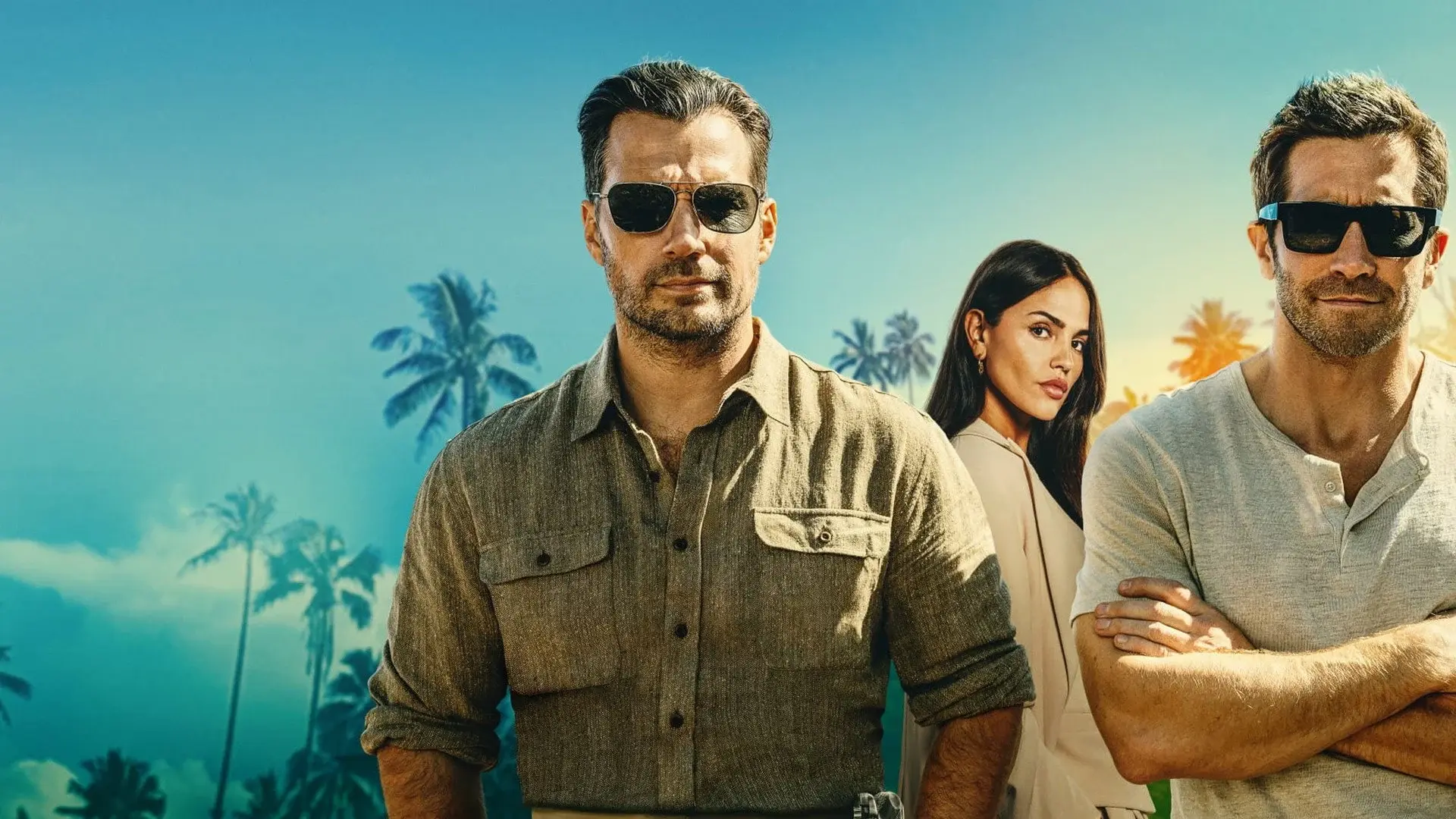

Guy Ritchie has built an entire career on stylish chaos, and his latest feature, ‘In the Grey,’ is no different. The film follows a covert team of elite operatives who live in the global shadows, as comfortable wielding power and influence as they are automatic weapons and high explosives, sent to steal back a billion-dollar fortune from a ruthless despot in a mission that spirals into an all-out war of strategy, deception, and survival. It hit theaters on May 15, 2026, after a famously turbulent road to release that left audiences wondering whether the wait was worth it.
Henry Cavill plays Sid, the disciplined British field operative, Jake Gyllenhaal stars as Bronco, the arrogant and quick-witted American extraction specialist, and Eiza González plays their handler Sophia, also named Rachel Wild across various portions of the film. The three leads carry the movie’s momentum with considerable charm, and a lot of what the ending means emotionally comes down to understanding exactly who these people are to each other before the credits roll.
What Rachel Wild’s Endgame Is Really About
The film begins in medias res, with an under-fire Rachel narrating the legal-illegal tightrope she walks while recovering assets for clients from crooked billionaires, literally stating that she works in a grey area. That opening monologue is doing real thematic work. The title is not incidental. Rachel and her crew exist in a moral no-man’s-land, and everything the finale delivers is filtered through that lens.
The plot kicks in when Sophia visits a New York banking executive named Bobby, whose employer is trying to recover a billion dollars it loaned to Manny Salazar, a criminal dictator. Sophia says she will get the billion back for a commission of twenty percent. That twenty percent cut is never just about the money. It functions as the film’s running symbol of compromise, of getting results through methods nobody in polite society would officially endorse.
With a crack team of experts covering a wide range of skills, Rachel has crafted an elaborate plan, a pincer movement, to expose Manny Salazar’s crimes and flush out details of his financial dealings through his equally shady lawyer William Horowitz, while Sid is deployed to Saudi Arabia on an undercover mission and Bronco heads to Salazar’s personal island to prepare for their inevitable meeting. The precision of this setup pays off in the film’s extended third act, where every pre-established escape route, piece of gear, and planted operative snaps into place.
It is all quite convoluted and the legality of everything under discussion is so opaque that you just kind of accept that Rachel is able to command the courts over the course of a few days to seize all of Salazar’s assets. Ritchie is asking audiences to trust the rhythm rather than the logic, and for most viewers, that deal holds.
Sid and Bronco Explained: More Than Just Muscle
The movie sums up the trio’s origin story in a one-shot flashback: apparently, the guys were in jail somewhere, bound for death, until Sophia intervened and secured their release, which presumably moved them to pledge eternal loyalty to the woman who saved them, though we can only infer that from context rather than explicit dialogue. That restraint is deliberate, and it gives the final act a quiet emotional payoff that the broader plot sometimes fails to earn.
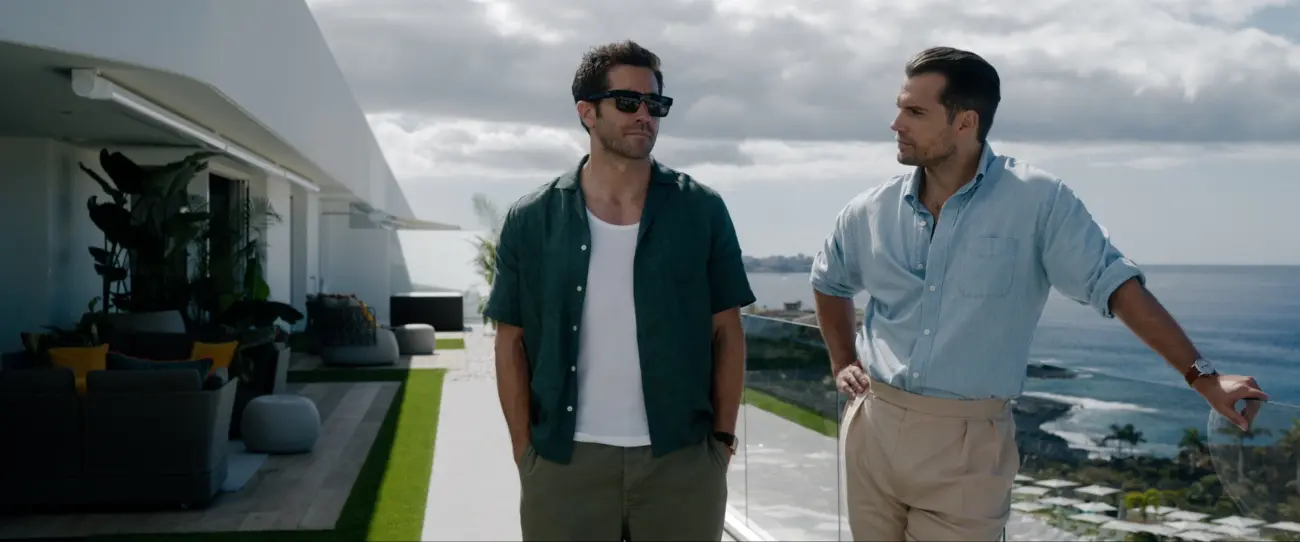
There is also something intriguing about Sid and Bronco as a pair, and it is impossible to say what kind of bond exists between them, but there is definitely more going on than standard he-man bonding, evident in the casually intimate ease that is their default whenever they ride together on missions. Ritchie leans into this deliberately without resolving it, and that ambiguity is part of what makes the duo linger after the film ends.
Sid treats Rachel with the respect usually shown to a head of state, and Bronco addresses her like a commanding officer, with Rachel’s currency being creativity, unflappability, and the ability to recruit and keep talent while staying professional. By the time the climactic action sequence lands, the viewer understands this trio as a unit even without conventional backstory, and that understanding is precisely why the ending registers as something other than empty spectacle.
The Guy Ritchie Heist Thriller Formula on Full Display
The film moves at a tight 98 minutes, and while there is a lot of talking about plans, that dialogue is mostly interesting and delivered in an energetic way, feeling at times like an Ocean’s movie in how information is conveyed. Ritchie has always traded in the pleasure of watching extremely competent people execute complicated plans, and ‘In the Grey’ is another entry in that tradition.
In the Grey has Rachel and her team dictating their every move with onscreen graphics and snippets of future action scenes when the plan is set in motion, and the film is never dull, with Ritchie’s kinetic camera work and action choreography still fully intact, including tremendous chase scenes through multiple settings. That visual grammar is the film’s most confident attribute, even when the script beneath it feels thin.
There is surprisingly little action until the last third, and most gunfights lack gore, but Ritchie does set up some appropriately over-the-top set pieces that pay off well when the film finds its energy in the final segment. The ending, then, is less a narrative resolution than a kinetic release valve for everything the first two acts have been building up through exposition and planning sequences.
No Post-Credits Scene and What the Film Leaves Behind
There is no post-credits scene in ‘In the Grey,’ so audiences can leave the theater right when the movie ends without missing anything. That absence is telling. This is not a film designed to launch a franchise or tease a sequel. It exists as a self-contained exercise in style, and Ritchie appears to have made peace with that.
In the Grey does end a lot better than it begins, and while you will likely forget it soon after, having seen so many movies that begin better than they end, it at least leaves the theater with a spring in its step. That is arguably the film’s most honest critical summary. It delivers on its final promise even if it underpromises throughout.
The film’s absence of key footage, which likely explains why it sat on a shelf for over two and a half years, makes the already demanding plot feel more confusing, and its patchwork structure is obvious to anyone paying attention. Despite that, the Cavill-Gyllenhaal-González trio generates enough goodwill to carry viewers through to the closing gunfire.
Whether ‘In the Grey’ makes you wish Ritchie had taken more time to sharpen the script or simply glad the thing finally arrived, share your read on the ending in the comments because this is exactly the kind of film people walk out of with completely different reactions.