Why ‘Street Fighter’ Has Opened a Massive Rotten Tomatoes Gap Between Critics and Fans


Adapting beloved arcade franchises for multiplex audiences has remained one of Hollywood’s most treacherous high-wire acts for decades. When properties boast millions of lifelong devotees across multiple console generations, satisfying casual filmgoers alongside encyclopedic gamers rarely yields a harmonious consensus. The balancing act between conventional narrative structure and unapologetic video game spectacle continues to generate friction across theater aisles.
Capcom has experienced this volatile dynamic firsthand throughout cinematic history, enduring critical beatings while maintaining dedicated cult followings for its theatrical outings. The legacy of earlier adaptations taught studios that gamers judge martial arts blockbusters on very different metrics than seasoned festival reviewers. As modern Hollywood doubles down on video game intellectual property, that lingering philosophical divide between storytelling craft and arcade fidelity remains unresolved.
That clash has now reached a boiling point with the arrival of Legendary Entertainment and Paramount Pictures’ brand-new reboot, ‘Street Fighter‘. When the review embargo lifted for its October theatrical premiere, the film staggered into a dismal 41% approval rating from critics on Rotten Tomatoes. Meanwhile, verified audiences completely flipped the script by awarding the martial arts extravaganza an 82% Popcornmeter score, establishing a massive 41-point divide.
The Mechanics Behind the 40-Point Score Chasm
Early box office receipts quickly mirrored this polarizing dynamic, with the reboot hauling in $4 million in Thursday previews ahead of a projected domestic debut north of $30 million. As Variety reported, Paramount secured global distribution for the project as the opening salvo of a multi-year pact with Legendary. The $82 million production was built to reignite the dormant theatrical property, yet the critical reception immediately revived debates about whether reviewers fundamentally misunderstand video game source material.
Review aggregators tell an instructive story when examining the numbers across the board. The film’s 41% critical standing matches a mediocre 46 rating on Metacritic, indicating that professional sentiment is consistently unenthusiastic across mainstream outlets. Yet over 500 verified ticket buyers propelled the audience rating past 80%, establishing the largest discrepancy for a video game feature since the summer box office season.
Why Critics Knocked the Tournament’s Storytelling
Critical assessments leveled against director Kitao Sakurai largely center on plotting coherence and pacing choices. Reviewers frequently complained that the screenplay rushes through character motivation in order to hopscotch between stylized brawls, leaving dramatic stakes underdeveloped. Several prominent critics also took issue with the film’s abrupt conclusion, arguing that the story stops dead to tease future installments rather than delivering an earned climax.
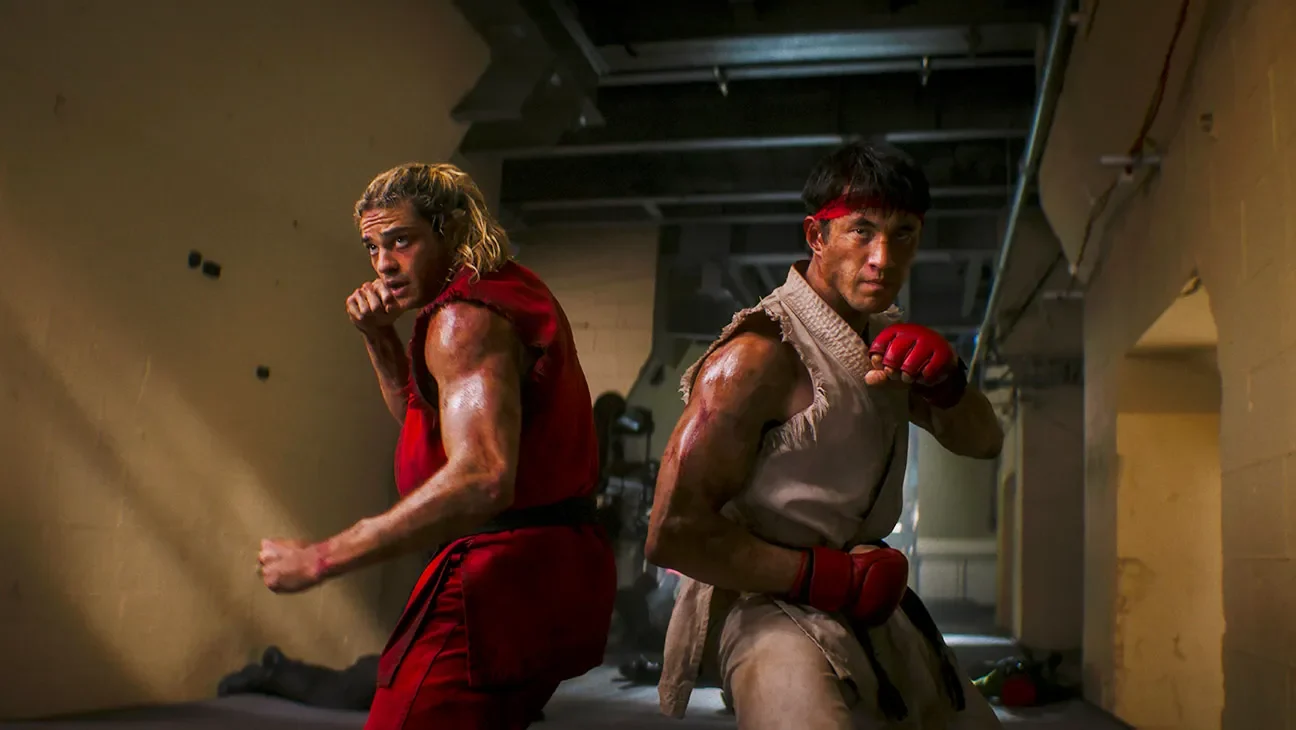
Others took aim at the eccentric, camp-heavy humor that permeates the two-hour runtime. Reviewers argued that the comedic tone trivialized emotional subplots between estranged martial artists Ryu, played by Andrew Koji, and Ken Masters, portrayed by Noah Centineo. While a handful of critics praised the audacious visual style, the majority concluded that kinetic fistfights could not compensate for paper-thin dramatic foundations.
What Longtime Capcom Fans Are Celebrating
On the opposite side of the turnstile, general audiences and lifelong gamers have openly praised the production for leaning directly into video game camp. Rather than attempting a grounded, self-serious tone, Sakurai set the adventure in 1993 and packed the frames with more than 100 franchise Easter eggs. Spectators have rallied around the faithful choreography, where characters execute recognizable special moves, hadoukens, and dragon punches without embarrassment.
The film also earned widespread acclaim from viewers for its hand-drawn anime flashback sequences produced by Titmouse, which paid homage to 1994’s animated Capcom cinema. Furthermore, the charismatic cast turned out to be an audience highlight, with professional wrestlers Cody Rhodes and Roman Reigns earning loud cheers for their physical turns as Guile and Akuma. Callina Liang also drew raves from viewers for bringing dynamic martial arts agility to Chun-Li.
Villainous Ambition and the Franchise’s Future
That character-first energy extended to the villainous side of the bracket, anchored by David Dastmalchian’s unnerving portrayal of General M. Bison. “Why would people follow Bison to the depths that they do to make Shadaloo come to its fruition?” Dastmalchian asked in an interview with Collider. “And I can’t wait for people to see how that happens.”
Whether this enthusiastic audience goodwill can overcome frosty critical ink will determine if a sequel comes to fruition. While critics view the movie as an overstuffed, chaotic relic of arcade excess, the target audience clearly received the nostalgic celebration they bought tickets to see. History shows that fighting game adaptations live and die by their community passion rather than prestige awards, meaning Capcom’s latest challenger may have the final laugh.
Do you side with the harsh critical reviews, or did ‘Street Fighter’ deliver the exact fighting game experience you wanted to see on the big screen?