28 Years Later, Brad Pitt’s Controversial War Movie Is Still Banned In China

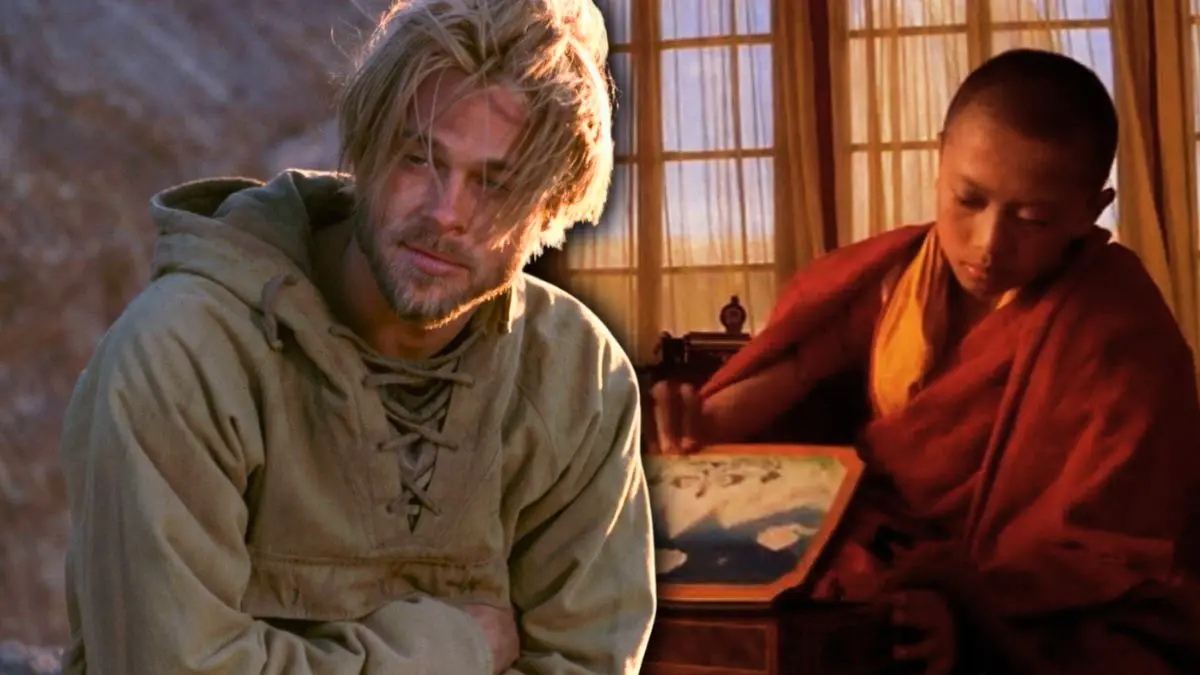

Today marks 28 years since the release of Seven Years in Tibet, the 1997 biographical war drama that starred Brad Pitt and David Thewlis and sparked controversy in China. Directed by Jean-Jacques Annaud, the film tells the story of Austrian mountaineer and former SS officer Heinrich Harrer, based on his 1952 memoir.
It follows Harrer’s experiences in Tibet from 1944 to 1951, including his friendship with the young 14th Dalai Lama. The film features a musical score by John Williams, including a special performance by cellist Yo-Yo Ma.
In the movie, Harrer and fellow Austrian Peter Aufschnaiter, played by Thewlis, are climbing in India during the 1930s when World War II breaks out. Their German nationality leads to imprisonment in a British POW camp in the Himalayas.
They escape in 1944 and cross into Tibet, facing the dangerous terrain of the high plateau. Initially told to return to India, they are instead welcomed in Lhasa and become integrated into local life. Harrer eventually becomes a tutor to the young Dalai Lama, forming a close bond with him.
The story continues until the Battle of Chamdo in 1950, which forces major changes in Tibet.
Seven Years in Tibet premiered at the Toronto International Film Festival on September 13, 1997, and was commercially released in the United States and Canada on October 8.
The film opened in three theaters, earning $46,130 in its first two days. It quickly expanded to over 2,100 theaters, generating more than $10 million that weekend. Ultimately, the movie earned $37.9 million domestically and $93.5 million internationally, totaling approximately $131.5 million worldwide.
Critical response was mixed. Rotten Tomatoes reported a 58% approval rating, noting that while the film told a fascinating true story, it “never quite comes to life the way it could.” Metacritic scored it 55 out of 100, reflecting generally average reviews.
Roger Ebert praised its ambition and beauty but criticized the focus on the travelers’ adventures rather than their discoveries. Derek Elley of Variety highlighted the strong production value but suggested the film could have embraced more traditional Hollywood drama. Audiences, however, responded positively, giving the film an “A−” on CinemaScore.
The film’s release created significant tension with the Chinese government. Beijing condemned the movie for portraying Chinese military officers as rude and brutal, and for its sympathetic depiction of the 14th Dalai Lama. As a result, all future Sony films were banned in China, and Annaud, Pitt, and Thewlis were initially barred from entering the country.
The ban sent a strong message that the Chinese authorities would punish studios or their parent companies for producing content they disapproved of, even if the films were never intended for Chinese release.
Over time, some restrictions eased. Annaud returned to China in 2012 to chair the jury at the Shanghai International Film Festival, and Pitt visited the country in 2014 and 2016. Sony resumed operations in China in 1998, but Seven Years in Tibet remains banned, a reminder of the country’s strict censorship policies and sensitivity around Tibet.
Reflecting on the film nearly three decades later, it remains a significant work for its portrayal of a unique historical period and its cultural clash. Its success at the box office and lasting discussion around its censorship highlight both the appeal of the story and the power of cinema to spark political controversy.
Seven Years in Tibet is remembered not just for Brad Pitt’s performance and its sweeping visuals, but also for the debates it ignited over artistic freedom and political sensitivity. Even today, it serves as a case study in how films can challenge authorities and influence global conversations.
Have something to add? Let us know in the comments!