The Ultimate Status Symbol: Understanding the Value of Every CS2 Knife

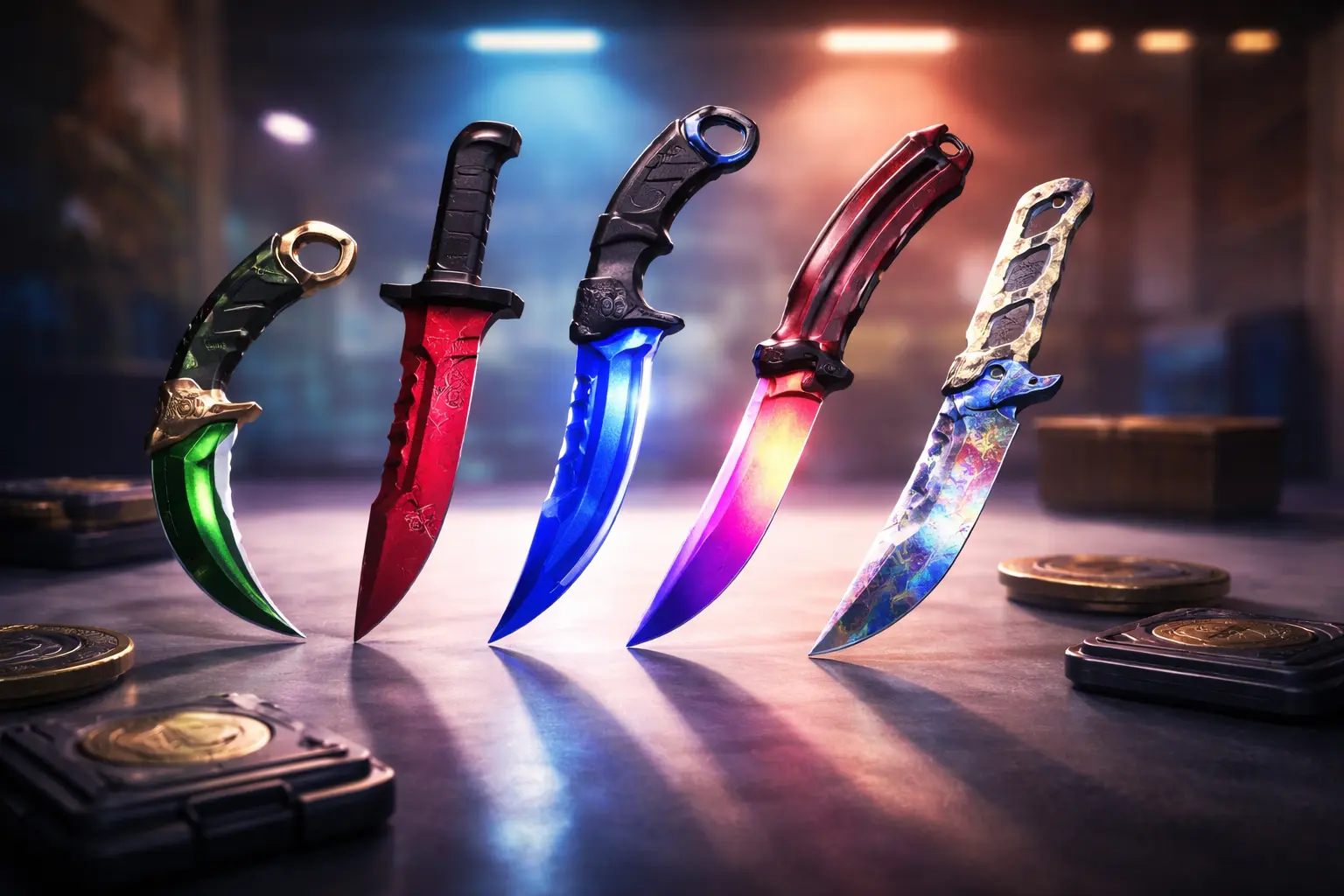

You’re standing in spawn on Mirage, the countdown timer is ticking away, and what are you doing? You aren’t checking your crosshair placement or discussing the A-site execute with your teammates. You’re spamming the F and R keys in a rhythmic, frantic dance, watching a curved piece of digital steel flip over your knuckles. It’s a CS2 Knife that costs more than your actual car, and in that moment, nothing else in the world matters.
The transition from Global Offensive to Counter-Strike 2 didn’t just update the lighting and smoke grenades; it fundamentally shifted the way we perceive our digital hoard. We’ve moved past the era where skins were just “cool cosmetics.” Now, they are a legitimate asset class, a social hierarchy, and, for many, the only reason to keep queuing for Premier matches after a five-game losing streak. Understanding the value of every blade in the current cs2 knife market requires more than just looking at a price tag—it requires a deep dive into the psyche of a community that values a pixelated Doppler finish over a functional retirement fund.
The Psychology of the Sharp and Shiny
Why does the community obsess over these items? It’s not like a Karambit deals more damage than a default flip knife. In the world of CS2, the knife is the ultimate expression of “look at me.” It is the first thing your teammates see when you’re running to a bomb site and the last thing an unlucky sniper sees before they’re humiliated in a backstab. The rarity is the point. When you browse a cs2 skins marketplace, you aren’t just looking for a tool; you’re looking for a badge of honor.
The value is driven by scarcity, sure, but also by the “clout factor.” A Butterfly Knife isn’t just expensive because it’s hard to find in a case; it’s expensive because the animations are essentially a fidget spinner for the terminally online. There is a specific dopamine hit associated with the “click-clack” sound of a Butterfly Knife opening that a Gut Knife simply cannot replicate. This emotional connection is what keeps the skin marketplace cs2 ecosystem thriving. We aren’t just buying pixels; we’re buying the feeling of being the most important person in the server.
The Tier List of Prestige
If we’re going to talk about value, we have to talk about the hierarchy. At the top of the food chain, we have the “Big Three”: the Karambit, the M9 Bayonet, and the Butterfly Knife. These are the blue chips of the cs2 knife skins world. If you own one of these, you aren’t just a gamer; you’re a connoisseur. The Karambit, with its iconic curved blade and the ability to spin it on your finger, has remained the gold standard for over a decade. It’s the choice of the professional player, the silent flex that says you know exactly what you’re doing.
Then you have the mid-tier. The Talon Knife, which is essentially the Karambit’s flashy younger brother, and the Skeleton Knife, which has that gritty, industrial feel. These items often fluctuate on the best cs2 skins marketplace platforms, providing a slightly more attainable level of prestige. They offer great animations without requiring you to take out a second mortgage.
Finally, we have the “entry-level” blades. The Navaja, the Shadow Daggers, and the Gut Knife. Often mocked by the elite, these knives are the backbone of the cs2 marketplace. They allow the average player to move away from the default blade and start their journey into the world of trading. There’s an old saying in the community: “A bad knife is still better than no knife.” While a Navaja might not turn heads at a Major, it still shows you’ve put some skin in the game—literally.
The Market Shift: From CSGO to CS2
The move to the Source 2 engine was the single most significant event in the history of cs2 skins. When the update dropped, the way light interacted with surfaces changed everything. Suddenly, Fade patterns and Dopplers weren’t just colorful; they were translucent, glowing, and vibrant. This caused a massive surge in the cs2 skins market. A knife that looked dull in the old engine suddenly looked like a gemstone under the new lighting.
This shift also changed where people go to trade. While the steam marketplace cs2 remains the most “secure” and convenient option for casuals, the limitations on wallet balance and the high transaction fees have pushed the hardcore community elsewhere. Finding the best cs2 marketplace often means looking for third-party platforms where the prices reflect the true “street value” of the items rather than the inflated Steam prices. Many traders have turned to Market CSGO skins to find specific patterns or to cash out their high-tier items. Using a marketplace cs2 outside of the official Steam ecosystem allows for a level of flexibility that the standard cs2 marketplace steam just can’t provide.
The Doppler Effect and the Pattern Hunt
Value in CS2 isn’t just about the model of the knife; it’s about the “finish.” This is where things get complicated—and expensive. Take the Doppler finish, for example. You don’t just buy a “Doppler.” You buy a Phase 1, 2, 3, or 4. Or, if you’re among the 1%, you buy a Sapphire, Ruby, or Emerald. These “Gems” are entirely different beasts. An Emerald Karambit can be worth ten times more than a standard one, simply because of the vibrant green hue that pops against the updated CS2 maps.
Then there’s the Case Hardened rabbit hole. This is where the cs2 knife market turns into a literal treasure hunt. Most Case Hardened knives are a mix of gray, gold, and a tiny bit of blue. But the “Blue Gems”—knives with a specific pattern ID that covers the blade in ocean-blue color—are the holy grails. These items rarely even touch a standard cs2 skin marketplace. They are traded in private circles for sums of money that would make a traditional art collector blush. This granular level of value is what makes the best cs2 skin marketplace so fascinating; it’s a mix of stock market speculation and antique appraisal.
Navigating the Marketplace Chaos
For a newcomer, the marketplace cs2 landscape can be terrifying. You have the cs2 steam marketplace, which is safe but expensive. Then you have dozens of third-party sites claiming to be the cheapest cs2 marketplace. How do you decide? The savvy collector looks for liquidity. You want a platform where items move fast and the gap between the “buy” and “sell” price is thin.
Mentioning Market CSGO items often comes up in these circles because the platform has survived the test of time, adapting from the old days of skin gambling into a legitimate peer-to-peer trading hub. Whether you are looking for a beat-up Forest DDPAT Flip Knife or a Factory New Crimson Web M9 Bayonet, the key is to compare. A smart trader never buys from the first cs2 skins marketplace they see. They check the floats, they inspect the corners in-game, and they track the price history. The value of a knife is only what someone else is willing to pay for it, and in a market this volatile, that number can change by the hour.
The “F” Key Obsession: Why Animations Matter
We have to talk about the “inspect” animations, because in CS2, that is 50% of the value. If a knife has a boring pull-out animation, its value is capped, regardless of how rare the skin is. This is why the Huntsman Knife, despite being a massive, cool-looking blade, often sits lower in price than the much smaller Butterfly Knife. The Butterfly has a “rare” inspect animation where the character flips it infinitely. The Falchion Knife has a rare animation where you balance the blade on your palm.
These little “Easter eggs” are what drive the cs2 knife market. When Valve adds a new knife to the game, the first thing the community does is go into a private server and spam the inspect key to see if there’s a hidden animation. If there is, the price on the best cs2 marketplace will instantly skyrocket. It’s a performative economy. We are buying props for a play where we are both the star and the audience.
Is the Bubble Ever Going to Burst?
People have been predicting the death of the CS economy since 2014. “Who would pay $500 for a knife?” they asked. Then it was $1,000. Now, we have deals happening for $1.5 million (the legendary 387 Karambit Case Hardened). The reality is that cs2 skins have become a form of digital gold. As long as the game remains the premier competitive shooter in the world, these items will hold value.
The introduction of CS2 breathed another decade of life into this market. The visual upgrades made old items feel new again, and the influx of new players from regions like China has added a massive amount of capital to the skin marketplace cs2. While there are occasional dips—usually around the time of a Steam Summer Sale or a new Operation—the long-term trend has been aggressively upward.
Final Thoughts on the Digital Edge
Owning a knife in CS2 is a rite of passage. It marks the transition from someone who just “plays the game” to someone who is “part of the culture.” Whether you’re hunting for a bargain on the cheapest cs2 marketplace or eyeing a centerpiece for your collection on a high-end cs2 skins marketplace, the journey is the same. It’s about the hunt for the perfect pattern, the satisfaction of the perfect animation, and the undeniable flex of having a piece of history in your virtual pocket.
In the end, the value of every CS2 knife is subjective, yet strictly governed by a global market of millions. It’s a beautiful, chaotic, and often ridiculous system. But the next time you see someone clutching a Sapphire M9 Bayonet while they miss every single shot with their AWP, don’t laugh. In their world—and in the world of the cs2 marketplace—they’ve already won. They have the ultimate status symbol, and in the neon-lit corridors of Counter-Strike 2, that’s worth more than any kill-death ratio.