From Page to Screen: How ‘Outlander’ Stayed Faithful and Where It Dared to Diverge


When a beloved book series makes the leap to television, fans always brace for the inevitable changes. With ‘Outlander’, the long-running Starz drama adapted from Diana Gabaldon’s sweeping nine-novel saga, the results have been both impressively faithful and creatively bold.
The show, which premiered in 2014 and wrapped its run with a final season, gave millions of viewers a rich visual companion to a story that had already claimed their hearts on the page.
Gabaldon’s original novel, published in 1991, blends historical fiction, romance, adventure, and fantasy, following Claire Randall, a 20th-century British nurse who travels back in time to 18th-century Scotland, where she meets Highland warrior Jamie Fraser.
That core premise has remained the spine of both versions, but the roads each takes to tell that story diverge in ways that fans have been debating for over a decade.
The Outlander Books vs Show Difference in Narrative Perspective
One of the most structurally significant departures from the source material is how the story is told. The ‘Outlander’ novels are written exclusively from Claire’s point of view, meaning readers experience every event, emotion, and encounter entirely through her eyes.
That intimacy is one of the defining qualities of Gabaldon’s prose, and it creates a deeply personal reading experience that the screen, by its very nature, cannot replicate in the same way.
In the show, the point of view is much broader, and viewers even receive Jamie’s narration at certain points. This shift proved especially important in the second half of the first season, when Jamie’s character is tortured and the events are shown from his perspective directly.
That expansion into Jamie’s interior world gave the series emotional depth it could not have otherwise achieved.
The Starz adaptation closely follows the books it is based on, but incorporates changes to suit the visual medium, with the intention of preserving the core of the story and characters while providing a compelling viewing experience for both fans of the books and new audiences. That balance between loyalty and creative necessity has defined the show’s relationship with its source material throughout its run.
The Diana Gabaldon Adaptation Process and Her Ongoing Role
What sets ‘Outlander’ apart from many literary adaptations is that Gabaldon has been involved as a paid consultant from the very beginning. Gabaldon is a paid consultant on the series, which has made for a very faithful adaptation overall.
Her presence behind the scenes has served as a quality-control mechanism, keeping the show anchored to the spirit of her books even when specific details had to change.
Gabaldon herself acknowledged the challenge of adapting her dense material, noting that the show does a wonderful job but has very limited space to tell the story, whereas she as the author does not face that same constraint. That tension between the sprawling ambition of the novels and the practical demands of episodic television has shaped every season.
As the historical fiction series entered its eighth and final season, showrunner Matthew B. Roberts confirmed that if Gabaldon did not want the production to pursue a certain direction, they would not go down that path, adding that this had happened before during the early days of the show. That collaborative dynamic has given book fans a rare sense of reassurance throughout the adaptation’s run.
The Murtagh Fraser Storyline and Fan-Favorite Character Changes
Perhaps no single change from book to screen generated more passionate fan response than what happened to Murtagh Fraser. In the book series, Murtagh dies in battle early, in the very first novel. Not so in the TV series, where he remains alive through at least the fifth season, resulting in entirely new storylines and a romance that were never part of the novels.
The show’s executive producer Maril Davis revealed that Murtagh’s storyline was changed because of the great bond that instantly formed on-screen between the three main characters. That chemistry between actors was simply too valuable to abandon at the cost of strict fidelity to the page.
Murtagh’s extended arc kept his familiar face on screen for roughly 25 years more of story than the books allowed, a change that may have been driven by the love audiences felt for the character. The expanded storyline even led to a romance with Jamie’s aunt Jocasta, a relationship that never existed in Gabaldon’s novels, giving long-time readers genuinely uncharted territory to experience.
Outlander’s Ending and What the Show Left Behind
The final chapters of ‘Outlander’ on screen brought the divergence between book and show into its sharpest focus. The Outlander TV series concluded with its eighth season, which meant that all ten of Gabaldon’s planned Outlander books could not be covered on screen. The author has confirmed that her tenth and final book was nowhere near finished when pre-production for the final season began.
The author has been candid about the fact that the TV show would not end the same way as her books, and the finale of season 7 officially placed the final season on its own unique route. For a show that spent years carefully honoring its source material, this marked a genuine creative departure into unscripted territory.
Gabaldon has since partially stepped back from the show’s production in order to finish writing Book 10, with a hoped-for release either at the end of 2026 or sometime in 2027, and she acknowledged that show business moves faster than a book ever can.
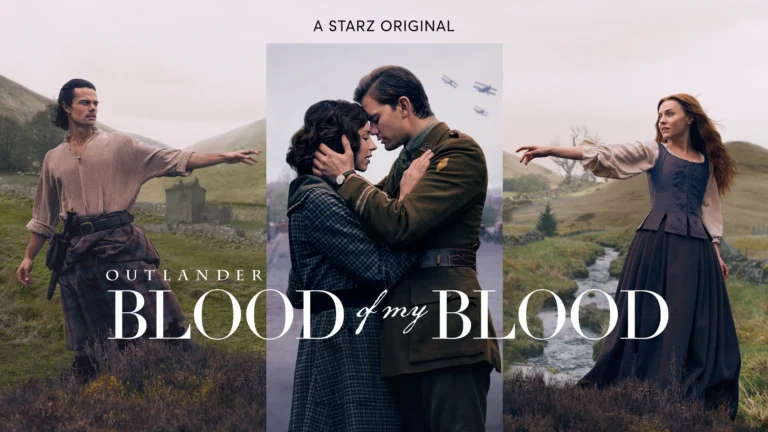
Meanwhile, the ‘Outlander’ franchise continues expanding through the prequel series ‘Blood of My Blood’, keeping the universe alive on screen even as Gabaldon races to deliver her literary conclusion.
Fans and critics generally praised the adaptation for its high production quality, compelling performances, and faithful storytelling, though some felt that later seasons strayed further from the books for dramatic effect. That creative tension is perhaps inevitable when a living author and an active television production are racing toward the same finish line by different routes.
Now that both journeys have reached their final chapters, one question seems to linger in the Outlander community: which ending do you think served Jamie and Claire’s story better, the one on screen or the one still waiting to be written?