Richard Gadd Teases What the ‘Half Man’ Ending Really Means



Richard Gadd has spoken openly about the ending of “Half Man,” a series that is already being described as intense and likely to divide audiences.
The show follows two boys in Scotland whose lives become deeply connected over many years, and it builds toward a finale that does not aim to give viewers a simple or comfortable conclusion.
Gadd explained that the story was never designed to end in a neat or happy way. He made it clear that the final episode reflects real life more than fiction usually does. He said, “I don’t think happy endings, or even conclusive endings, are really true to life.”
The series itself explores a difficult and often uncomfortable relationship between two characters, Ruben and Niall, played at different ages by Stuart Campbell, Gadd, Mitchell Robertson, and Jamie Bell. Their bond begins in childhood when their mothers form a relationship, forcing the boys into the same household. Over time, their connection becomes complicated, shifting between friendship, tension, and emotional dependence.
As the story develops, Ruben becomes a more unstable and aggressive presence, while Niall struggles with his own emotional attachment to him. Gadd has described Ruben as a character with two sides. He said, “There’s the calculated version of Ruben, and then there’s the explosive and in-the-moment version of Ruben as well.”
These two versions of the character play a major role in how the story moves toward its ending. The series builds tension by showing how deeply the two men remain tied to each other, even when their lives take different paths. According to Gadd, that connection is central to the story’s meaning, even when it becomes destructive.
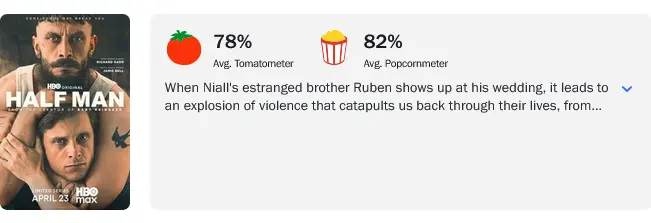
The final episodes of “Half Man” take place partly in the present day, where Niall is seen at a wedding when Ruben returns after being released from prison. These scenes gradually build toward a tense and emotional conclusion that avoids clear answers or simple resolution.
Gadd has said that filming the ending was physically and emotionally demanding. The production schedule was tight, and the cast had limited time to shoot key scenes. He described the experience as something that required full commitment in the moment. He said, “It felt like one of those things where you had to take a deep breath and just absolutely go for it.”
The creator also acknowledged that the ending may not satisfy all viewers. He did not try to hide that it could be controversial or difficult to watch. Instead, he embraced that reaction as part of the storytelling. The goal, he suggested, was not to comfort the audience but to reflect something closer to real emotional life, where answers are not always clear.
The cast has also spoken about the intense themes of the show, including Jamie Bell, who plays an adult version of Niall. The production involved careful attention to the emotional impact on actors, especially during more difficult scenes, with support systems in place during filming.
Overall, Gadd’s comments make it clear that “Half Man” is designed to leave viewers with questions rather than closure. The ending is meant to feel unsettling and honest, even if that means it will not please everyone watching.
Have something to add? Let us know in the comments!