Why Has ‘Masters of the Universe’ Bombed? The Real Reasons He-Man Couldn’t Save His Own Movie

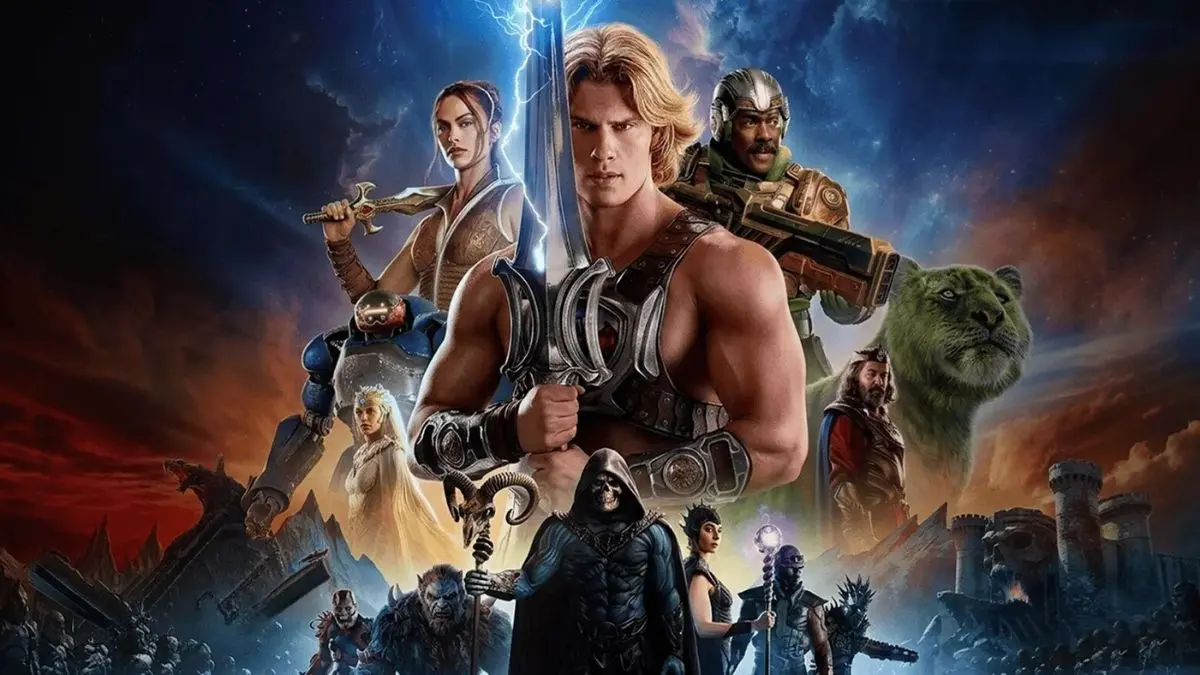

When Amazon MGM Studios and Mattel placed their bets on a summer blockbuster built around one of the most iconic toys of the 1980s, the entertainment industry watched closely. ‘Masters of the Universe‘ grossed a mere $29.3 million during its opening weekend at the North American box office, a devastating result for a film carrying a reported $200 million budget. What was supposed to be the sword-and-sorcery event of the summer turned into one of the more painful box office autopsies of 2026.
The film had everything that should have worked on paper. The star-studded cast features Nicholas Galitzine as He-Man, Camila Mendes as Teela, Jared Leto as Skeletor, Alison Brie as Evil-Lyn, Morena Baccarin as the Sorceress, James Purefoy as King Randor, and Idris Elba as Man-At-Arms, with direction from three-time Oscar nominee Travis Knight. Yet the film that finally made it to screens was met not with thunderous applause, but with the uncomfortable silence of empty theater seats.
A $200 Million Bet on a Franchise Nobody Introduced to New Audiences
The numbers behind the ‘Masters of the Universe’ collapse are genuinely staggering. The film earned $29.3 million domestically and $25 million internationally against a reported production budget of between $170 million and $200 million, and the general industry rule requires a film to earn approximately 2.5 times its production budget to reach profitability.
That math puts the break-even threshold somewhere north of $400 to $500 million, a mountain the film is nowhere near equipped to climb.
With a break-even point of around $555 million, the movie is currently sitting at a loss of roughly $251 million, a deficit that will likely prove far too much to overcome even with a warm audience reception. The PG-13 rating gives it some runway with family audiences, but competing titles like ‘Scary Movie’ and ‘Backrooms’ are consuming the very crowds ‘Masters of the Universe’ needed to survive its second and third weeks.
For a studio likely hoping word of mouth would bail out a soft start, the front-loaded box office shape was exactly the wrong sign, suggesting audiences were not motivated to evangelize the film to friends and family in the way a franchise-starter desperately needs.
The Barbie Playbook That Backfired Spectacularly
The strategy behind ‘Masters of the Universe’ was never subtle. Rolling Stone described the film as an attempt to make ‘Barbie’ for eighties-nostalgia-loving men, calling it not a movie so much as extremely bad brand management. The parallel was deliberate from the start. Mattel had watched the ‘Barbie’ cultural moment generate billions and wanted to replicate that engine with He-Man, but the two properties are fundamentally different animals.
Amazon and Mattel chased the Barbie playbook, betting a male-skewing action property could appeal to all four major audience groups, the broader four-quadrant crossover crowd. The early demographics said otherwise, with the audience coming in at 68% male, dads outnumbering moms 71% to 29%, and boys under 12 leading girls by 82% to 18%. That is not a cultural crossover. That is the same audience He-Man already had.
Amazon’s Barbie approach completely backfired. The movie did not bring in the younger crowd, it did not bring in enough families, it did not bring in women and girls, and it did not turn He-Man into a new pop-culture event. The mistake was assuming the formula was transferable without accounting for why ‘Barbie’ worked, which had everything to do with Barbie’s unique identity as a cultural symbol for women of all ages and nothing to do with the blockbuster playbook itself.
A Long Road from Development Hell to Box Office Disaster
Part of what makes this collapse sting so sharply is how long it took to get here. A new live-action ‘Masters of the Universe’ film was announced in 2009 by Sony Pictures Entertainment with Escape Artists producing, and following multiple writer, director and casting changes, the rights were transferred to Netflix in 2022 and then bought by Amazon MGM Studios in 2024.
That is more than fifteen years of development hell for a film that opened below the domestic take of films already considered failures.
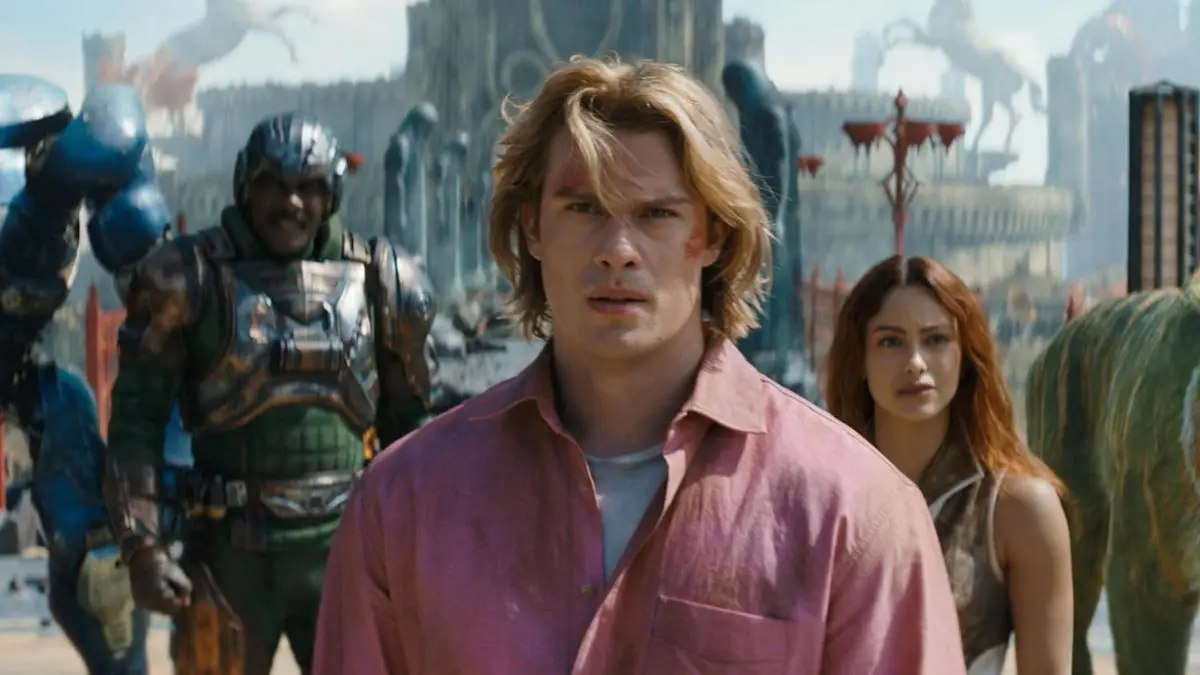
Netflix even cast Noah Centineo as He-Man before the budget ballooned past their comfort zone and the entire project collapsed at that studio. The version that ultimately reached theaters carried the scars of that turbulent journey, arriving with a tone that several critics found uncertain.
The Hollywood Reporter noted that director Travis Knight and his team loaded the film with so much campy, self-referential humor that the result winds up feeling like one of those fringe festival musical theater parodies, leaving audiences unsure whether to laugh or cry.
The Demographics Problem That No Studio Spin Can Fix
The most telling data point from opening weekend had nothing to do with the total gross. Only 5% of viewers were under the age of 12 and only 6% were between the ages of 13 to 17, while the biggest demographic at 29% were those between the ages of 45 and 54, the generation that grew up watching these characters. For a movie designed to launch a fresh franchise and introduce He-Man to a new generation of children and teenagers, those numbers represent a complete strategic failure.
The marketing missed the young audience entirely. Those movies that connected with Gen Z in 2026 met them where they actually are: YouTube, gaming culture, TikTok, memes, and online conversation. The ad money for ‘Masters of the Universe’ never landed on them. The film competed in a summer landscape where titles like ‘The Super Mario Galaxy Movie’ crossed a billion dollars by staying native to the digital spaces where young audiences actually live.
The core messaging also sent red flags to fans. Early press coverage described Prince Adam as a depressed corporate HR worker who would rather dance than fight, framing He-Man as a story about toxic masculinity and vulnerability in a way that made the movie sound more interested in deconstructing the character than delivering him. For a fanbase that spent decades waiting for a faithful big-screen version of Eternia, that pitch felt like a bait and switch before the film even opened.
What Comes Next for He-Man and Mattel’s Franchise Dreams
The theatrical window for ‘Masters of the Universe’ is effectively closed as a financial success story, but the conversation is not entirely over. Amazon will be keeping a close eye on Prime Video streaming numbers when the film hits the platform, but this has not been the Barbie-sized hit that Mattel expected or hoped for. Streaming performance could yet soften the blow and give the studio something to point to when justifying any future investment in the property.
The film currently holds a solid 69% score on Criticless based on 106 reviews, and an 87% audience score on Rotten Tomatoes, making it clear that most people who actually saw it enjoyed themselves. The tragedy of ‘Masters of the Universe’ is not that it made a terrible film. By most accounts it delivered a functional, entertaining adventure.
The tragedy is that it built the wrong strategy around the right ingredients, chasing a cultural moment that cannot be engineered, and spending $200 million to find that out. If you grew up watching He-Man raise his sword on Saturday mornings, drop your thoughts below on whether Amazon should still take a shot at a sequel, or whether Eternia deserves a completely fresh start.