Are the Cases Fact or Fiction? ‘Criminal Minds’ and the Real Cases That Haunt Its Fictional Crimes


For nearly two decades, ‘Criminal Minds‘ has kept audiences on the edge of their seats with its vivid portrayals of serial killers, abductors, and psychological obsessives. The popular American TV series aired from 2005 to 2020, captivating audiences with its psychological depth and intense narrative arcs. But for all its dramatic license, one question keeps surfacing among fans and true crime enthusiasts alike: just how much of it is real?
The answer is more unsettling than most viewers expect. ‘Criminal Minds’ was conceived as a fictionalized interpretation of a real unit within the FBI, and its popularity led to an increase in popular knowledge of the general precepts of criminal profiling, and how the Behavioral Analysis Unit generally works. The deeper you dig into the show’s DNA, the more connections to actual crimes and real investigators begin to surface.
The Real FBI Unit Behind the BAU
The show’s foundation is not purely invented. The unit itself is based entirely on the real-life BAU built by FBI Profiler John Douglas. The show’s former main character Jason Gideon and current main character David Rossi are both partially based on John Douglas himself, with respect to different aspects of their personalities.
John Edward Douglas was one of the FBI’s first profilers. He transferred to the FBI’s Behavioral Sciences Unit in 1977, where he taught hostage negotiation and applied criminal psychology at the FBI Academy in Quantico, Virginia. He created and managed the FBI’s Criminal Profiling Program and was later promoted to unit chief of the Investigative Support Unit, a division of the FBI’s National Center for the Analysis of Violent Crime.
In the very first episode, ‘Criminal Minds’ introduces Jason Gideon as he gives a profile that his real-world inspiration, John Douglas, actually delivered. Gideon’s character is inspired by the very real FBI criminal profiler, who posited that the Trailside Killer operating near San Francisco in the eighties had a speech impediment, and according to the New Yorker, he was right.
David Rossi, Gideon’s replacement, is also inspired by Douglas. Like his friend Gideon, David also has trouble at home due to his work, and like Douglas, he is an author who published numerous books on serial killers. Having one real figure cast such a long shadow over two beloved main characters is a striking testament to just how central Douglas is to the entire premise.
Criminal Profiling and Its Real-World Roots
Beyond the characters themselves, the investigative method at the heart of ‘Criminal Minds’ also traces back to documented FBI practice. The real BAU works on building behavior profiles based on crime scene evidence, witness and victim reports, and a deep understanding of psychological theories and models. Although the actual process is much slower and less dramatic than depicted on television, the fundamental practices are accurately inspired.
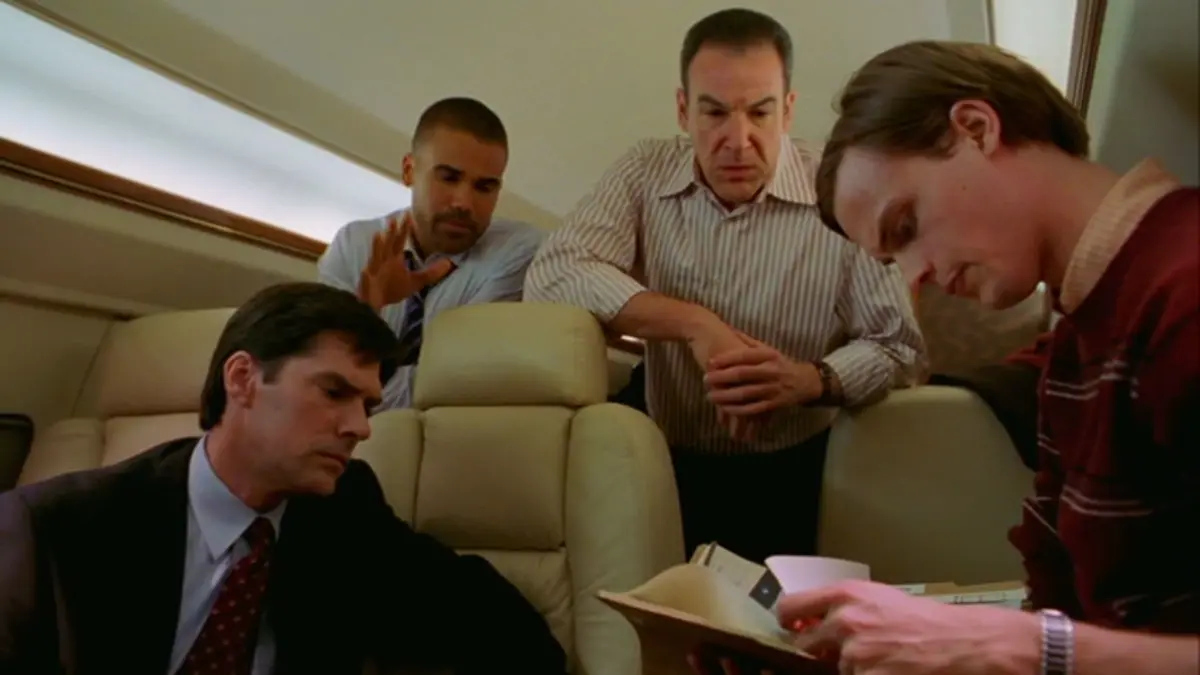
Criminal profiling is the art and science of trying to understand the underpinnings of what causes extreme, serial violence, so in general, episodes draw on clinical findings, collected since the seventies, to inspire their fictional murderers. That clinical base gives the show a grounding that sets it apart from pure procedural fantasy.
Douglas has criticized some pop-culture depictions of his work. In an interview with Vulture, he called ‘Criminal Minds’ “procedurally all wrong.” He also claimed that many movies and TV shows about serial killers make them “so diabolical and unreal.” His frustration is understandable, but it also confirms what fans have long suspected: the real version of his work is even more intricate than anything the show has managed to portray.
Real Killers Who Inspired the Show’s Most Chilling UnSubs
Where ‘Criminal Minds’ gets genuinely haunting is in the specific real-life criminals who informed its fictional villains. George Foyet, known as the Boston Reaper, was arguably the most notorious killer covered in ‘Criminal Minds.’ His actions were compared to those of two infamous serial killers, the Zodiac Killer and the BTK Killer, being described as highly intelligent and having a penchant for taunting investigators about their crimes.
The episode ‘Unfinished Business’ revolves around the Keystone Killer, Walter Kern, who shares a lot of similarities with Dennis Rader, the BTK Killer, including a proclivity for taunting letters and crossword puzzles. Both men also had very similar methods of operation, served in the Air Force, and worked as alarm installers along with other jobs that allowed them access to people’s homes.
In the season one episode featuring Eddie Mays, a young man suffering from psychotic delusions and consuming the blood and organs of his victims, Reid mentions Richard Chase in the episode. Mays was likely based on Chase, as they both were institutionalized, suffered from delusions, and were heavily into drugs. In January 1978, Chase killed five men, women, and children, and he similarly drank the blood of his victims. These parallels are rarely accidental; the writing team clearly combed through case files with genuine care.
How ‘Criminal Minds: Evolution’ Keeps the True Crime DNA Alive
The connection to real crime history did not fade when the show moved to streaming. The rebooted ‘Criminal Minds: Evolution’ continues to use real cases as inspiration, prompting the creation of the docuseries ‘The Real Criminal Minds,’ a companion series about these real-life serial killers. The fact that Paramount+ felt confident enough to commission an entire companion docuseries speaks to how deeply the true crime roots of the franchise resonate with its audience.
‘Criminal Minds,’ after running 15 seasons on CBS from 2005 to 2020, returned with a new iteration, ‘Evolution,’ in 2022 on Paramount+. The step forward in ‘Evolution’ is in the plotting, which is designed to make it a more serialized serial killer procedural, braiding the season-long threat together with contained cases, lending the show a new momentum and cohesiveness.
On Paramount+, ‘Criminal Minds: Evolution’ is one of their top five original series and has driven the original series to have an increase of as much as six times in monthly viewership. A new generation of viewers is clearly as drawn to the show’s mix of fact and fiction as the original audience was, suggesting the formula still works precisely because it is built on something real.
Why the Real Connection Still Matters
The enduring appeal of ‘Criminal Minds’ is inseparable from the knowledge that its darkest moments are often pulled from documented history. ‘Criminal Minds’ might be a work of fiction, but it often serves as a harsh reminder of how terrifying the real world can be. The cases that inspired these episodes are proof of that.
From the Zodiac Killer to the Lipstick Killer, the show incorporates infamous and lesser-known cases, delving into the dark and disturbed minds of serial killers. Each season effectively functioned as an unofficial primer on the history of American violent crime, wrapping real investigative science in dramatic packaging that millions could absorb on a Wednesday evening.
What makes the franchise genuinely singular is not just its body count of referenced killers but the institutional authenticity underneath it all. The BAU is real. Criminal profiling is real. The interviews with serial killers that gave Douglas his insights were real. ‘Criminal Minds’ borrowed all of it, dressed it up, and made it primetime. If you’ve been watching all these years wondering which cases the writers pulled from their research files next, drop your best guesses and most disturbing discoveries in the comments below.