‘Widow’s Bay’ Is Set in the Present but Its Curse Runs Back to 1702

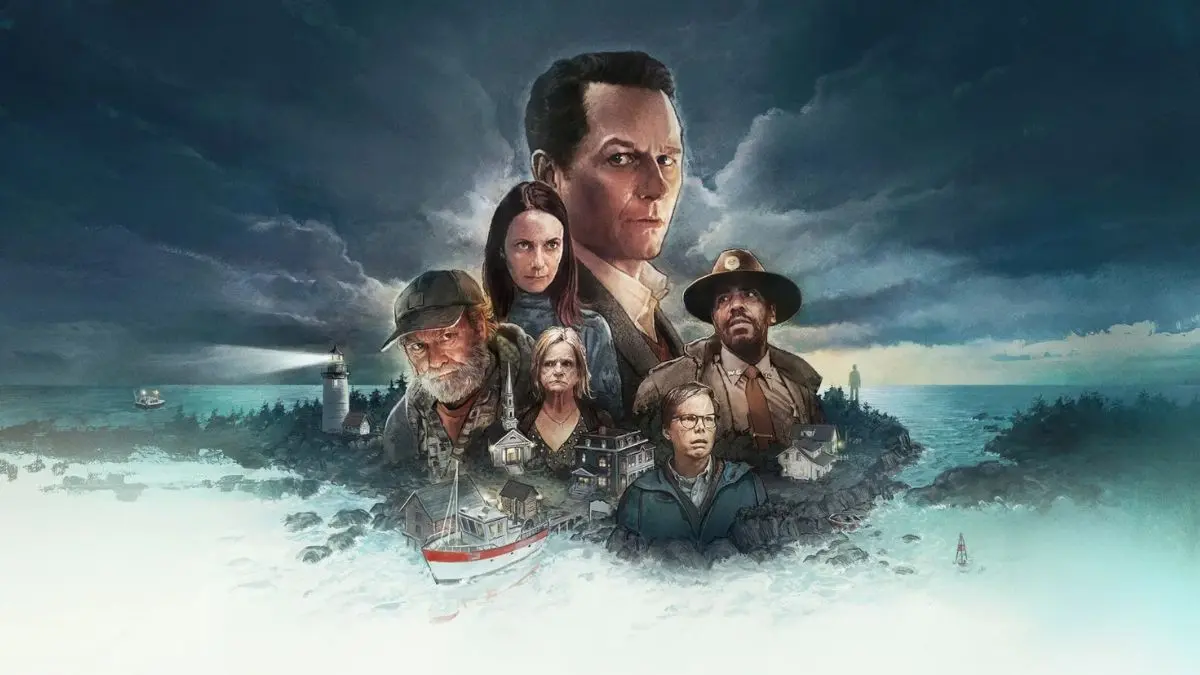

Apple TV’s breakout horror-comedy ‘Widow’s Bay‘ is the kind of show that makes you genuinely nervous about small-town charm. Premiering to widespread critical acclaim, the series has quickly become one of the most talked-about new shows of the year, and part of what makes it so compelling is the way it plays with time itself. The fictional island at the center of the story carries centuries of rot beneath its picturesque New England surface.
The main narrative of ‘Widow’s Bay’ unfolds in the present day. The town itself, however, essentially exists in a time machine, with bad cell service that has everyone using landlines, a mayor with an actual Rolodex on his desk, and station wagons as the vehicle of choice around the island. That deliberate anachronism is no accident. It is a visual and tonal choice that reinforces just how thoroughly the island is frozen in the grip of its own haunted past.
The Present-Day Story of a Cursed New England Island
The series is set on the fictional New England island town of ‘Widow’s Bay’, which is afflicted with a centuries-old curse that brings various supernatural evils upon the island. At the center of it all is Mayor Tom Loftis, a skeptic from the mainland who just wants to put the island on the tourist map.
A New England mayor trying to boost tourism on his island must navigate strange events suggesting it might be cursed. That tension between civic ambition and supernatural reality is what drives the show’s engine. The comedy and the horror are inseparable, and both live entirely in the present tense.
When a writer for The New York Times arrives to profile the town, Mayor Tom salivates at the possibility of the island becoming the next Martha’s Vineyard or Nantucket, but the pressure to keep mouths shut about the island’s spooky lore practically unravels him. It is as grounded and contemporary a premise as any workplace comedy, wrapped in something deeply unsettling.
The show is about a community with a past that’s chained like an anchor to its future, and it takes the time to fill out its setting enough to make it feel real, so the unreal that happens within it will hit harder.
The 1702 Flashback That Changes Everything
While ‘Widow’s Bay’ is rooted in the present, its most celebrated episode takes a dramatic detour into the past. Episode 6 goes back to the very beginning, specifically 1702, when the island was first being settled. It is a full colonial-era chapter, entirely separated from the present-day cast and storyline.
In this episode, Sarah Westcott Warren, played by Betty Gilpin, is a woman newly arrived on Widow’s Bay and betrothed to its leader, Richard Warren, played by Hamish Linklater. Sarah does not even get to enjoy her wedding night before she realizes something sinister is afoot with her new husband. The episode functions as a self-contained origin story for the island’s entire mythology.
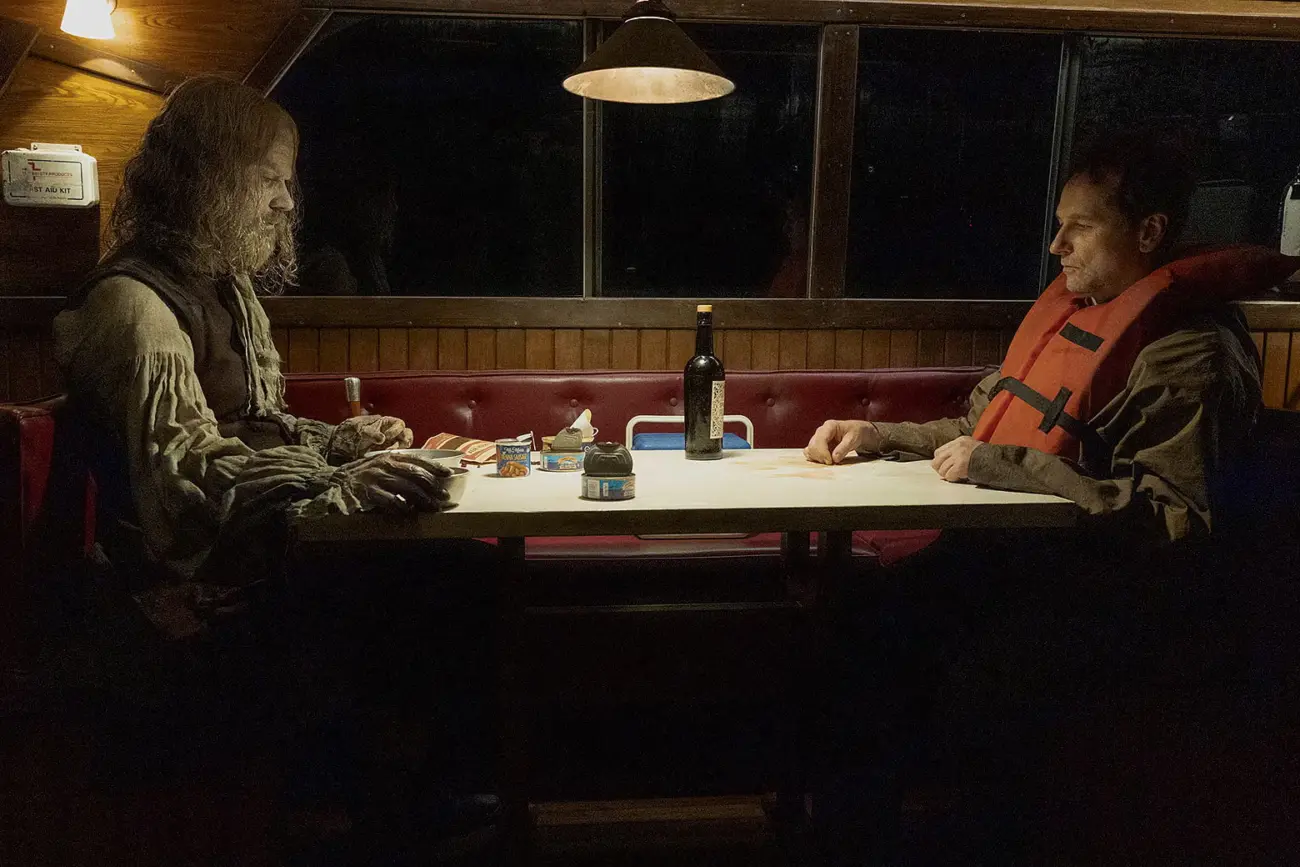
Series creator Katie Dippold told TheWrap about the show’s midseason flashback that the writers’ room spent a great deal of time discussing the island’s history, including its founder and what it would have been like in the early days and the timeline of different mayors from different eras. That careful world-building gives the present-day horror its weight and emotional stakes.
Richard Warren is a man who truly believes in his right to rule, having founded a covenant with the entity on the island, one that means he can never die and that islanders are bound to it. Everything the modern residents of the island are living through traces directly back to what was set in motion in that 1702 settlement.
Katie Dippold’s Intentional Use of the Colonial Past
The decision to anchor the series in a colonial founding was a deeply intentional creative move, not simply a narrative device.
Dippold explained that the more the writers talked about what it would have been like when the settlers first arrived, the more they started thinking about how interesting it would be to see it and do a straightforward, dry colonial period piece that leans a little into the horror. The result is one of the most praised single episodes of television this year.
Behind the camera for the 1702 flashback is horror filmmaker Ti West, and he delivers an episode that slots in nicely with his other period piece horror films. The hiring of West to direct the historical chapter was a precise match of filmmaker to material.
Murai’s foundational episodes are brilliantly complemented by Ti West, who helms the pivotal, historically focused sixth episode, bringing a distinct, period-accurate folk-horror aesthetic to the series. The tonal shift between the present-day episodes and the colonial flashback is jarring in the best possible way, and critics have singled it out as a high point of the entire season.
The Timeless Horror That Binds It All Together
What ‘Widow’s Bay’ ultimately argues is that the specific year does not matter nearly as much as the inescapability of what was started long ago. The series holds a 97 percent approval rating on Rotten Tomatoes based on 76 reviews, with the critics consensus reading that creator Katie Dippold successfully continues to invest in eccentricity, bringing scares, laughs, and a game cast. Critics and audiences alike have responded to the show’s layered sense of history.
Lucy Mangan of The Guardian gave the series five out of five stars, calling it “an absolute blast, rich and wonderful.” That kind of praise speaks to how effectively the show uses its dual timelines to build something that feels genuinely mythological.
The present-day storyline and the 1702 flashback do not just coexist in ‘Widow’s Bay’. They are in constant conversation, with the sins of the island’s founders bleeding forward across centuries into the lives of everyone stuck on that ferry-dependent rock.
The very Stephen King-esque series has Tom fighting with the residents to allow tourism to flourish, while the legends of the island keep threatening to drag everything back into darkness. For a show so committed to comedy, it is remarkably serious about the weight history places on a place and its people.
If you have already watched the 1702 flashback episode and have theories about how the covenant Richard Warren made with the island’s entity will ultimately be broken or fulfilled in the final episodes, drop them in the comments because this community deserves the conversation.