‘Masters of the Universe’ Gets Slight Box Office Bump—But It’s Still Crashing & Burning

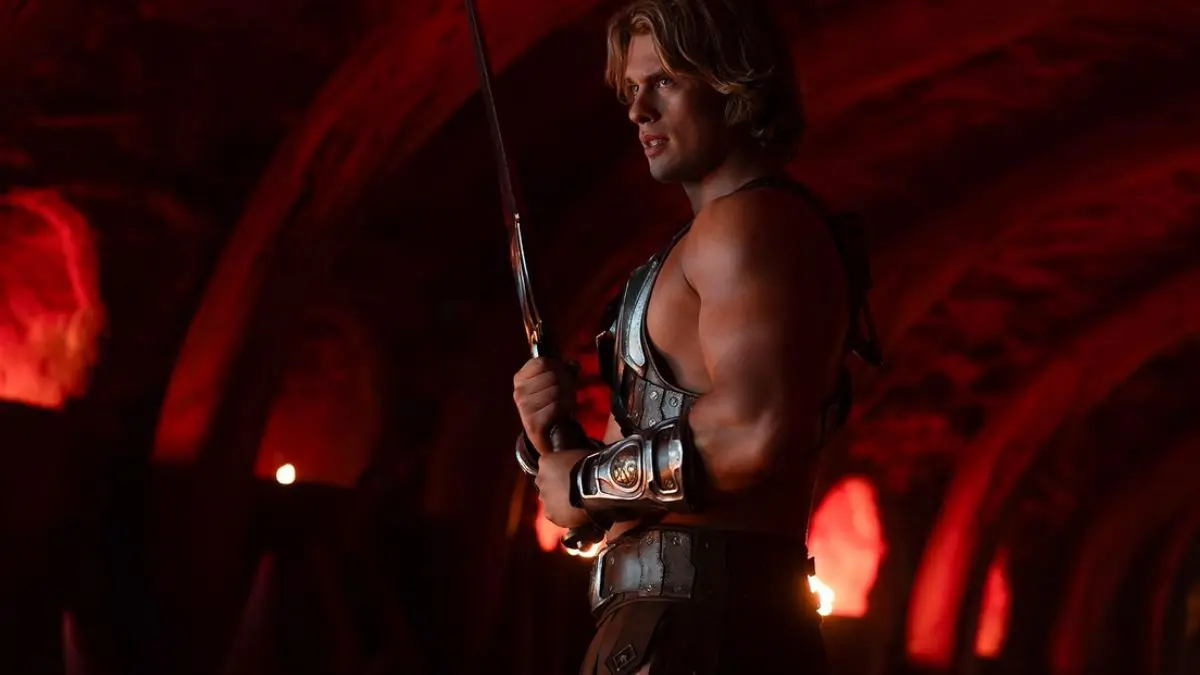

There was a time when the name He-Man felt like a guaranteed crowd-pleaser. The Masters of the Universe franchise spent decades as a cornerstone of 1980s pop culture, moving toys, dominating Saturday morning cartoon blocks, and inspiring fierce nostalgia in generations of fans.
When Amazon MGM Studios announced its big-budget live-action revival, starring Nicholas Galitzine as Prince Adam and Jared Leto as the villainous Skeletor, the hope was that all of that goodwill would translate into a summer event. It did not.
‘Masters of the Universe’ opened in U.S. theaters on June 5, and by its second weekend it had fallen to fifth place at the domestic box office, bringing in $8.6 million from 3,677 locations. That figure brought its cumulative domestic total to roughly $46 million and its worldwide haul to around $86 million. For a film positioned as the launch of a major franchise, those are bruising numbers.
The second-weekend collapse represented a staggering 71% drop from the already disappointing $29.4 million opening weekend, suggesting the movie’s core fanbase showed up early while general audiences largely stayed away. Box office analyst Luiz Fernando pegged the second-weekend domestic gross at an estimated $8.9 million with a 69.6% drop, placing it in unfortunate company alongside other nostalgic reboots that struggled to find their footing.
For reference, the tweet compared the drop unfavorably to films like ‘Dungeons and Dragons Honor Among Thieves,’ ‘The Lost City,’ and ‘Free Guy,’ all of which held considerably better in their sophomore frames.
The film reportedly cost somewhere between $170 million and $200 million before marketing, placing its estimated break-even point as high as $425 million, a figure it is nowhere close to approaching. That gap between what the film needed to earn and what it is actually earning is becoming harder to ignore with each passing weekend.
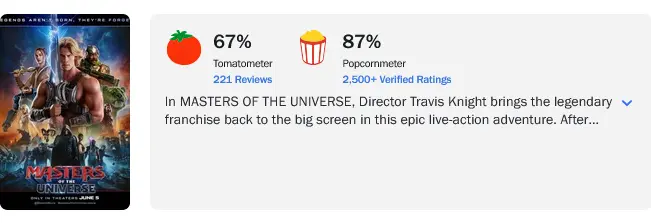
The film currently holds a 67% critical approval rating on Rotten Tomatoes alongside a solid 88% audience score, but earned a so-so B CinemaScore, suggesting that word of mouth in the weeks ahead will be lukewarm at best. A B CinemaScore is particularly concerning for a franchise-starter, as it points to audiences who liked the film well enough but are unlikely to evangelize it to friends and family in the way a breakout hit demands.
‘Masters of the Universe’ joins a growing list of revived 1980s properties that have struggled in the modern marketplace, following ‘Tron: Ares’ and ‘The Running Man’ into the same disappointing territory, where brand recognition among older audiences has not been enough to pull younger moviegoers into theaters.
Despite the grim theatrical trajectory, Amazon MGM domestic distribution head Kevin Wilson attempted to reframe the situation in a positive light. Wilson said in a statement, “This weekend represents a very solid start for ‘Masters of the Universe’ and the passionate, multigenerational audience response we’re seeing around the world has been fantastic,” adding that the opening “validates our holistic distribution strategy, building awareness and engagement that will carry well beyond the theatrical window.”
That “holistic distribution strategy” framing is industry code for a path that relies heavily on Prime Video. The expectation from analysts is that most audiences are simply going to wait to stream this one, rather than rush out to theaters. For Amazon MGM, which has the luxury of feeding underperforming titles directly into its streaming pipeline, the theatrical run serves more as a marketing exercise than a financial one. The question is whether the mixed word of mouth will translate into strong streaming numbers or whether the same audience indifference follows the film onto the platform.
With ‘Toy Story 5’ and ‘Supergirl’ arriving in theaters through the end of June, followed by a packed July slate, the theatrical window for ‘Masters of the Universe’ is closing fast. Analysts now project the film will finish its domestic run in the range of $60 million to $70 million, a deeply underwhelming result for a property that was supposed to announce itself as the next big franchise. The film still outgrossed the original 1987 movie, which ended its run at just $17.3 million, but given the budget difference and the shifting economics of Hollywood, that comparison offers little comfort to anyone involved.
Have something to add? Let us know in the comments!