Who Really Killed Agamemnon and What It Means for Nolan’s ‘The Odyssey’

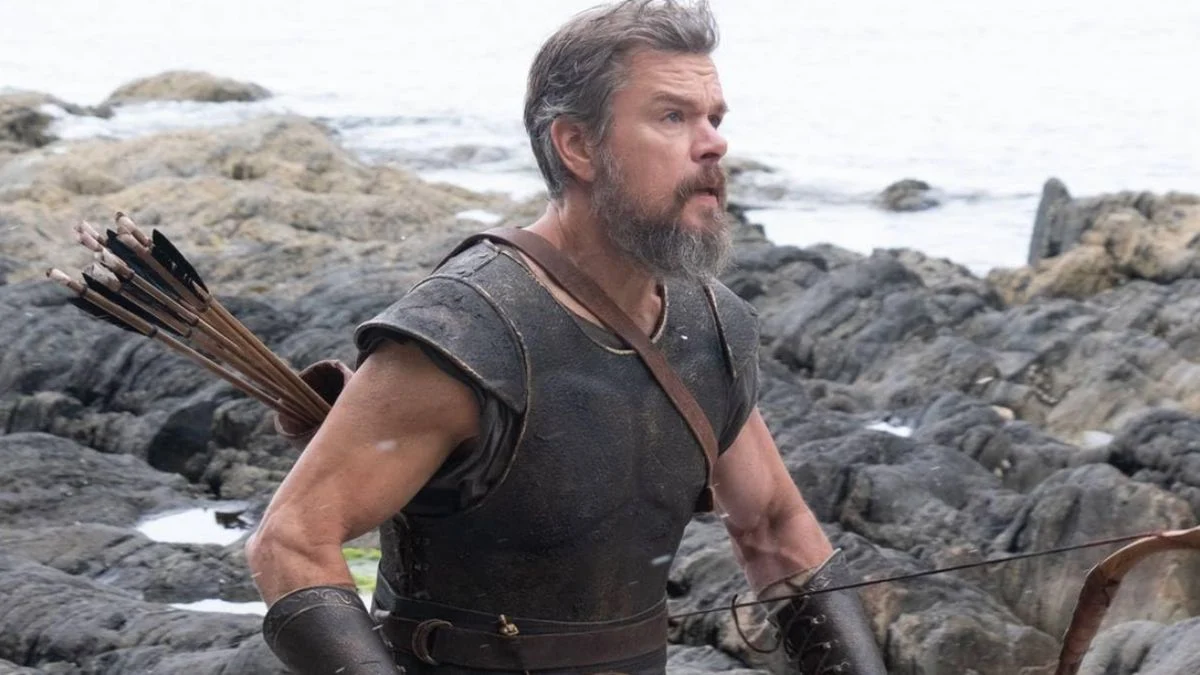

Christopher Nolan’s ‘The Odyssey‘ has finally arrived in theaters, and one question keeps popping up among audiences who only vaguely remember their high school mythology lessons. Who actually killed Agamemnon, the imposing Greek king glimpsed in the film’s flashbacks, and how does that ancient murder mystery connect to the story Nolan is telling on screen.
The answer depends on which ancient source you trust, and that ambiguity is exactly what makes Agamemnon’s death one of the most fascinating threads running quietly beneath ‘The Odyssey’. Nolan’s adaptation leans heavily on Homer’s original text, and Homer’s version of this particular murder is messier and more political than most people remember.
Agamemnon’s Death According to Homer
In Homer’s ‘Odyssey’, the killing of Agamemnon is not something readers witness firsthand. Instead, Odysseus hears the story directly from Agamemnon’s ghost when he travels to the underworld in Book 11, with Agamemnon recounting his own murder as a warning. That framing matters, because it turns Agamemnon’s death into a cautionary tale rather than a straightforward action sequence.
According to that account, Clytemnestra’s crime in Homer’s version is infidelity rather than direct murder, since the actual killing is carried out by Aegisthus inside his own house.
Agamemnon’s shade specifically describes how Aegisthus and Clytemnestra hosted a feast, then launched a surprise attack that killed him along with several of his soldiers, while Clytemnestra separately killed the Trojan prophetess Cassandra.
That detail, that Clytemnestra facilitated the trap but did not personally strike the blow in Homer’s telling, is a distinction a lot of pop culture summaries gloss over. It is also worth noting that the death of Agamemnon and Clytemnestra’s betrayal are not the central focus of the ‘Odyssey’, but they are still referenced prominently throughout the poem as a warning to Odysseus.
Clytemnestra and Aegisthus as Co-Conspirators
Later Greek writers, particularly the tragedian Aeschylus, changed the story so that Clytemnestra herself wields the weapon, making her a far more active and vengeful figure. In older versions of the story, including Homer’s, Aegisthus murders Agamemnon upon his return from Troy, but in later versions, including those tied to the Orestes myth, it is Clytemnestra who kills her husband directly.
Either way, the motive stays consistent across nearly every telling. Clytemnestra kills, or helps kill, Agamemnon as revenge for his sacrifice of their daughter Iphigenia to Artemis roughly ten years earlier, while Aegisthus assists her because he wants to rule Mycenae alongside her. That sacrifice, made so Agamemnon’s fleet could sail to Troy, is the wound Clytemnestra never forgives.
There is also a deeper, older grudge at play. Aegisthus struck the fatal blow to avenge wrongs done to his own father, Thyestes, tying the murder to the broader curse hanging over the House of Atreus. It is a story about generational vengeance as much as it is about one woman’s grief.
How Nolan’s ‘The Odyssey’ Portrays Agamemnon
Nolan’s film does not center on the murder itself, since the story follows Odysseus’s journey home rather than Agamemnon’s household. But Agamemnon still casts a long shadow. Benny Safdie plays Agamemnon in the film, marking his second collaboration with Nolan after portraying Edward Teller in ‘Oppenheimer’.
Visually, the character makes an outsized impression despite limited screen time. Agamemnon is depicted with an imposing, Darth Vader-like presence, and critics have noted his hulking, mohawked helmet as one of the film’s most vivid design details.

That armor has become a talking point in its own right, since Nolan explained that costume designer Jeffrey Kurland’s team, working under Mirojnick, used materials like blackened bronze, silver, and sulfur to convey Agamemnon’s elevated status through cost and craftsmanship.
Story-wise, the film ties Agamemnon directly into Odysseus’s arc rather than treating him as a standalone tragedy. Odysseus’s forced conscription into the war by Agamemnon is shown through flashbacks, while the main narrative follows a weathered, white-bearded Odysseus after the fall of Troy. Trailer footage also hints that Agamemnon’s arc will intersect with wartime flashbacks tied to the Trojan Horse, suggesting his role expands beyond the brief glimpses shown in marketing.
Why Agamemnon’s Fate Still Resonates on Screen
Part of what makes this backstory land so hard in ‘The Odyssey’ is that Nolan built his film on faithfulness to the source material. Nolan read and studied multiple translations of the ‘Odyssey’, including those by Emily Wilson, E. V. Rieu, and Robert Fagles, while aiming to keep the script very faithful to Homer’s original text. That commitment means the film treats Agamemnon’s downfall the way Homer did, as a warning embedded in the margins of a bigger journey rather than a spectacle in its own right.
It also gives Odysseus’s own homecoming an added layer of tension for anyone who knows the myth. Since Agamemnon’s ghost uses his own murder as a cautionary tale about untrustworthy homecomings, audiences watching Odysseus sail back to Penelope are meant to feel that same low hum of dread the whole time.
Fans have already been dissecting every frame of Safdie’s Agamemnon since the trailers dropped, debating just how much of Clytemnestra’s revenge plot might surface once the film hits streaming and home video breakdowns start circulating.
Do you think Nolan’s ‘The Odyssey’ should have given Agamemnon’s murder more screen time, or does keeping it as a whispered warning from the underworld actually serve the story better?