Paramount and Warner Bros. Are Merging Into a $111 Billion Giant, But There’s a Massive Catch


Hollywood has been bracing for this moment for months, watching one of the most contentious corporate battles in recent memory finally inch toward a resolution. What started as a dramatic bidding war between rival suitors has now settled into something far more consequential: the largest media merger in history is officially clearing its final hurdles. The implications for how audiences watch television and film for years to come are enormous.
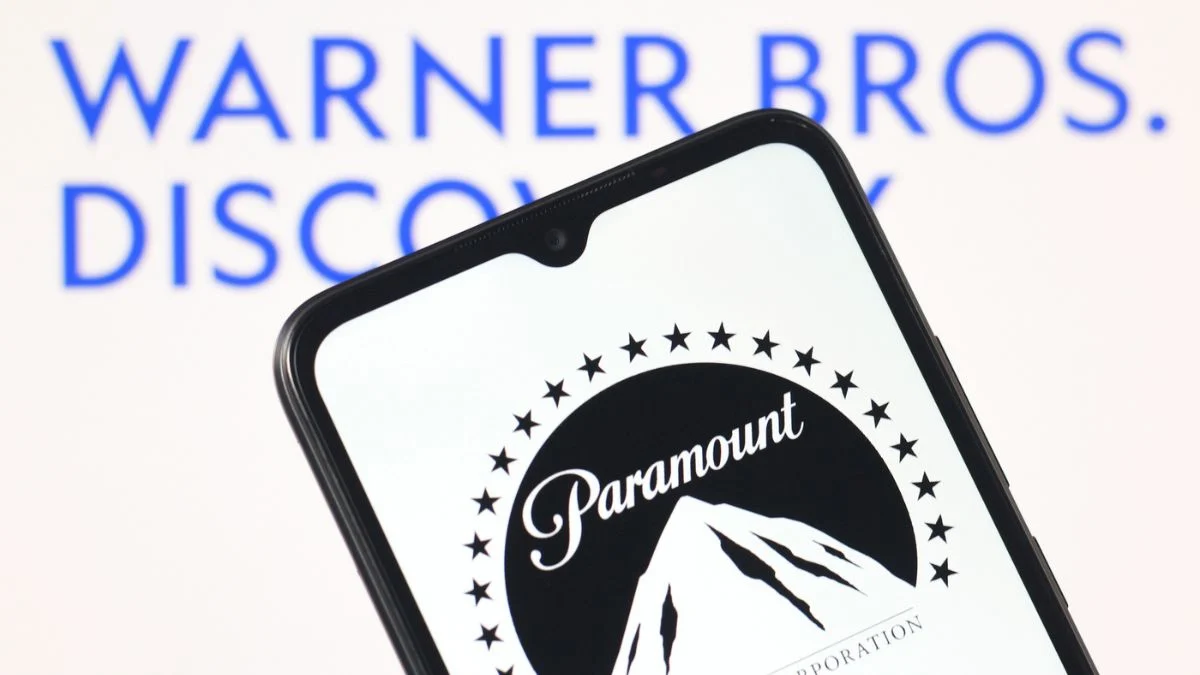
Paramount Skydance chief David Ellison has spent months pursuing Warner Bros. Discovery, and this week that pursuit finally paid off. Following a settlement with 12 Democratic state attorneys general that resolves the antitrust case threatening to block the deal, the merger is now expected to close within about two weeks, according to a staff memo Ellison sent Monday.
The resulting company, valued at roughly $111 billion, would combine two of the industry’s most recognizable content libraries under one roof. But according to a new Wall Street analysis, that scale comes at a steep price: the newly merged Paramount-Warner Bros. is expected to carry more than $77 billion in debt, a financial burden that will shape nearly every strategic decision the company makes in the years ahead.
Morgan Stanley analysts Sean Diffley and Daniel Duran addressed the tension between scale and debt directly in a research note dated September 22. They called the deal’s outcome “a clear positive for the pro-forma PSKY + WBD,” especially given the wide range of feared outcomes that had loomed over the marketplace throughout the deal’s uncertain path to completion.
Much of that optimism centers on what happens when HBO Max and Paramount+ eventually combine into a single streaming service. Analysts believe the combined company could grow from being the fourth- and fifth-largest streaming services individually to rivaling Disney and Amazon for the second and third spot behind Netflix in premium subscription video, according to Morgan Stanley’s note obtained by Variety. The firm projects the combined platform could surpass 240 million subscribers by 2030.
That optimism isn’t purely theoretical. Morgan Stanley found roughly 28% subscriber overlap between HBO Max and Paramount+ today, but also noted that 23% of surveyed consumers who don’t currently subscribe to either service said they’d likely add the combined platform, while 17% said it would replace another streaming service in their household entirely. Ellison has confirmed plans to eventually merge the two platforms into one consolidated service, though exact timing and structural details haven’t been announced yet.
The appeal of combining these two companies isn’t hard to understand from a content perspective. Paramount brings franchises like ‘Mission: Impossible,’ ‘Star Trek,’ and ‘Yellowstone’ to the table, while Warner Bros. contributes HBO’s programming lineup alongside properties including ‘Harry Potter,’ the DC universe, ‘Game of Thrones,’ and ‘Lord of the Rings.’ Analysts expect the new company’s leverage, measured as net debt to adjusted EBITDA, to shrink from roughly six to seven times at deal close down to three to four times within three years, assuming the streaming growth outpaces the ongoing decline in linear television cash flows.
That linear decline is a real threat working against the merger’s timeline. Traditional TV networks are projected to fall below half of the company’s pro-forma earnings by 2028 and shrink to roughly 30% by 2030, underscoring just how quickly the industry’s economics are shifting toward streaming. As part of the antitrust settlement, Paramount has also agreed to keep its operations in California, committing to not sell the Paramount Studios or Warner Bros. lots for at least five years, while also promising to release a minimum of 30 films annually with a 45-day theatrical window intact.
Not everyone is convinced the transition will be painless. Industry unions have already raised concerns about potential layoffs as the two companies work to consolidate overlapping departments and operations, even as officials have attempted to reassure entertainment workers that significant job cuts aren’t part of the plan. With the deal now cleared to close within weeks, the real test of whether this streaming powerhouse can outrun its massive debt load is only just beginning.
Do you think the new Paramount-Warner Bros. giant can challenge Netflix?
Have something to add? Let us know in the comments.