Is Sue Pregnant in ‘Carrie’? The New Adaptation Settles Her Story


Ever since Stephen King released his legendary horror tale, fans have analyzed every detail surrounding the complicated fate of Sue Snell. With the arrival of Mike Flanagan’s television version of ‘Carrie‘ on Prime Video, viewers are once again curious whether Sue Snell’s pregnancy plays a central role in the unfolding tragedy. The topic has stirred debate across multiple generations of horror enthusiasts because previous adaptations took vastly different creative paths with her character.
In this modern television reimagining, the mystery of Sue Snell’s pregnancy in ‘Carrie’ finally receives a clear and grounded answer. Rather than letting her future hang in total ambiguity, the eight episode series tackles her personal dilemma right away. The decision fundamentally reshapes Sue’s motivations, her friendship circle, and her ultimate survival when prom night turns into an inferno.
The Sue Snell Pregnancy Scare in the Prime Video Series
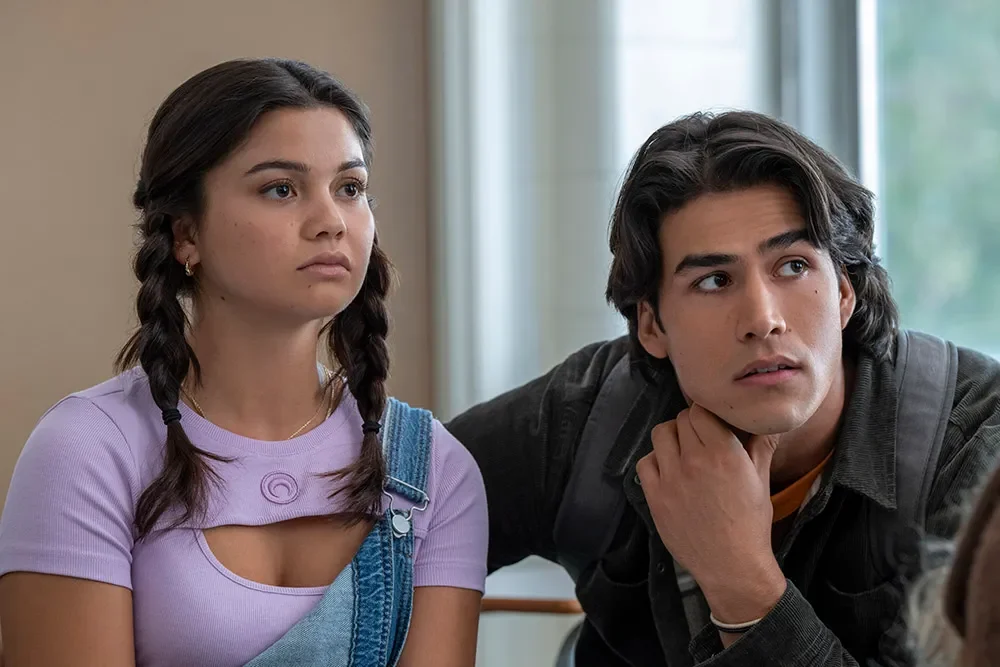
In the television series directed by Mike Flanagan, Siena Agudong steps into the role of high school student and class president Sue Snell. Unlike earlier versions where Sue exists largely in relation to Carrie White, this adaptation gives her a fully realized personal journey. She grapples with intense guilt over the infamous locker room bullying incident, but her private life quickly becomes just as overwhelming.

During the fourth episode, audiences watch the Sue Snell pregnancy scare unfold in dramatic fashion. Convinced that a missed cycle might mean she is expecting a child, Sue takes an over the counter test while hiding away from her peers. The tense scene concludes with a negative result, confirming to Sue and the audience that she is not pregnant.
This moment of relief provides immense emotional clarity for both the character and the narrative. By removing the prospect of teenage motherhood, the series avoids leaning into unnecessary soap opera theatrics. It keeps the primary focus squarely on Sue’s remorse, her growing estrangement from cruel classmates, and her genuine desire to atone for past cruelty.
How the Stephen King Novel Handled Sue Snell
To understand why audiences remain fixated on this question, one must return to how the Stephen King novel presented the character in the first place. King told large portions of his debut novel through epistolary documents, government hearings, and personal memoirs written years after the catastrophe. Sue serves as one of the few surviving voices attempting to process the horrors of Chamberlain, Maine.
Throughout the text, Sue worries that she might be pregnant with Tommy Ross’s baby because her menstrual cycle is nearly a week overdue. The anxiety weighs heavily on her mind as she watches the prom festivities from afar and realizes the horrific danger unfolding at the school gymnasium. King deliberately connects blood imagery with Carrie’s emergence into womanhood, creating a recurring motif that links the two young women.
The book reaches a sorrowful climax when a devastated Sue discovers a dying Carrie in a vacant parking lot. The two communicate telepathically in Carrie’s final breaths, exchanging sorrow, guilt, and mutual understanding before the telekinetic teen passes away. Moments after fleeing the scene, Sue feels the sudden onset of menstrual flow down her thighs, prompting a primal scream of exhaustion and grief.
That sequence has fueled passionate literary debates for half a century. While some readers interpret the bleeding as a delayed period released by the sheer physical stress of the night, others view it as an emotionally induced miscarriage caused by Carrie’s psychic resonance. King left the biology intentionally haunting, which made subsequent filmmakers hesitant to tackle the scene directly.
The ‘Carrie’ 2013 Remake Took a Completely Different Direction
When director Kimberly Peirce took charge of the ‘Carrie’ 2013 remake, the creative team decided to discard King’s ambiguity entirely. Starring Chloë Grace Moretz as Carrie and Gabriella Wilde as Sue, the remake leaned into contemporary teen melodrama. Instead of leaving Sue’s situation up to interpretation, the filmmakers confirmed her pregnancy without hesitation.
During the film’s climax, Sue enters the collapsing White household in an attempt to save Carrie from her own destructive rage. Carrie lifts Sue through the air with her supernatural powers and suddenly senses an unborn heartbeat inside her. In a tender moment amid the wreckage, Carrie informs Sue that the child is a girl before telekinetically floating her outdoors to ensure both survive the collapsing structure.
The production team doubled down on that choice by creating an infamous alternate ending for the home video release. In that sequence, Sue gives birth in a hospital ward, only for Carrie’s bloody arm to erupt outward in a waking nightmare. While the jump scare was cut from the theatrical version, it proved how fixated that adaptation was on literalizing the maternal connection between the two characters.
Flanagan’s newer interpretation consciously avoids that route, pulling back from sensational twists to keep the narrative anchored in emotional authenticity. By stripping away the literal baby plot, the new series keeps Sue’s remorse from feeling like a narrative setup for a family legacy. It allows Sue to reckon with the social cruelty of her high school peers on her own terms.
The Evolving Dynamic Between Tommy Ross and Sue Snell
Handling the false alarm early in the series creates a massive domino effect for the relationship between Tommy Ross and Sue Snell. In almost every prior version, Sue pushes Tommy to take Carrie to prom as an act of personal charity, burdening him with her own guilt. Tommy typically obliges simply because he wants to make his girlfriend happy, turning Carrie’s dream evening into a well meaning conspiracy.
In the newer television retelling, the scare acts as a major wake up call for both teenagers. Sue realizes that she does not envision a future with Tommy, leading to an honest and mature conversation that results in an amicable breakup. When Tommy invites Carrie to the dance, he does so as an unattached friend who genuinely cares about Carrie’s happiness rather than a boyfriend executing a guilt driven assignment.
This adjustment completely elevates Tommy’s character and strips away the patronizing pity that often defined Sue’s actions in older adaptations. Sue remains a deeply sympathetic survivor whose remorse is unclouded by romantic complications or maternal responsibilities. It represents one of the smartest structural updates in Flanagan’s reimagining, giving every character more agency as the tragedy unfolds.
By settling the question swiftly and giving Sue Snell room to evolve outside of motherhood, the show revitalizes a classic horror narrative for contemporary audiences. Share your take in the comments on whether Mike Flanagan made the right choice by giving Sue a quick false alarm or if the story works better when her pregnancy is left as a lingering mystery.