Game Scenes in Comics: What We Can Verify About the Rules

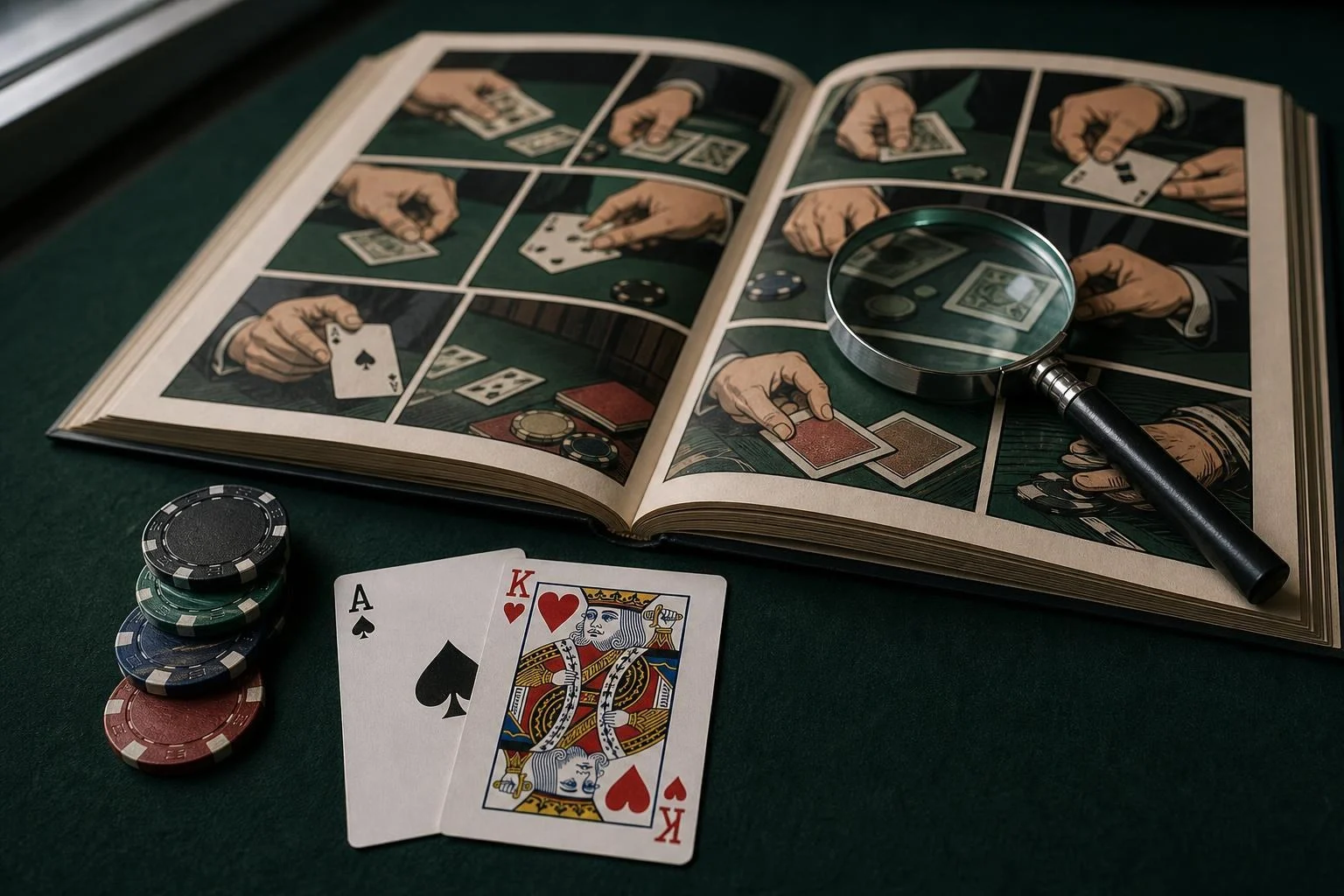

Blackjack presents a problem for comic artists: a few small marks on a playing card can change the meaning of an exchange. Dialogue, artwork, and the dealer’s response contribute to the result. Even an unmistakable 21 requires context before readers can judge the hand.
Three appearances, in X-Men, Scalped, and Mark Trail, offer material for examining those details. Using Canadian blackjack guidance as the reference, these scenes illustrate how the game’s terminology and procedures serve characterization, suspense, and everyday conversation.
The Rules Behind the Scene: A Canadian Reference
Players compete against the dealer. Numbered cards retain their values; face cards count as ten. An ace counts as eleven unless that would take the hand above 21, in which case it counts as one. Exceeding 21 means the player busts.
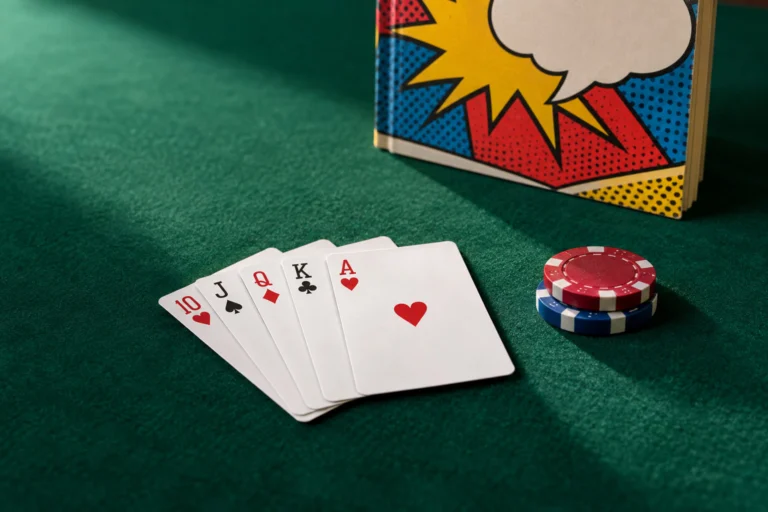
The distinction between a natural and a drawn 21 deserves attention, whether assessing illustrated hands or information about live blackjack ontario. An ace and a ten-value card in the initial deal constitute blackjack. A three-card total of 21 is assessed as a completed hand.
Usual blackjack tutorials explain another detail: when the dealer and player both have blackjack, the player keeps the original wager. This tie helps readers assess scenes in which a dealer announces a natural and immediately collects everyone’s chips.
Judging accuracy means asking whether the depicted action follows the relevant procedure. A strategically poor decision can still follow the rules.
Real-world gambling involves financial risk and is restricted to legal-age adults. Treat it as entertainment with a fixed spending limit, never as reliable income.
Domino’s Blackjack Appearance in X-Men #38
The Boneyard, Part 1 appeared in X-Men’s 2010 series, reaching stores on November 7, 2012, with a January 2013 cover date. The creative team comprised writer Seth Peck, artist Paul Azaceta, and colorist Rico Renzi.
In a contemporary account, Renzi identified Peck and Azaceta as the creators, correcting solicitations that had named Brian Wood and David Lopez.
A specialist synopsis describes Domino infiltrating a criminals-only casino under the identity of a Swedish crime boss’s wife. She plays blackjack and accumulates chips before Daredevil’s arrival interrupts the operation.
Her luck-based characterization makes the setting relevant to the story. For a rules assessment, the important question is how each reported win occurs: through an initial natural, a higher completed total, or a dealer bust. Each outcome has its own requirements. Reading the cards alongside the dialogue would establish which mechanism supports the scene and how the artwork communicates Domino’s advantage.
Scalped #25: Card Counting and Concealment
Published on February 11, 2009, Jason Aaron and R. M. Guéra’s Scalped #25 begins High Lonesome. Its newcomer enters the Prairie Rose reservation with a background in deception.
DC’s issue description calls him a card shark and con man whose presence could endanger an established character. A secondary review describes him playing blackjack and counting cards while trying to avoid detection.
The review uses “Styles” as a convenient name for a man operating under multiple identities. Keeping that attribution preserves the distinction between the reviewer’s shorthand and the character’s shifting identities.
Assessing the counting requires different evidence from checking a hand’s arithmetic. The sequence of exposed cards and the character’s response would allow examination of the method. His attempts at concealment give the blackjack scene a role within the con-man storyline.
Edition identification matters here, too: Scalped Vol. 5: High Lonesome collects issues #25–29.
Mark Trail Gives “Double Down” Its Proper Context
Jules Rivera’s February 4, 2021 Mark Trail strip provides a directly archived example. Its dialogue identifies a blackjack table and includes the call “Double down!”
Ontario’s tutorial describes doubling down after the initial two cards as doubling the original wager and receiving one additional card. The extra wager and restricted draw are both part of the action.
That gives an editor specific details to examine in the artwork: the amount committed, the card received, and the end of the player’s turn. The terminology supplies a precise reading of the exchange.
The strip’s brevity makes it useful for separating verbal accuracy from a fully depicted procedure. “Double down” identifies the intended move; the surrounding panels determine how much of that move readers see.
Why Blackjack Works So Well in Comics
Blackjack gives comic writers a quick way to show luck, pressure and deception without slowing the story.
In X-Men, it suits Domino’s association with luck. In Scalped, it supports a con-man storyline. In Mark Trail, a phrase like “double down” communicates a decision instantly. A card, dealer reaction or familiar term can carry specific meaning, turning blackjack from background decoration into part of the storytelling.