5 Ways ‘2001: A Space Odyssey’ Aged Poorly (& 5 Ways It Aged Masterfully)

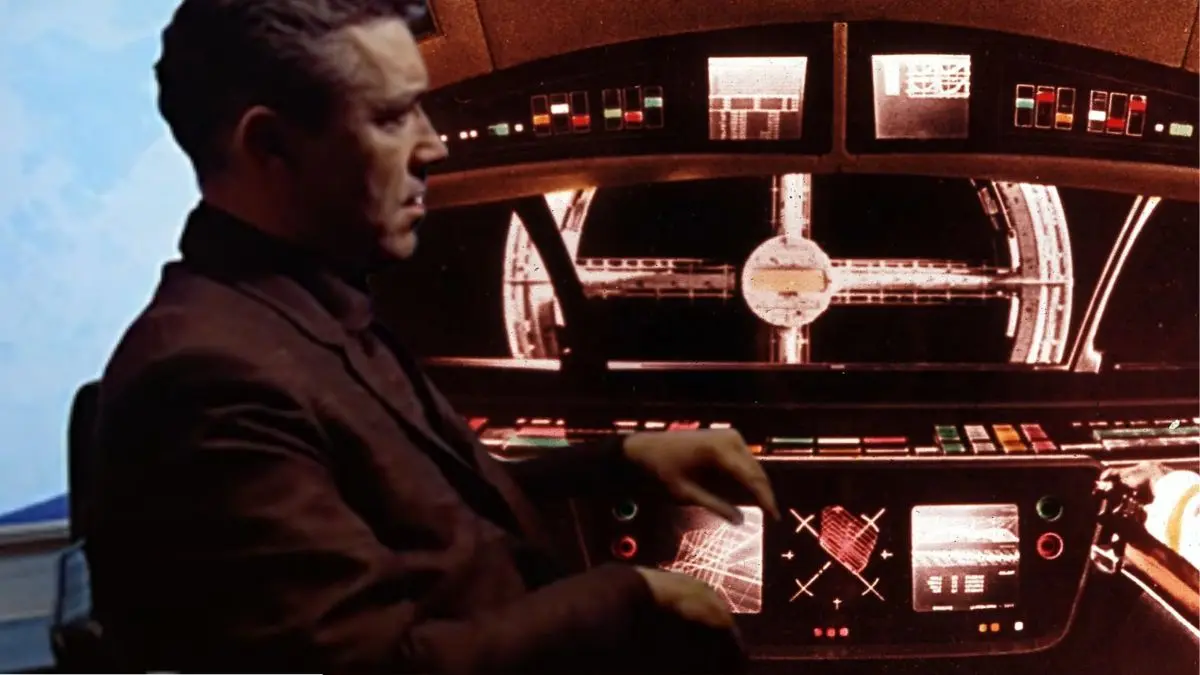

Few science fiction films invite as much close reading as ‘2001: A Space Odyssey’. Its attention to design and method still shapes how filmmakers show space travel and advanced technology. The film also preserves a snapshot of what people in the late sixties thought the near future might look like, from corporate logos to everyday gadgets.
Looking back with today’s experience of spaceflight and computing makes some choices feel rooted in their moment. Other choices look remarkably durable, supported by careful research and inventive engineering. Here are five ways it aged poorly and five ways it aged masterfully, alternating to show how each strength and shortfall sits side by side.
Aged Poorly: A future timeline that missed the mark
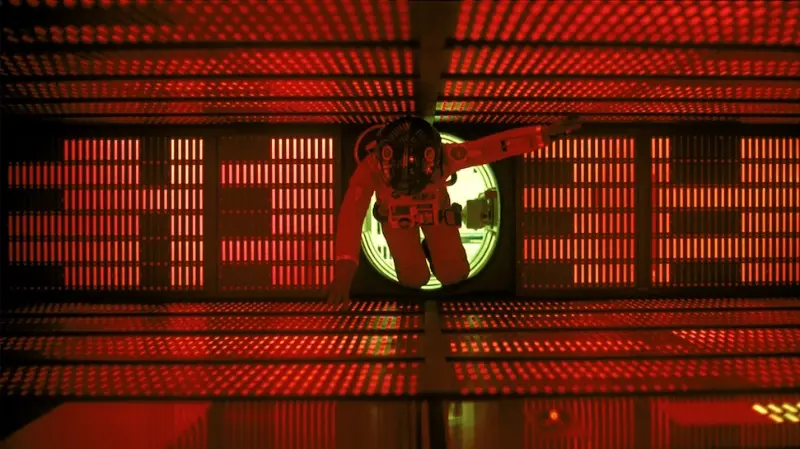
The film presents routine flights to an orbital station and a staffed base on the Moon by the year 2001. Commercial travel appears as simple as booking an airline seat, with branded cabins and printed boarding documents used for identification. In reality, the International Space Station only gained a continuous human presence in 2000 and no nation established a public facing lunar base by 2001.
Civilian space travel in the film moves through companies that dominated mid century aviation. Pan Am branding sits on the shuttle and a hotel chain occupies a lounge on the station. Pan Am ended operations in 1991 and the real world shift to government funded programs and later private launch providers shows how the industry evolved in a different direction than the film predicted.
Aged Masterfully: Spaceflight physics that hold up
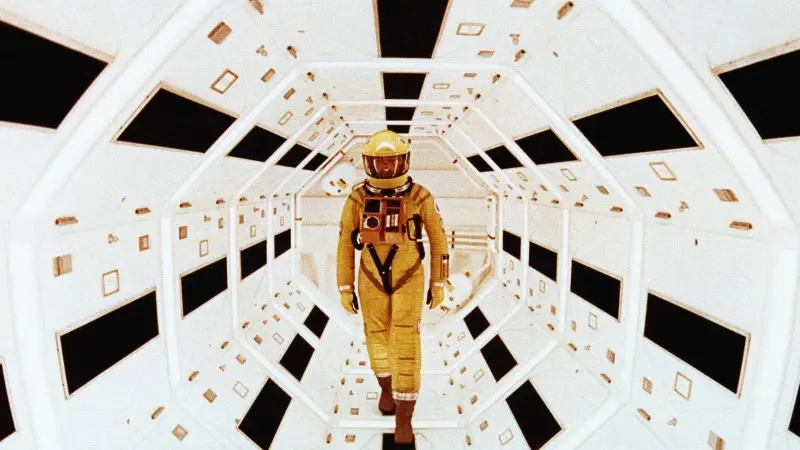
Exterior shots of spacecraft stay quiet and treat vacuum correctly. Movements are slow and deliberate, with docking and alignment shown through carefully timed thrust and rotation. The film treats orbital mechanics with respect and avoids theatrical shortcuts like banking turns in space.
Artificial gravity arrives through rotation rather than fictional fields. The production built a full scale rotating set so performers could walk the curve of the habitat while the camera followed. That choice explains crew movement and furniture orientation without dialogue and mirrors real proposals for long duration travel.
Aged Poorly: Gender representation locked to its era
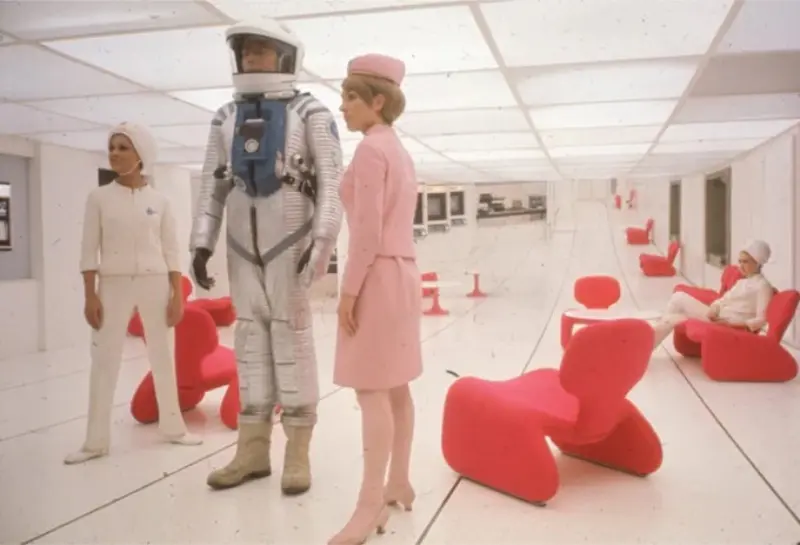
Most speaking roles belong to men in positions of authority while women appear mainly as cabin crew, reception staff, and operators. Mission leadership, scientific briefings, and the deep space crew are presented as male by default with minimal attention to alternative perspectives.
Job titles and uniforms reinforce a service image for women that reflects hiring patterns of the period. Contemporary aerospace teams include women as flight directors, principal investigators, and mission commanders, which shows how the field has diversified beyond the narrow slice shown on screen.
Aged Masterfully: Practical effects that remain convincing

The production used miniature spacecraft photographed with long exposures to achieve crisp depth and smooth motion. Planetary and lunar vistas used front projection with highly reflective screens to merge performers and landscapes without visible matte lines. These methods keep edges clean and lighting consistent even in high resolution formats.
For the Stargate sequence the team created slit scan photography with moving artwork and a traveling aperture. The result fills the frame with abstract patterns generated in camera rather than relying on later digital tools. Because the images come from physical light recorded on film, they scale cleanly to modern restorations.
Aged Poorly: Corporate futures that vanished
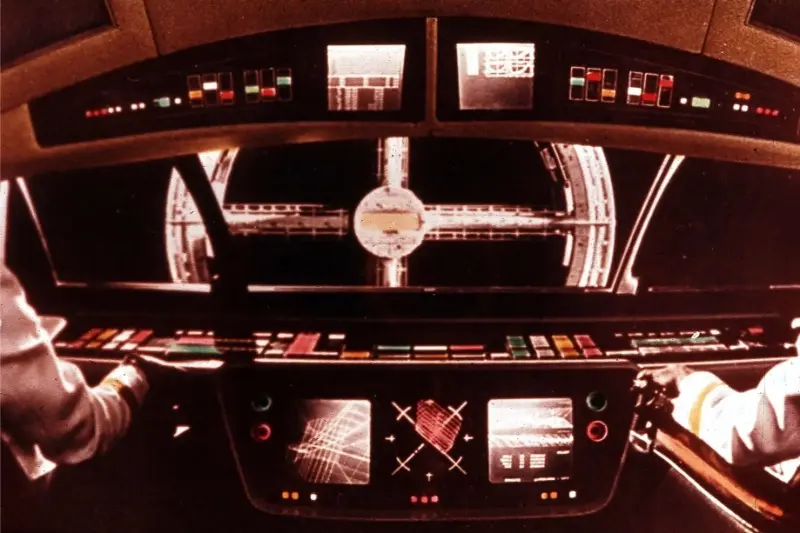
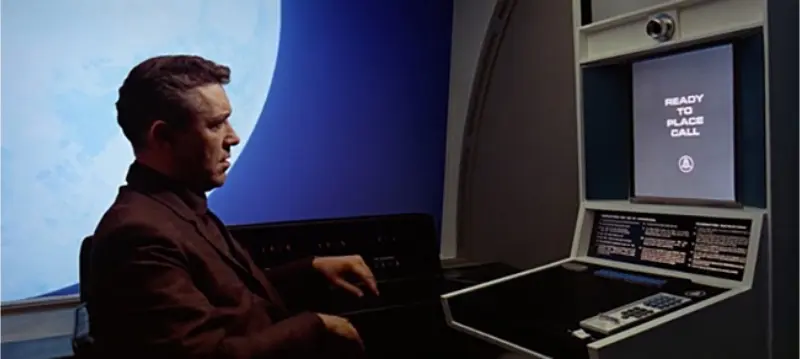
The film treats well known brands as fixtures of space travel and communications. Viewers can spot the Bell System logo on devices and a Howard Johnson’s presence on the station. Telecommunications in the real world changed through divestitures and new entrants while many mid century chains reduced footprints or disappeared.
This approach makes the space station feel like an airport from the sixties, complete with familiar signage and customer service desks. The world that followed moved computing and customer interfaces to personal devices, which reduced the need for branded counters in transport hubs and made the film’s commercial environment feel like an artifact of its time.
Aged Masterfully: Design foresight on everyday tech
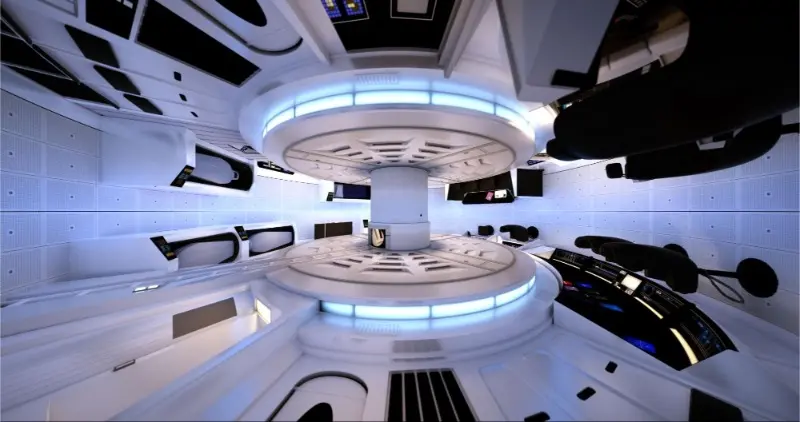
Astronauts use flat personal screens to read news and watch programs during meals. The device functions like a tablet with a thin bezel and a clean interface for text and video. Video calls appear as a normal service that people use to speak with family from distant locations.
Cabin displays are large, high contrast, and arranged in logical clusters around hardware controls. Biometric access, compact food service, and sleep pods present a consistent view of how a crew might live and work in a confined habitat. Many of these ideas resemble later consumer and aerospace designs even as the underlying electronics improved.
Aged Poorly: A monolithic view of artificial intelligence

HAL serves as a single centralized system that runs flight controls, life support, and communications. The interface centers on natural speech with little sign of redundancy or distributed decision making. Modern practice favors multiple computers with layered safeguards and separate channels for critical functions.
The film’s computers appear as room sized cabinets and fixed consoles, which reflects mainframe architecture. Today’s systems use networked processors, specialized accelerators, and software that learns from large datasets. The film captures an important concept in human machine interaction while missing how widely computation would spread across devices.
Aged Masterfully: Visual storytelling with roadshow craft
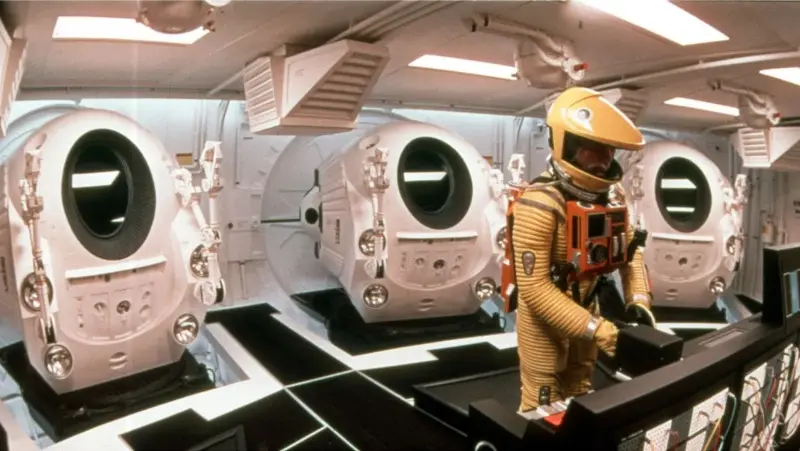
Long sections unfold with minimal dialogue, including an overture before the first image and an intermission in the middle of the program. The structure follows roadshow presentation, where screenings included printed programs and reserved seating. The format gives room for music, image, and editing to carry meaning without explanatory speech.
Production choices support this approach at every level. Shot length stretches to show procedures step by step, and cuts emphasize orientation and scale over plot summaries. The result lets viewers track tasks like docking, EVA, and habitat routines through clear visual blocks rather than spoken instruction.
Aged Poorly: A narrow Cold War frame
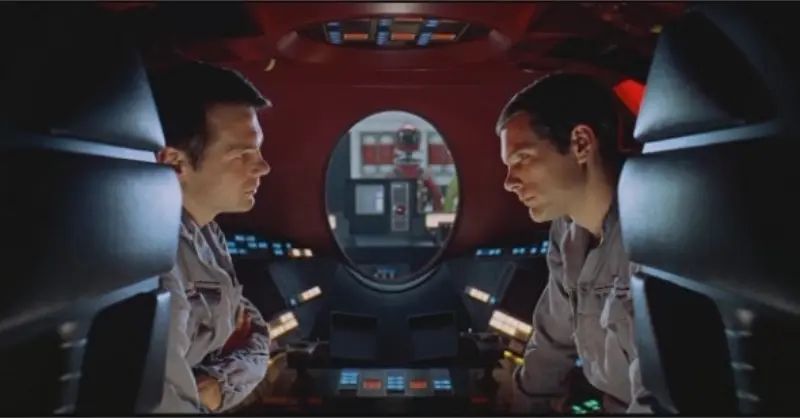
Conversations about secrecy and access present the Moon discovery as a matter for superpower officials and trusted allies. The film reflects a world where space activity came from national programs that communicated through diplomatic channels rather than open international frameworks.
By the early twenty first century the landscape included agencies beyond the United States and the Soviet Union along with commercial launch providers and satellite operators. Multinational crews lived on the International Space Station and commercial cargo and crew programs expanded the field. The film’s focus captures one moment in geopolitical history while leaving out the broader participation that followed.
Aged Masterfully: Enduring recognition and influence
The film received the Academy Award for visual effects and earned repeated theatrical reissues in large format prints. Archives preserved original elements and studios prepared new negatives and digital scans for anniversary screenings. Museums and cinematheques continue to program it for audiences that want to study its craft on the big screen.
Filmmakers and scientists cite its influence on spacecraft interiors, spacesuit design, and mission procedure scenes. Later works such as ‘Interstellar’ and ‘Gravity’ adopted realistic soundscapes, careful blocking, and practical rigs to stage zero gravity movement. The film’s methods formed a shared toolkit that remains useful for credible space storytelling.
Share your own take on what held up and what did not in the comments.