5 Ways ‘V For Vendetta’ Aged Poorly (& 5 Ways It Aged Masterfully)

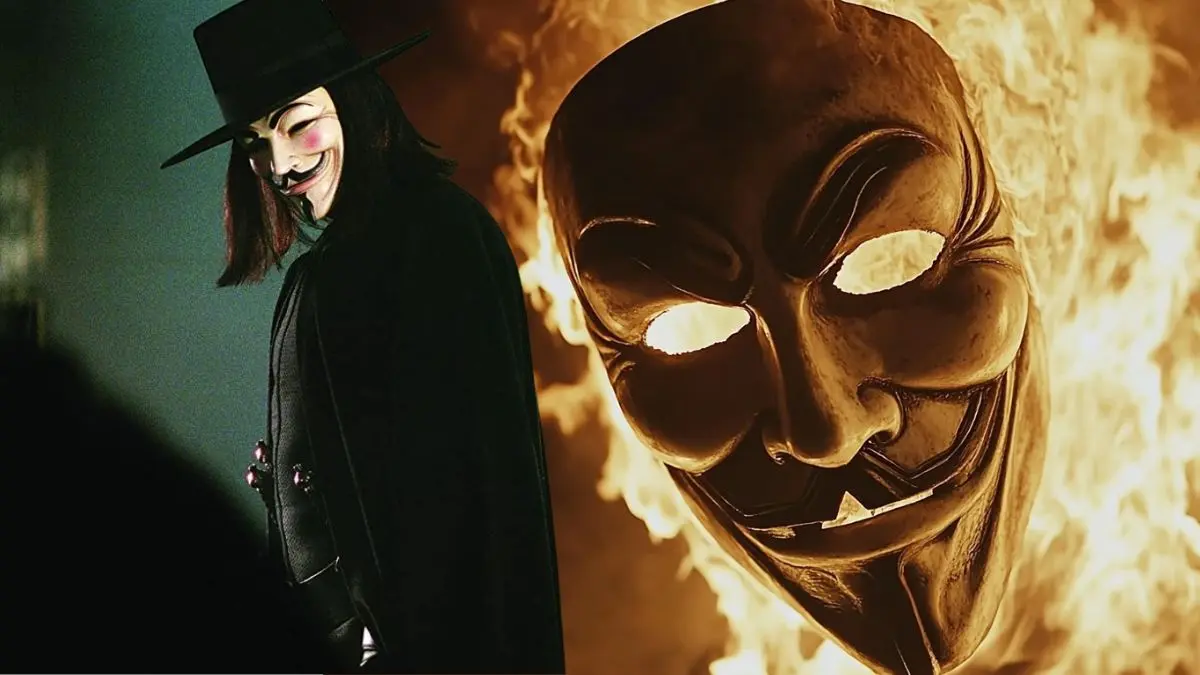

‘V For Vendetta’ imagines a near future Britain under a totalitarian regime and follows a masked vigilante who targets the state’s leaders while inspiring a mass uprising. The film blends political thriller, dystopian science fiction, and comic book adaptation, using bold imagery and elaborate set pieces to build a world of curfews, surveillance, and propaganda.
Looking back, some elements feel very tied to the moment of its release while others have only grown more influential. Here are ten focused takeaways that look at what feels dated and what continues to resonate, organized to make it easy to see both sides.
Aged Poorly: Analog era surveillance tools
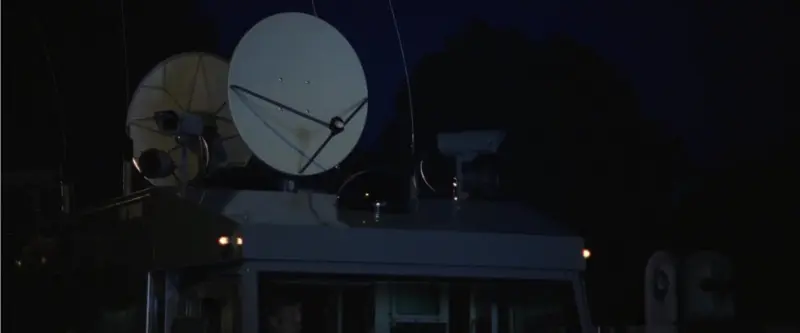
The film’s control room fills the screen with walls of monitors and operators who track citizens through fixed CCTV feeds and phone traces. Intelligence flows through a small circle of officials who rely on physical files and centralized terminals, and raids trigger after human analysts collate reports. The tools emphasize visibility in public spaces and contact through landlines.
Modern surveillance combines large camera networks with automated face matching, location histories from mobile devices, and keyword scanning across digital platforms. Collection can run continuously in the background and alerts can trigger without an operator watching every screen. This shift makes the story’s wire rooms and manual workflows feel rooted in an earlier phase of monitoring technology.
Aged Masterfully: The Guy Fawkes mask as a global protest icon

The film placed the stylized Guy Fawkes mask at the center of its imagery, giving audiences a single object that signals dissent, anonymity, and shared purpose. Street scenes and broadcasts show crowds adopting the same mask, which turns individual faces into a common emblem that the camera can read instantly.
Beyond the film, the mask moved into real protests, online activism, and pop culture. It appears in demonstrations, encryption advocacy, and hacktivist branding, where it lets participants obscure identity while presenting a unified front. The design is simple to reproduce on posters and avatars, which helped it travel widely.
Aged Poorly: A single state broadcaster rather than a networked media ecosystem
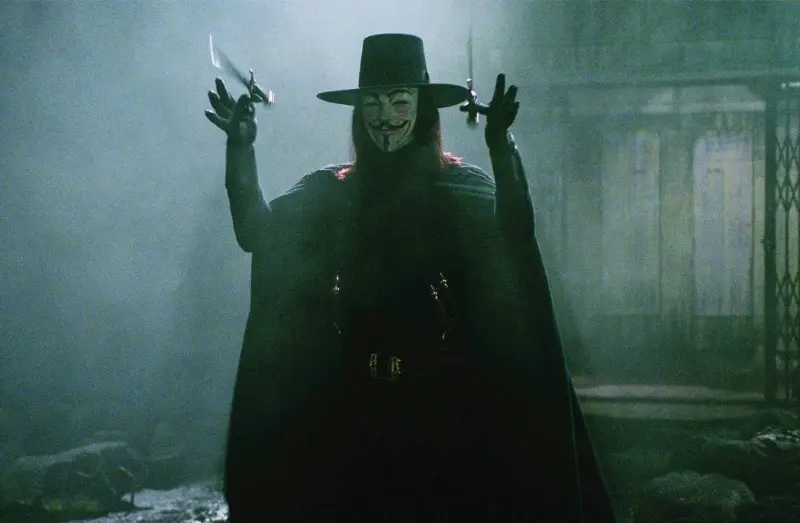
News in the story flows through one dominant television channel that can be bullied or hijacked. Programming schedules and emergency bulletins determine what the public sees, and one dramatic studio interruption can change the national conversation in an instant.
Information now spreads through many nodes at once, including social platforms, encrypted chats, and livestreams that do not rely on a single studio feed. Rumors, corrections, and propaganda circulate peer to peer in minutes. The film’s focus on one network captures the power of broadcast but underrepresents how decentralized channels shape narratives today.
Aged Masterfully: Timely depiction of emergency powers and curfews
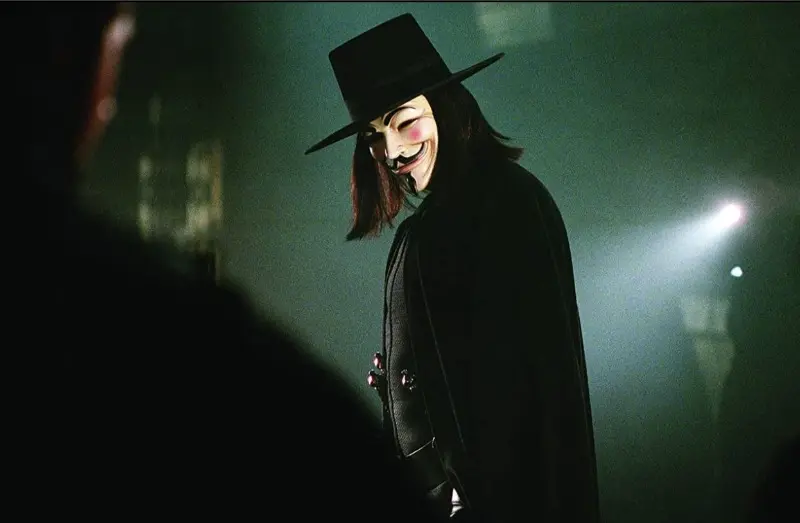
The government imposes a citywide curfew, black-bag detentions, and checkpoints that control movement. Officials justify these measures with the language of public safety, then use them to restrict assembly and silence critics. The plot shows how routine restrictions can become permanent once people adjust to them.
The story also details a legal architecture that grows around a crisis. Authorities cite threats, expand authority, and redirect law enforcement toward ideological policing. By walking through each step of that escalation, the film provides a clear picture of how extraordinary powers can become everyday tools.
Aged Poorly: Narrow LGBTQ+ representation framed through persecution
Queer characters in the film appear primarily through stories of imprisonment, secret keepsakes, and execution orders. Valerie’s letter preserves a personal history from inside a cell, and Deitrich hides contraband art while masking his identity for survival. Their arcs document state violence with care but give little room for ongoing community life beyond memory and loss.
Later screen storytelling has offered more varied queer roles with agency in public and private spaces. Against that backdrop, the film’s lens remains fixed on victimization and erasure. The focus serves its theme of repression, yet it also limits the kinds of queer experience that reach the screen.
Aged Masterfully: Valerie’s letter as a lasting piece of resistance writing
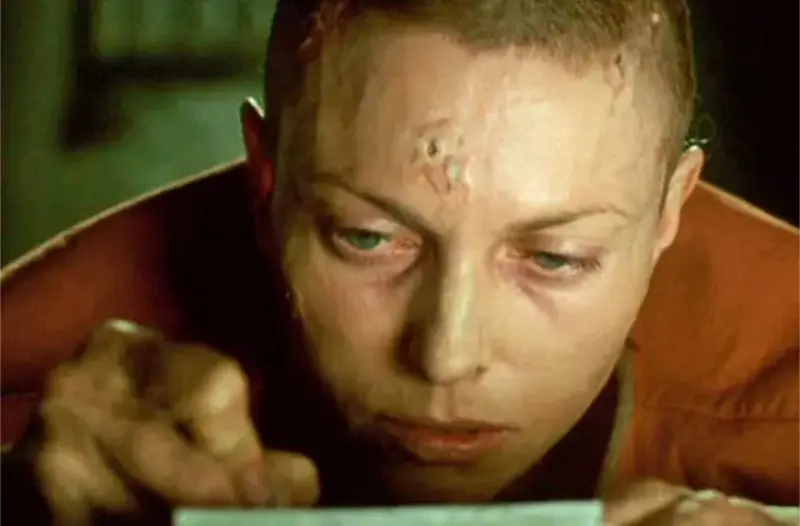
Valerie’s letter is delivered as first person testimony written on scraps of paper, and the film stages it as a calm voice inside a brutal process. The account names places, small joys, and the exact steps by which ordinary life was stripped away. It gives Evey a complete human story at the moment when the state has tried to reduce her to a number.
That passage has circulated far beyond the movie as a self-contained text. It appears in classrooms, protest art, and readings because it requires no extra context to land. The scene demonstrates how a personal narrative can carry history, ethics, and courage across generations.
Aged Poorly: Mid-2000s speed ramping and CG blade trails
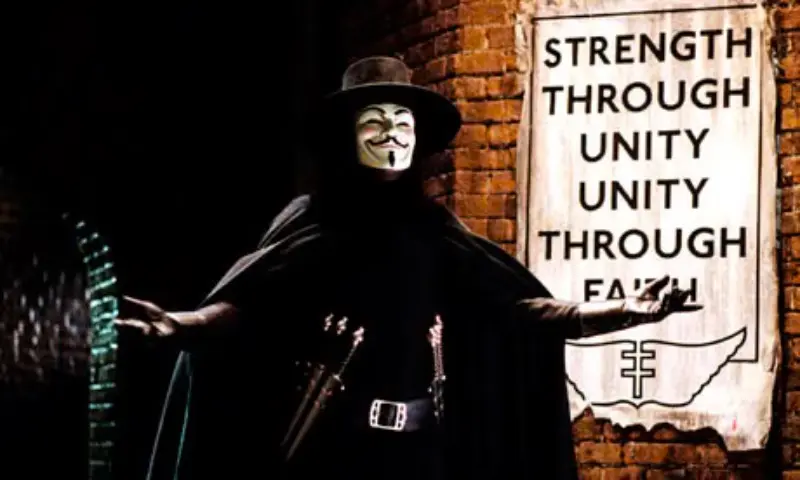
The fight scenes use speed changes and simulated contrails that trace each knife path through the air. Cuts arrive on impact beats and the camera circles in close, turning bodies into arcs that glow for a split second. The style reflects a specific moment in digital postproduction and choreographic fashion.
Action filmmaking now often leans on wider framing, longer takes, and practical stunt continuity that highlights footwork and environment. Many productions stage encounters in available light with less emphasis on digital smear. The film’s approach remains legible, yet its visual signatures point to a particular technical toolkit.
Aged Masterfully: Visual translation of the graphic novel’s core imagery
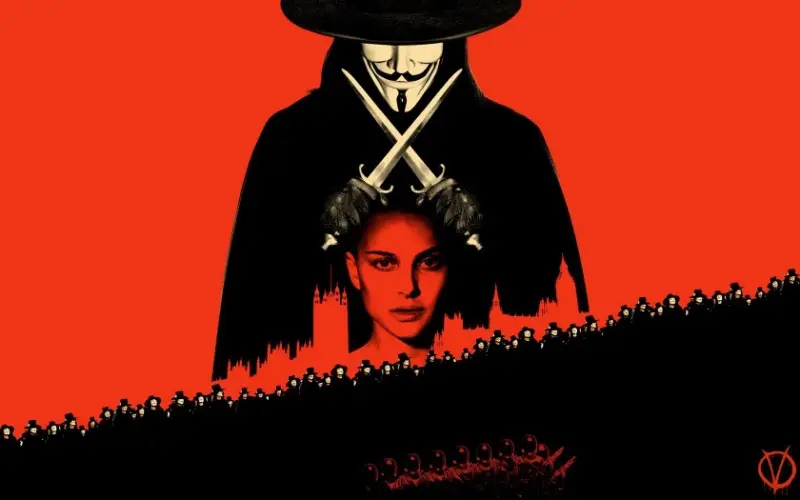
V’s hat, cloak, and mask arrive almost unchanged, and the lair layers books, instruments, and contraband art in ways that echo panel compositions. The domino display builds a literal chain of cause and effect, and the Old Bailey and Parliament sequences preserve the comic’s idea of architecture as message.
The script updates timelines and political references while keeping the rhyme, the roses, and the theater of public spectacle. That balance maintains recognizability for readers of the source while guiding new viewers through the same symbols. The result shows how a page-bound design language can move into live action without losing clarity.
Aged Poorly: Minimal role for the internet in organizing

V reaches people through mailed packages, leaflets, and commandeered broadcasts. Plans depend on fixed dates, physical gathering points, and the spectacle of a single transmitter overpowering the airwaves. Communication risks center on search teams and confiscated print objects.
Contemporary movements coordinate through hashtags, group chats, and encrypted channels that shift locations and tactics in real time. Video from phones creates its own evidence trail and narrative. The film captures the power of appointment broadcasting but leaves out the digital logistics that now shape large crowds.
Aged Masterfully: Documented production choices that anchor Evey’s transformation
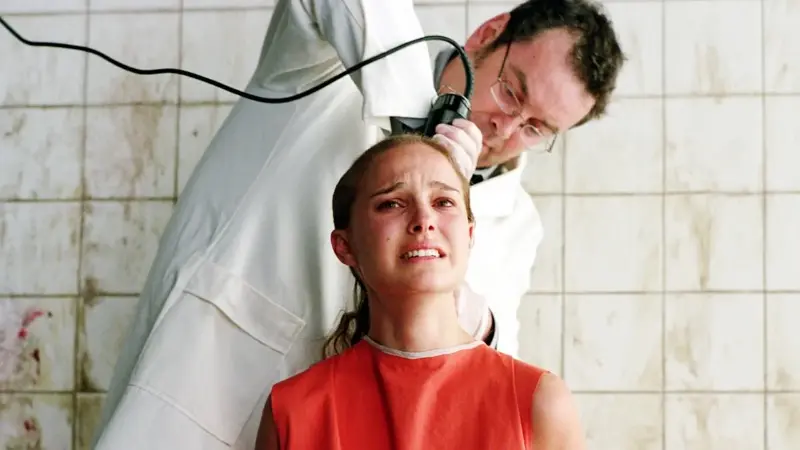
Natalie Portman shaved her head on camera for Evey’s imprisonment sequence, which the crew captured with multiple angles to preserve continuity in a single moment. The set work and makeup track bruising, hunger, and water exposure across scenes so the body tells the same story as the dialogue.
She also worked with dialect coaching to sustain an English accent across quiet exchanges and shouted lines. The rain-soaked rooftop scene pairs her release with V’s earlier emergence from fire, creating a visual rhyme that the edit makes clear without extra explanation. These grounded choices keep the arc tangible for viewers.
Share your own takes on what holds up and what does not in the comments.