‘Cape Fear’ Season 1, Episode 7 Review: “Mongrel” Piles on the Family Chaos and Somehow Still Sticks the Landing

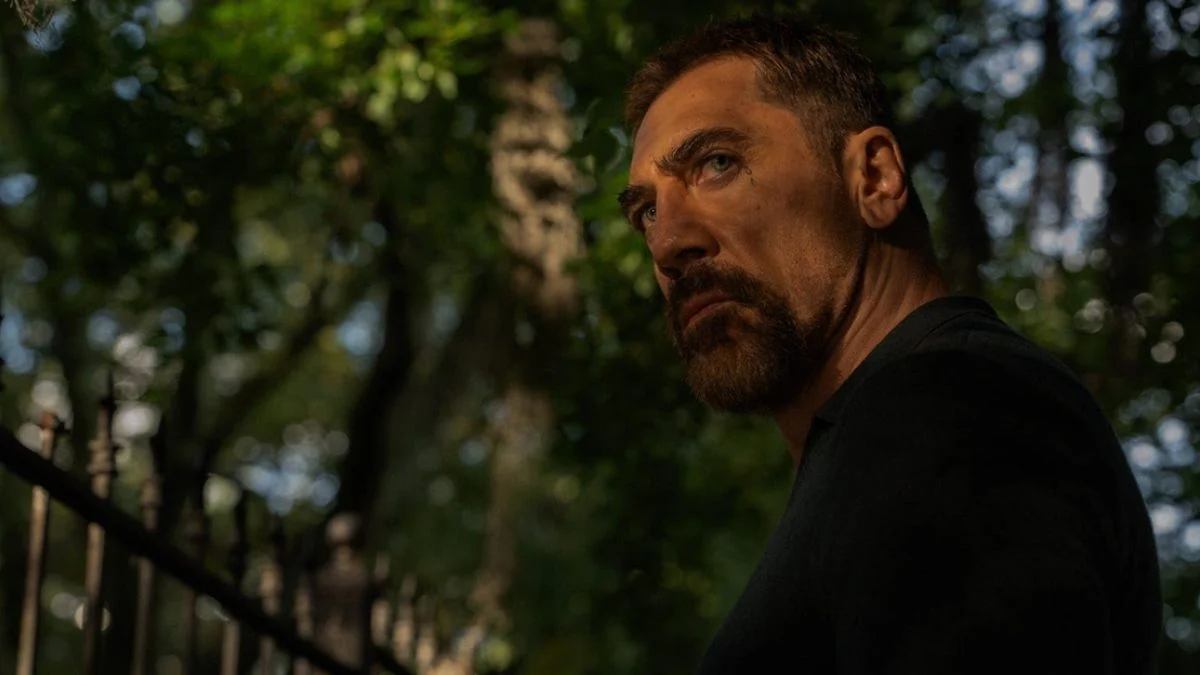

Apple TV’s ‘Cape Fear‘ has never been shy about escalation, and by the time the seventh episode of the season rolls around, the show has fully leaned into its own madness. This is a series that started as a tense reimagining of a classic revenge thriller and has slowly mutated into something much stranger, where secret rooms in the walls and hallucinogenic tea are just another Tuesday for the Bowden family.
Javier Bardem’s Max Cady remains the gravitational center of the whole show, and ‘Mongrel’ finally lets him step outside the Bowden orbit to show us where he actually comes from. Watching him squirm in front of his own father is a small but telling shift, and it recontextualizes a man we have mostly seen as an unstoppable predator.
What struck me most about this episode is how willing it is to let its plot spin wildly out of control while still keeping its emotional throughline intact. The street fight between Tom and Max, filmed by every phone on the block with zero context, is a genuinely inspired bit of dramatic irony, since it turns the show’s most righteous character into a viral villain overnight.
That sequence works because the performances sell it so completely. Patrick Wilson plays Tom’s unraveling with a controlled desperation that makes his violence feel earned rather than cartoonish, even as the show pushes the scenario further into pulp territory than it probably should.
The introduction of Ron Perlman as Max’s father Robert is where the episode takes its biggest swing, and mostly it pays off. Perlman brings a lived in menace to a role that could have been a cheap plot device, and the family dynamic between Robert, his unraveling wife Hester, and the estranged half sister Crystal gives the show a new well of dysfunction to draw from without feeling like padding.
I do think the episode occasionally trips over its own ambition. The subplot involving the pill bottles and the scopolamine reveal is clever on paper, but it gets rushed through in a way that undercuts how disturbing that idea should actually feel, and a show this patient in earlier episodes suddenly seems eager to check plot boxes.

Natalie’s arc is where ‘Mongrel’ finds its emotional gut punch, and it is easily the strongest material in the hour. Lily Collias plays her slow realization about her own parentage with a quiet, wounded stillness that avoids melodrama, and the baptism scene that follows lands as genuinely unsettling rather than gratuitous.
There is a real tension in this show between its pulpy genre instincts and its more grounded family drama, and this episode is the clearest example yet of both sides pulling in opposite directions at once. It should not work as well as it does, and yet the momentum of the season carries it through, mostly because the cast refuses to let any of it feel silly even when the plotting gets a little unwieldy.
By the time the credits roll, with Tom oblivious to the fact that the murder weapon has been planted right under his nose, the episode has set up a back half that feels genuinely dangerous rather than merely twisty for its own sake. ‘Cape Fear’ continues to be a show that trusts its actors to carry material that might collapse in lesser hands, and Bardem in particular keeps finding new textures in Max that make him impossible to look away from.
Rate episode 7
I walked away from ‘Mongrel’ more impressed than I expected to be, even with its shakier plot mechanics, because the character work underneath all the chaos remains genuinely gripping. It is not a flawless hour of television, and the show is clearly juggling more subplots than it can always handle gracefully, but the emotional core keeps everything anchored. 8 out of 10.
Have something to add? Let us know in the comments!