Christopher Nolan Just Explained the One Rule That Makes ‘The Odyssey’s’ Gods Feel Terrifyingly Real

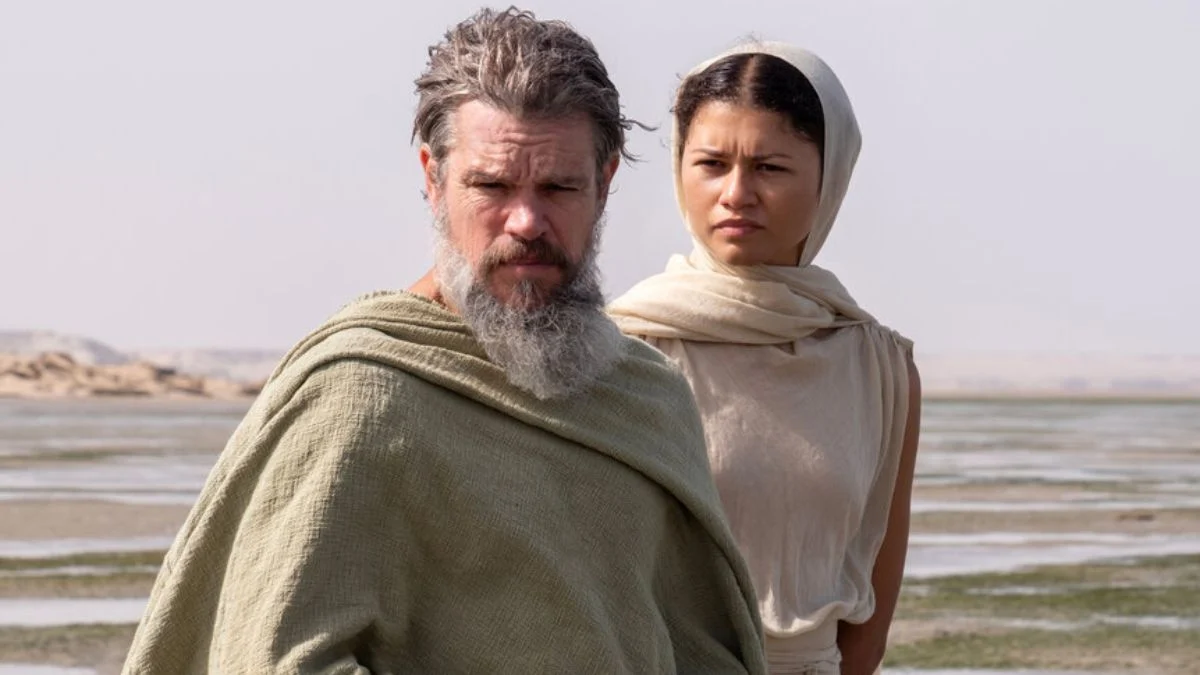

Adapting Greek mythology for modern audiences has always come with a tricky creative dilemma. Do you lean into gods and monsters as literal, awe-inspiring forces of nature, or do you strip the divine elements away entirely and tell a grounded, human story instead?
Christopher Nolan has never been a filmmaker who shies away from big philosophical questions, and his approach to Homer’s ancient epic in ‘The Odyssey’ was never going to take the easy route on that front. Rather than treating the gods as pure fantasy or symbolic flourish, Nolan built his entire approach around a much stranger, more grounded idea.
During a Beijing press stop for the film, Nolan sat down with political philosophy lecturer Zhong Shu for one of the most in-depth conversations yet about the movie’s mythological framework, according to The Film Stage. In it, Nolan laid out exactly how he wanted audiences to understand the presence of gods throughout the story.
Nolan explained that his creative breakthrough came from imagining the perspective of people living in a pre-scientific era, for whom signs of divinity were everywhere in daily life. As he put it, the existence of gods wasn’t a matter of belief for those people, but simple observable reality, no different from how modern audiences accept scientific facts like the Earth’s orbit around the sun without personally verifying them.
To illustrate that mindset, Nolan pointed to natural phenomena like thunder, lightning, and the unpredictable behavior of the ocean, framing them as the only explanations available to people living at that time. Without access to scientific reasoning, those forces would have simply read as direct communication from the divine, making belief in gods less a leap of faith and more an inevitable conclusion.

That philosophy lines up closely with comments Nolan has made in other interviews surrounding the film’s release. He has previously described the creative challenge of translating mythological elements into a grounded, real-world cinematic language, noting that many things now explained by science, such as lightning, earthquakes, and volcanic eruptions, would have appeared purely supernatural to people of that era.
This grounded approach to mythology also connects to broader ideas Nolan has explored throughout his career, particularly in ‘Oppenheimer,’ where questions of belief, perception, and the limits of human understanding played a central role. Rather than treating ‘The Odyssey’ as a total departure from that film, Nolan appears to see a shared philosophical throughline between the two projects, even though one deals with ancient gods and the other with the birth of the atomic age.
The approach also explains some of the choices audiences have noticed throughout the film’s marketing and trailers, where divine intervention is suggested through natural forces and environmental chaos rather than overtly fantastical imagery. Rather than showing gods as characters constantly intervening on screen, Nolan seems more interested in showing how belief in them would have shaped the way ancient people interpreted the world around them.
That distinction matters given how differently other adaptations of Greek mythology have handled the same material, with some films opting to strip out supernatural elements entirely in favor of a more historically grounded war story. Nolan’s choice to instead root the gods in psychological and cultural reality, while still treating their presence as consequential, gives ‘The Odyssey’ a distinct identity within that broader tradition of myth-to-screen adaptations.
With the film continuing its record-breaking theatrical run, Nolan’s comments offer fans a deeper look at the ideas shaping one of the year’s most ambitious blockbusters.
Do you like Christopher Nolan’s grounded approach to the gods in The Odyssey?
Have something to add? Let us know in the comments!